
Experimental Cell Therapy Improves Skin Resilience, Advancing Treatments for Skin Injuries
11/10/2026
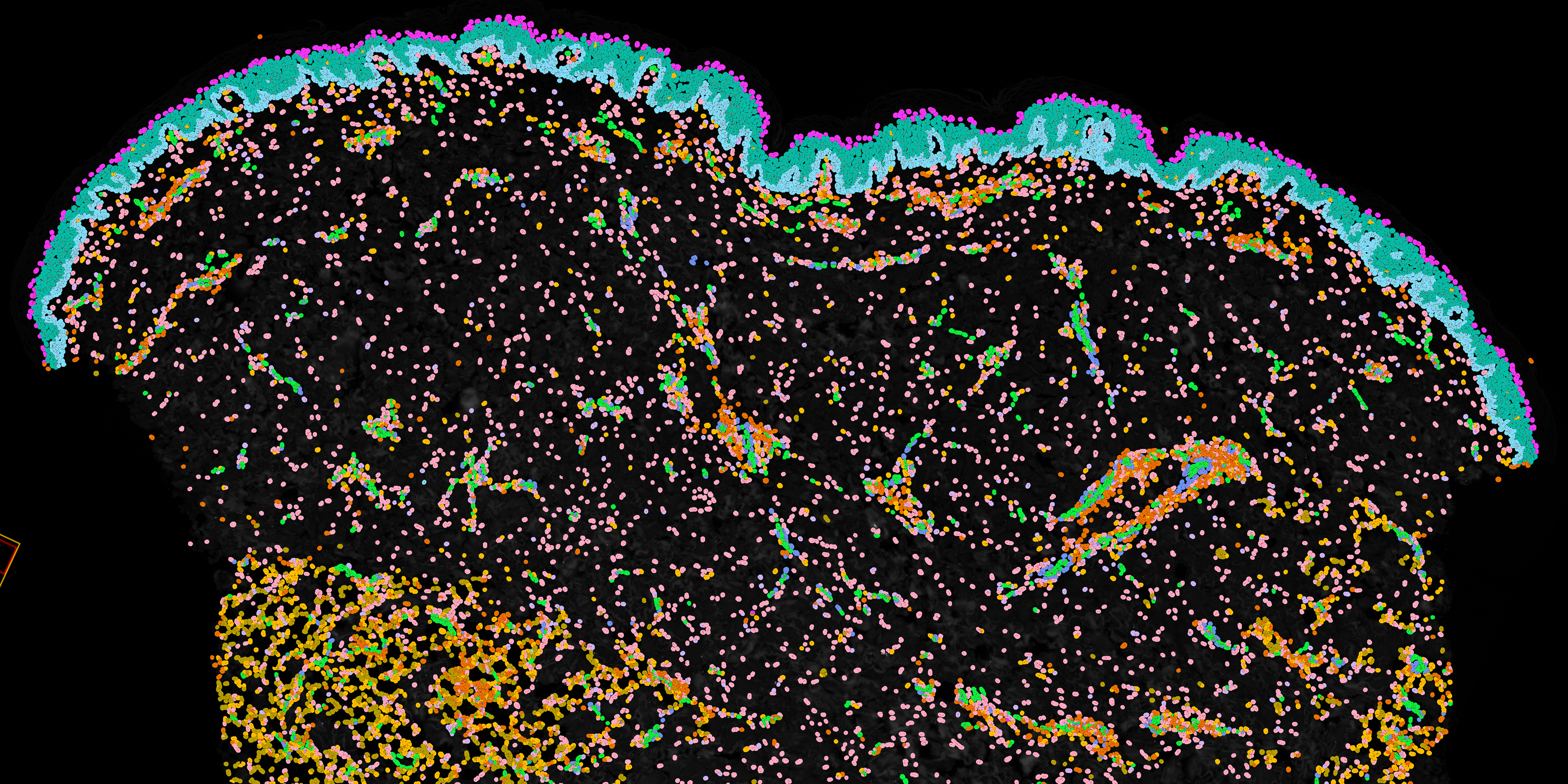
In a phase I clinical trial funded by the National Institutes of Health and the Maryland Stem Cell Research Fund, Johns Hopkins Medicine researchers say they have partially transformed ordinary human skin cells into volar skin — the durable skin found exclusively on the palms and soles that resists friction and pressure.
The researchers say the study, which published Nov. 10 in the Journal of Investigative Dermatology, demonstrates how skin cell therapy — the transfer of living skin cells to treat injury or disease in people — may change skin when combined with dermal fillers, which are injectable substances approved by the U.S. Food and Drug Administration to reduce the appearance of aging.
An estimated 2 million people in the U.S. live with limb loss. Prosthetics can aid movement, but skin bruising and irritation at their attachment sites limit daily use. Sam S. Lee, Ph.D., study lead, research analyst and lab manager in the Garza lab, says volar skin, being naturally tough and hardy, presents a natural solution to prosthetic injuries; however, because limb loss also often removes volar skin, sourcing enough tissue for treatment remains a challenge.
In a previous clinical trial, Lee and his team found that transplanted human volar fibroblasts — connective tissue cells that maintain the skin — can give non-volar skin volar-like characteristics, such as increased skin thickness, for up to five months.
Lee’s current study aims to improve his experimental cell therapy by increasing the number of volar or volar-like skin cells generated and by helping the transformed cells last longer.
“Skin fibroblasts naturally attach to collagen [a protein found in skin and other tissues], so we tried incorporating a commercially available cosmetic skin filler containing both collagen and PMMA [polymethylmethacrylate, a synthetic polymer] to help,” says Lee.
Ten healthy adult volunteers (mean age 36.5 years) were recruited for the five-month study. Each study participant provided scalp (non-volar) and sole (volar) fibroblasts, which were cultivated and expanded in a lab to create the study’s skin cell therapy injections.
The same participants received control, scalp and volar fibroblast injections at separate treatment sites. Before starting the cell therapy, a single collagen-PMMA filler injection was applied at the study’s predetermined injection sites.
At a two-month follow-up and the final five-month evaluation, the researchers measured skin thickness, firmness and cellular changes at the treatment sites. As the team expected, skin treated with volar fibroblasts developed volar-like characteristics, such as increased skin thickness and elasticity. They noted that the addition of collagen-PMMA did not prevent skin changes from taking place, but it also did not drastically improve them.
Unexpectedly, the researchers say, they found that using collagen-PMMA caused participants’ fibroblasts, blood vessel cells and immune cells to gather at every treatment site, evidence of an immune response. While the migrated cells were believed to outnumber the transplanted fibroblasts, which could not be directly distinguished from the native cell population, the presence of the migrated cells did not change treatment effectiveness during the five-month study.
Lee says the combined collagen-PMMA filler was used because FDA-approved, collagen-only injections are not currently available. He suspects PMMA contributed to the observed immune response because the body does not break it down. Longer studies will be needed to determine how the observed immune response affects transplanted volar cells and skin transformation over time.
In future studies, Lee and his team plan to investigate whether additional approaches, such as growth factors or physical stimulation, could strengthen or stabilize volar skin characteristics.
In addition to Sam S. Lee and Luis A. Garza, the researchers who authored the study, in alphabetical order, are Justin Blumenthal, Leigh Curvin-Aquilla, Amy van Ee, Ramon Garcia-Rodenas, Nina Rossa Haddad, Andrew Huang, Arieana Johnson, Ella Jung, Joshua Kim, Charles Kirby, Jeremy C. Lee, Ang Li, James Liu, Zhaobo Liu, Hana Minsky, Minji Park, Jiaxuan Qi, Amanda Ruci, Iralde Sicilia, Aiden Willis, Elizabeth Winnicki, Aaron Won, Yingchao Xue, and Dianzheng Yu.
The study was supported by the National Institute of Arthritis and Musculoskeletal and Skin Diseases in the National Institutes of Health (R01AR074846, UG3AR079376) and the Maryland Stem Cell Research Fund (MSCRF).
Luis A. Garza has received grant support from Sun Pharma Advanced Research Company (SPARC). He holds a licensing agreement with SPARC that has resulted in royalty payments to inventors that are not related to the study. Garza also discloses that in 2025 he received honorarium and travel payments from Eli Lilly to be a plenary speaker at the Korean Hair Research Society (KHRS) in Seoul, South Korea and from Novartis to speak at the Japanese Dermatology Association in Tokyo, Japan.
DOI: 10.1016/j.jid.2026.10.040