
Natalie Thrives as a Cancer Survivor
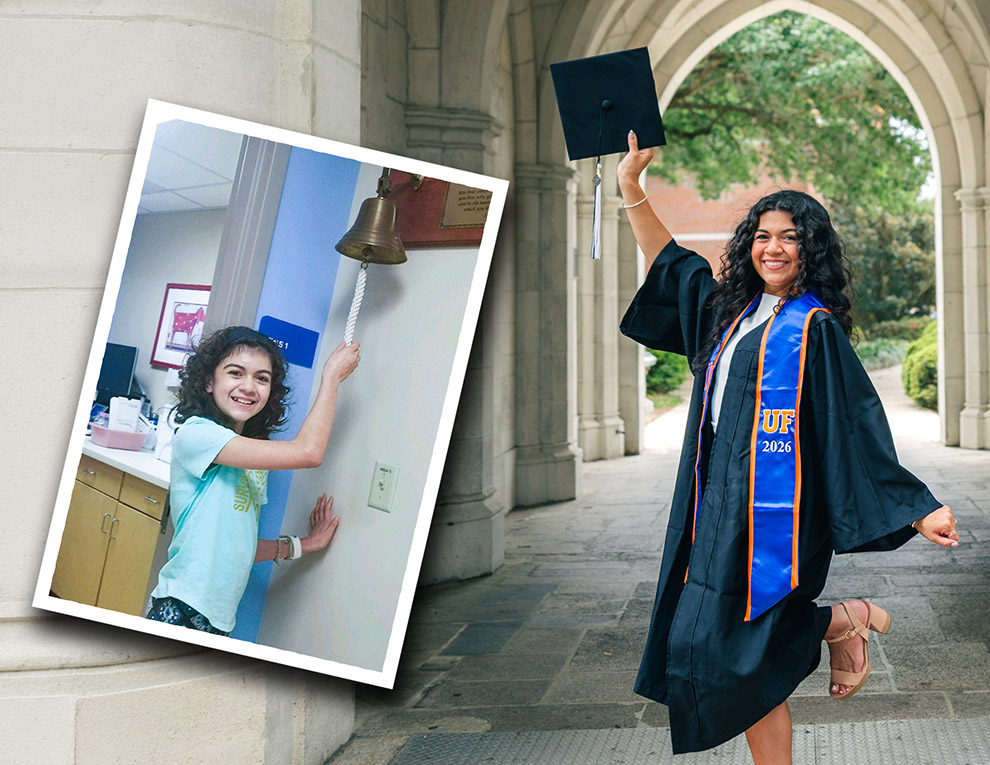
Twenty-two-year-old Natalie is about to check off another milestone on her list: Moving to New York City to attend law school. She recently graduated from the University of Florida. She has accomplished so much since ringing the bell inside the Cancer & Blood Disorders Institute at Johns Hopkins All Children's Hospital in St. Petersburg, Florida, signaling the end of her fight against T-cell lymphoma cancer.
Being a cancer survivor comes with mixed feelings, but for Natalie, it’s an experience she wouldn’t trade in. Despite all the challenges, it made her who she is. “Being a cancer survivor means being the strongest version of yourself … beyond what you think is possible,” she says, courageously. “As weird as it sounds, I wouldn't change anything that happened, because it made me who I am today. It made me a stronger, better, more positive person.”
A Special Connection
Natalie was just 11 years old when all her worries about starting middle school and making new friends came to a grinding halt … stalled by a word that petrified her parents: “Cancer.”
Luckily, doctors told Natalie her survival rate was high as the cancer was caught at an early stage.
From sixth through ninth grade, Natalie spent months at a time in the hospital receiving treatment. Even when she was able to return home, she needed to protect her immune system. “I had two friends who would come to visit me. Being away from people my own age was tough. I really liked school and I missed it,” she explains.
Natalie leaned on her care team at Johns Hopkins All Children’s Hospital to help her through. “They were genuinely the sweetest, most caring people who, through everything, just wanted to see me do better.”
Eleven years later, she’s still close with one of the first nurses to care for her, Mindy Duren, APRN. “I was Natalie’s bedside nurse during her first hospital admission, when she received her diagnosis and was learning about her treatment plan,” Duren recalls.
Duren later became a nurse practitioner and cared for Natalie toward the end of her cancer treatment. Now, Duren continues to see Natalie as part of Johns Hopkins All Children’s Survivorship Clinic, which is dedicated to supporting long-term survivors of cancer, brain tumors, blood disorders, and immunodeficiencies who required high-risk therapies such as chemotherapy, radiation, bone marrow transplant, and/or gene therapy. Patients transition to the Survivorship Clinic around three to five years after therapy ends depending on their diagnosis. “In survivorship, our focus shifts to monitoring and managing long-term effects of therapy. Each patient receives a comprehensive treatment summary and individualized long-term follow-up guidelines outlining their risks and recommended screening and surveillance. Typically, lifelong survivorship care is recommended,” Duren explains.
In the Survivorship Clinic, each patient is given a personalized plan, which also focuses on nutrition and psychological services using Passport for Care, a national pediatric cancer survivor information portal. The clinic also closely monitors “late effects” or side effects that can present years after radiation and chemotherapy treatments including heart issues, infertility, secondary cancers and anxiety to name a few. Often, the survivorship clinic can catch these “late effects” as they emerge and make a difference in ensuring survivors live happy, healthy lives.
“My ultimate goal is to see my patients thriving,” Duren adds. “Despite the challenges, there's so much hope and so much life that you get to see these kids living. It’s just amazing.”
Duren remembers Natalie’s magic card tricks during that initial hospitalization and her zest for life ... which has only grown. “With Natalie, the whole room lights up, even on the hardest days, even when she was first diagnosed, even when she was in the thick of treatment, there's just this light to her. She is so resilient,” she says with a smile.
Duren still remembers receiving Natalie’s high school graduation announcement from her family. Since then, Natalie has graduated college with a bachelor's in science focusing on advertising and pre-law. Soon, she’ll be a full-time law student.
“Following her journey has been incredibly special,” Duren adds.
Sharing Her Story
As the years pass, Natalie finds it easier to share her story. “It wasn't until I started making new friends and telling my story that I realized the weight of what it means to be a cancer survivor,” she explains. “Saying I had cancer is a big shock to a lot of people and it really puts life into perspective. People say law school is hard, and I'm sure it's going to be hard, but if I can get through cancer treatment, I know I can get through anything else. It really motivates me.”
Survivorship comes with complications. Recently, Natalie had surgery to replace one of her hips. Doctors believe the avascular necrosis, which is when bone tissue dies from a lack of blood supply, was likely a result of the steroid injections that helped her to beat cancer.
“Three in four pediatric cancer survivors experience at least one late effect of therapy, and about one in four develop a significant long-term health complication, showing the need for ongoing survivorship care” Duren says. “So, we know that it doesn’t end when someone rings the bell. While we can't change the risks from chemotherapies or treatments, we know that lifestyle choices (diet, exercise, avoiding smoking, etc.) can minimize long-term risk. Survivorship means recognizing those higher risk factors and doing everything we can to help our patients live happy, healthy lives.”
Natalie is recovering fantastically from her hip replacement. She should even be cleared to walk in New York City without restrictions this fall.
Achieving Her Dreams
Natalie can’t wait to start school at the Benjamin Cardozo School of Law. She wants to study entertainment law, specifically cases dealing with intellectual property contracts. “Part of the reason I want to be an entertainment lawyer is because going through cancer treatment, one of my favorite escapes was watching TV and movies in the hospital, and not only that, I'd always research how they were made,” she explains.
“It's hard when you're fighting cancer to think that a lot of good could come out of it, but I never thought life would lead me to who I am now. I think ‘good job little me. Look how far we’ve come,’” she says as a bright smile sweeps across her face.
As Natalie recounts her story inside a small coffee shop in Tampa, a man approaches to reveal a scar on the side of his head. “I had brain cancer,” he says. “Hearing stories like yours is what kept me alive. You’ll never realize the impact sharing your experience will have on others who are still fighting.”