
Solving the Mystery of MALS

Alejandro Garcia directs the Pediatric MALS and SMAS Program.
At 13, Keara Kish began to experience nausea and stomach discomfort, which soon progressed to loss of appetite and inability to keep food down after eating and exercise. Her local pediatrician tried for months to reduce her symptoms, to no avail.
“Day-to-day life became very challenging, the worse that it got,” remembers Keara.
She and her family were referred to Johns Hopkins Children’s Center and ultimately saw specialists in the Pediatric MALS and SMAS Program, a multidisciplinary program dedicated to the diagnosis and treatment of two gastrointestinal-related conditions: median arcuate ligament syndrome (MALS) and superior mesenteric artery syndrome (SMAS). With both conditions, patients experience abdominal pain, nausea, vomiting and weight loss due to inability to eat, among other symptoms.
“The program is sort of a one-stop shop for patients dealing with these conditions,” says pediatric surgeon and program director Alejandro Garcia.
MALS occurs when the tissue in the upper belly area (median arcuate ligament) presses onto the celiac artery, which sends blood to the stomach and surrounding nerves. MALS is not a common condition; however, recent studies show that it may affect more people than initially thought as diagnosis becomes wider reaching. SMAS occurs when the area of the small intestine connecting to the stomach (duodenum) is pinched by two arteries. A rare condition, it is estimated to affect .13% to .3% of people worldwide.
“[The program] provides validation for what is often a very mysterious set of symptoms,” says David Hackam, surgeon-in-chief and co-director of the Children’s Center. “The comprehensive team approach provides medical, surgical and — also importantly — emotional support.” Because of the conditions’ complexity, input is often required from specialists in general surgery, vascular surgery, interventional radiology and gastroenterology.
"The program is sort of a one-stop shop for patients dealing with these conditions."
Alejandro Garcia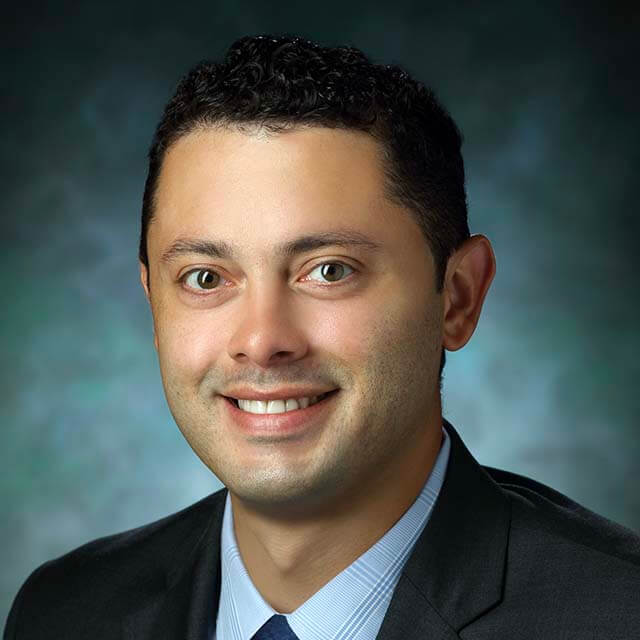
After discussing treatment options with the team, Keara underwent robotic MALS release surgery. Garcia — a specialist in robotic surgery — performed the procedure, during which parts of the median arcuate ligament are cut to reduce compression on the celiac artery and nerve system. Just days later, Keara could eat again, and even returned to the soccer field six weeks later.
About nine months after the surgery, though, all of her initial symptoms returned. Tests showed that the MALS had remained, this time due to scar tissue buildup in the celiac artery. A second surgery was performed in December 2024. This time, the rarer open-surgery technique was performed to remove the scar tissue and some additional nerves causing issue.
Though it took Keara longer to recover from the open surgery, her MALS symptoms subsided and have not returned. She returned to playing sports the following spring, a welcome shift back to some of the normalcy lost when the symptoms began.
“The care that Keara has received and the overall experience has been so positive,” says Keara’s mom, Kathy. “Many people struggle with just being heard, and we felt like they heard Keara.”