Building Tomorrows Leaders

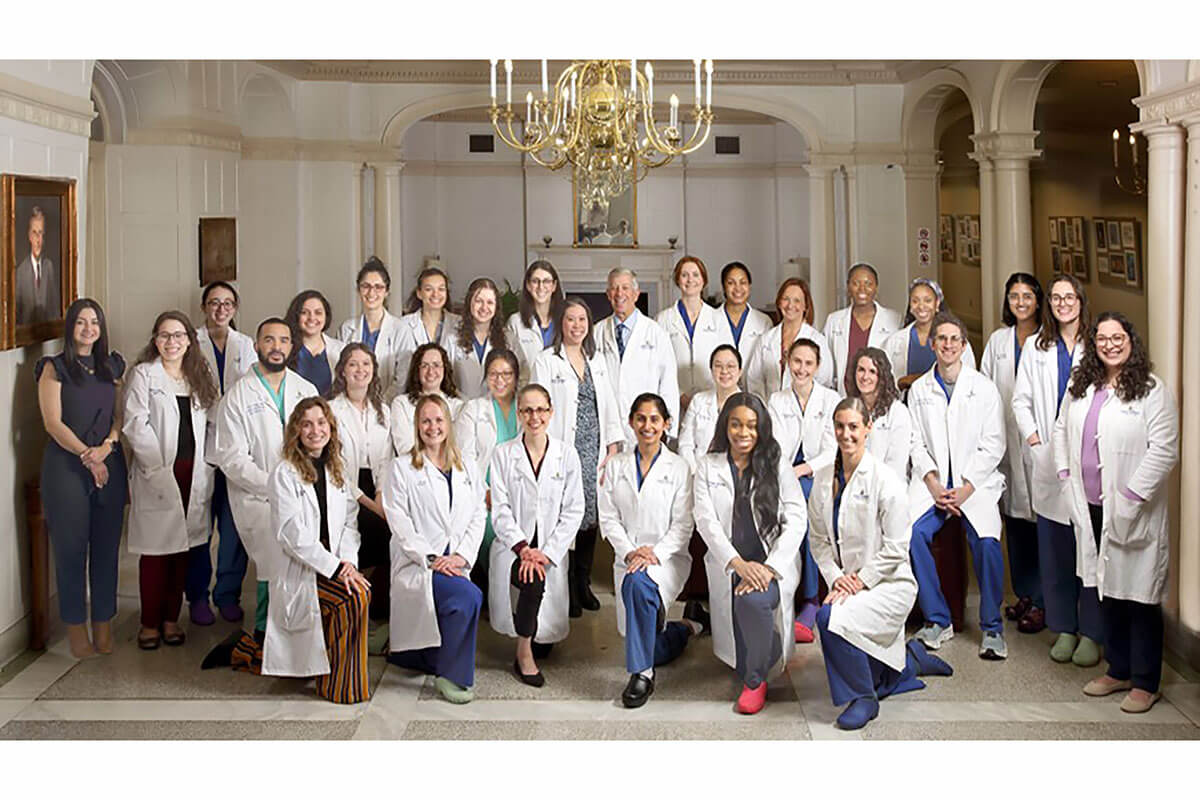
Gynecology Residency Group in 2025

At Johns Hopkins, building tomorrow’s leaders in obstetrics and gynecology is not just a mission—it’s a movement grounded in excellence, purpose, and a deep commitment to the future of women’s health. Our postgraduate training program blends rigorous clinical immersion with focused subspecialty development, preparing physicians to lead with both skill and vision. Residents rotate through a wide range of settings—from high-volume labor and delivery units to complex gynecologic oncology clinics—gaining hands-on experience in every facet of reproductive health. The depth and breadth of this exposure reflect the multifaceted demands of modern medicine and the evolving needs of the communities we serve.

Leadership at Johns Hopkins is not confined to clinical acumen—it is cultivated through mentorship, scholarly inquiry and an environment that encourages questioning the status quo. Our faculty members are more than educators; they are role models guiding the next generation through a rapidly changing health care landscape. Graduates leave our program with the confidence to lead teams, advance health equity, and shape policy, practice, and education in ways that extend far beyond the clinic. This is training with a purpose—empowering physicians not only to deliver outstanding care, but to transform the systems and societies in which that care is delivered.

Residency

Founded in 1889 by Howard Atwood Kelly — a pioneer in establishing gynecology as a recognized medical specialty — the Department of Gynecology and Obstetrics has a long-standing tradition of training leading clinicians and surgeons. For more than a century, it has maintained a distinguished reputation for its premier residency program, producing exceptional clinicians, researchers, educators and leaders in the field.

This dynamic program offers well-rounded medical and surgical training along with opportunities in leadership, research, quality improvement and patient advocacy. The program, led by top clinicians and researchers, fosters a culture of discovery, encouraging residents to pursue and share knowledge in areas like medical ethics, community outreach, health care policy and global health initiatives.

Training Program

Each year, the residency program welcomes interns for four years of comprehensive training in general gynecology and obstetrics, with extensive exposure to subspecialties such as:

  • Maternal-fetal medicine
  • Gynecologic oncology
  • Urogynecology and pelvic reconstructive surgery
  • Complex family planning
  • Minimally invasive gynecologic surgery
  • Reproductive endocrinology and infertility

Residents gain a diverse range of experiences through rotations at three primary hospitals:

  • The Johns Hopkins Hospital: A subspecialty-oriented tertiary care center.
  • Johns Hopkins Bayview Medical Center
  • Greater Baltimore Medical Center

Career Preparation

The program prepares residents for successful careers and leadership roles. More than 70% of graduates secure fellowship positions, while others pursue paths in critical care, bioethics, advocacy and service with organizations such as Doctors Without Borders and the Indian Health Service.

Fellowships

Complex Family Planning

The Complex Family Planning Fellowship Program at Johns Hopkins is a comprehensive two-year program aimed at cultivating leaders in clinical care, research and advocacy. This fellowship, accredited by the Accreditation Council for Graduate Medical Education (ACGME), is guided by experienced faculty members who specialize in complex family planning. Fellows receive advanced training in first and second trimester abortion and complex contraception at the Johns Hopkins Center for Family Planning, which serves patients with medically intricate conditions in the Baltimore and Washington, D.C., area. The program fosters skills in advocacy and education, ensuring that fellows are well-prepared to offer a range of family-planning options.

Global Women's Health

The Johns Hopkins Global Women’s Health Fellowship Program is a two-year program that addresses women’s health issues in resource-limited settings. This interdisciplinary fellowship, a collaboration with Jhpiego and the school of nursing, pairs physicians with health care professionals, fostering collaborative learning and research. Fellows gain the skills necessary to implement clinical, educational and research initiatives that affect maternal and child health in underserved communities across Africa, Asia and the Americas. The program expands the network of health care providers who are equipped with global health competencies, promoting sustainable health solutions and improving the well-being of women worldwide.

Gynecologic Oncology

The Johns Hopkins F.J. Montz Gynecologic Oncology Fellowship Program is a three-year program with one to two fellowship positions available each year. Its goal is to train excellent abdominal-pelvic surgeons — clinicians who are well-versed in oncology, palliative and oncofertility care. Many graduates become leaders in the field and serve in faculty positions at top U.S. academic centers.

Maternal-Fetal Medicine

The Maternal-Fetal Medicine Fellowship Training Program is a clinical and research-oriented program that provides advanced training in high-risk obstetrics and prenatal care. Educational objectives align with ACGME and American Board of Obstetrics and Gynecology competencies. Focused on the needs of pregnant patients and their fetuses, the fellowship includes clinical experience with prenatal diagnostics and therapeutic procedures. Fellows benefit from mentorship by experienced faculty, enhancing their clinical and research skills in maternal health.

Minimally Invasive Gynecologic Surgery

The AAGL-accredited Minimally Invasive Gynecologic Surgery (MIGS) Fellowship Program, established in 2018, is a highly selective two-year program. The program emphasizes rigorous training in advanced surgical approaches for benign gynecologic disorders. Fellows gain extensive experience in operative hysteroscopy, advanced laparoscopy and robotic surgery. Rotating through multiple Johns Hopkins facilities, they handle a range of complex cases. The fellowship aims to produce exceptional MIGS surgeons who will lead in academic and clinical settings, enhancing patient care with innovative, minimally invasive solutions.

Reproductive Endocrinology and Infertility

Established in 1973, the Johns Hopkins Reproductive Endocrinology and Infertility Fellowship Program trains future leaders in reproductive medicine. Over 65 graduates have emerged from this fellowship, many assuming leadership roles as division chiefs, department heads and deans. The fellowship encourages research productivity, with fellows contributing to numerous peer-reviewed publications. This rigorous training prepares graduates for successful careers in both academic medicine and private practice.

Urogynecology and Reconstructive Pelvic Surgery

The Urogynecology & Reconstructive Pelvic Surgery Fellowship Program is an ACGME-accredited program providing extensive clinical training in diagnosing and managing complex pelvic floor disorders. Through comprehensive training, fellows develop advanced surgical techniques, conduct impactful research and enhance their leadership capabilities.