
Division of Gynecologic Oncology
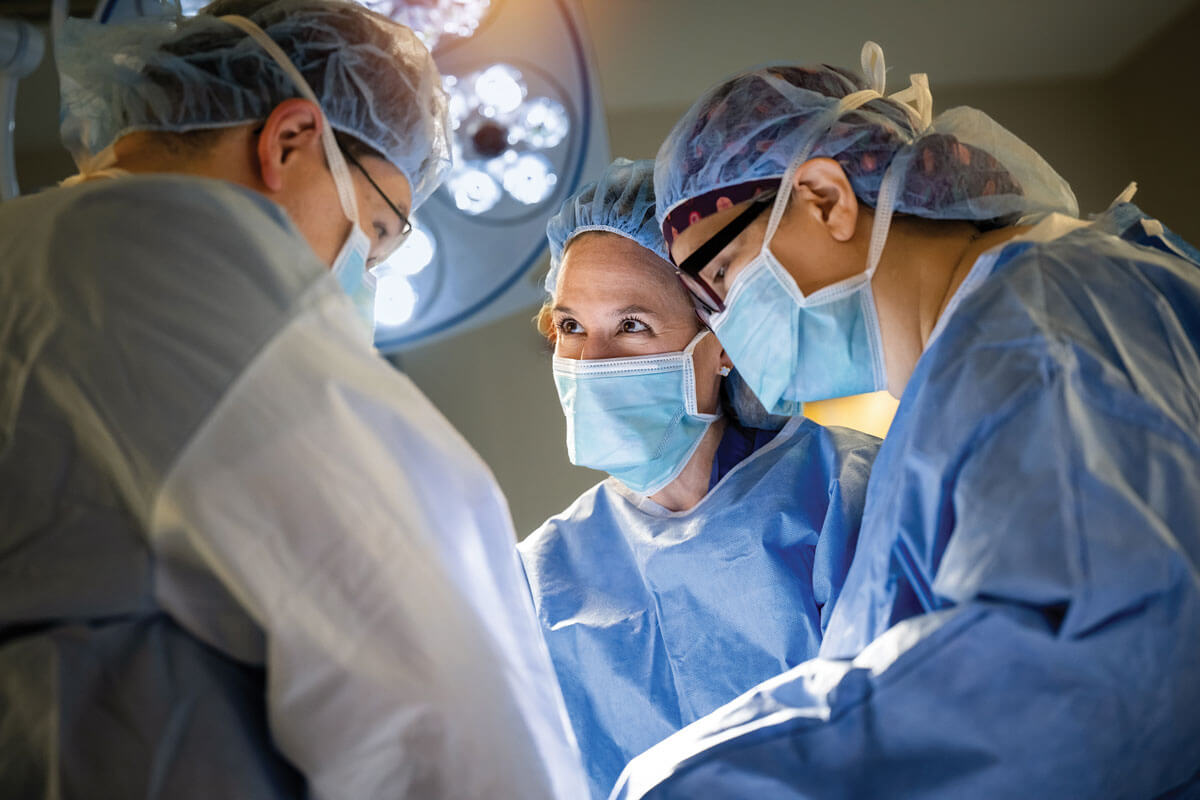
Rooted in the pioneering legacy of Howard Atwood Kelly, the Johns Hopkins Kelly Gynecologic Oncology Service (KGOS) has been setting and raising the standards of gynecologic cancer care since 1889. Situated within the Department of Gynecology and Obstetrics to advance the broader mission of championing women’s health, the service supports the National Cancer Institute (NCI) designation and other core functions of the Sidney Kimmel Comprehensive Cancer Center. There, KGOS actively leads and participates in a wide array of national and international collaborative trials. The team includes 11 gynecologic oncologists — seven based in Baltimore and four in the National Capital Region — alongside expert pathologists as well as medical and radiation oncologists.
This dream team, covering four hospitals and six outpatient centers, provides highly specialized care to patients from broad geographic and cultural backgrounds. While many are burdened with some of the most complex ovarian, fallopian tube, uterine, cervical and vulvovaginal cancers, their outcomes consistently surpass national and global benchmarks. Success is driven by a steadfast commitment to precision medicine, surgical excellence, pioneering clinical trials and innovative prevention strategies. Notably, the KGOS model ensures that all patients — whether hospitalized or seen in clinic — continue to receive direct care from board-certified gynecologic oncologists. Award-winning nurses and staff members foster a long-standing culture of service excellence and personal connection with patients and their families. In March 2025, the Armstrong Institute Organizational Resilience Team recognized the Johns Hopkins Hospital inpatient unit as a Best Practice Area, earning top scores in safety culture, employee engagement and patient experience.
The KGOS faculty members at Johns Hopkins are steadfastly committed to delivering comprehensive, high-quality care across the full spectrum of gynecologic oncology. Anchored by four core faculty based at The Johns Hopkins Hospital, the team administers over 1,000 chemotherapy cycles annually — despite a national trend that has seen 30% to 40% of gynecologic oncologists step away from this responsibility due to its growing complexity and demands. This speaks to the group’s dedication and depth of expertise in managing even the most resource-intensive treatments.
Each year, the KGOS team evaluates more than 1,000 new patients, with over 90% presenting with either a confirmed diagnosis or elevated risk of gynecologic cancer. The surgical volume is equally significant, with more than 2,000 operations performed annually. Many of these are high-complexity procedures conducted in collaboration with other specialties, reflecting the group’s leadership in multidisciplinary cancer care. Notably, 10% of surgeries on the East Baltimore campus are joint procedures — 93% of which involve non-gynecologic cancer or acute care indications. KGOS surgeons are regularly called upon to assist in cases beyond their traditional scope, such as colorectal cancer, underscoring their integral role in broader surgical oncology efforts.
The group’s impact extends well beyond the main campus. At Johns Hopkins Howard County Medical Center, 84% of all scheduled KGOS surgeries now address preinvasive or invasive gynecologic cancers — a dramatic rise from just five years ago. This shift reflects both increasing community need and the expanding footprint of Johns Hopkins gynecologic oncology services. Additionally, the team is advancing cancer prevention efforts, performing nearly 100 risk-reducing procedures annually at the East Baltimore location alone. With plans underway to establish a center of excellence for gestational trophoblastic disease, the division continues to build on its legacy of innovation, access and leadership.
Beyond clinical excellence, KGOS is equally committed to education, advocacy and research. Its three-year fellowship program celebrated its 50th anniversary last year and evolves to meet the demands of a rapidly changing health care landscape. Faculty lead advocacy efforts at the local, state and national levels — addressing social determinants of health, expanding the role of community health workers, improving coverage for gynecologic cancer prevention, increasing cancer research funding, and helping to shape policy responses to crises like chemotherapy drug shortages. The division’s research portfolio spans the spectrum of gynecologic oncology, from surgical stress and recovery to immunotherapy, clinical trials and cancer genomics. By integrating research into clinical practice, KGOS pushes the evolution of gynecologic cancer care forward for all.
Clinical initiatives
Break Through Cancer Initiative
KGOS plays a leading role in the Break Through Cancer Initiative — a paradigm-shifting effort for the early detection and prevention of ovarian cancer. With mounting evidence that many ovarian cancers begin in the fallopian tubes, this initiative is pioneering imaging techniques, screening strategies and preventive surgical approaches tailored to women with varying levels of risk. This initiative catalyzed a national public health campaign to expand access to and awareness of options for ovarian cancer prevention. The ultimate vision: a future in which ovarian cancer is no longer a major threat because prevention is a standard of care that all people know about and are empowered to choose.
We’ve never really had the promise of prevention like this in medical history — that one could choose to remove an anatomic structure that has no known function after childbearing to prevent a lethal cancer later in life.
Rebecca Stone, M.D., Director, Kelly Gynecologic Oncology Service
Center for Rare Gynecologic Cancers
KGOS is home to one of the only dedicated programs for individuals with uncommon gynecologic malignancies. The Center for Rare Gynecologic Cancers features an innovative approach to precision-based medicine through groundbreaking clinical trials and research, improving outcomes with cutting-edge treatments tailored to each patient’s unique tumor and genetic profiles. This includes advancing immuno-oncology through collaboration with the Bloomberg~Kimmel Institute for Cancer Immunotherapy, a global leader in next-generation immunotherapy. The program focuses on identifying predictive biomarkers, developing personalized treatment strategies and leading trials in checkpoint inhibitors, targeted and adoptive cell therapy, and cancer vaccines. This audacious endeavor expands therapeutic options for patients whose cancers do not fit standard treatment paradigms.
Endometrial Cancer Prevention and Early Detection: Womb for Improvement

While the incidence and mortality rates of most solid tumors are decreasing or plateauing, endometrial (uterine/womb) cancer is one of the few malignancies experiencing a global rise in both incidence and death rates. The KGOS team is dedicated to reversing these concerning trends through pioneering research in prevention and early detection. Their efforts focus on developing novel genomic cancer detection platforms and conducting population-based studies to better understand and reduce the underlying risk factors associated with this disease.
National Cancer Institute SPORE Pioneers
Johns Hopkins is the only institution in the U.S. to lead two NCI-funded Specialized Programs of Research Excellence (SPORE) initiatives in gynecologic cancers. The Cervical Cancer SPORE — co-led with the University of Alabama — is led by pioneers in immunotherapy who are advancing next-generation HPV vaccines and therapeutic strategies. In parallel, the Ovarian Cancer SPORE — co-led with the University of Pennsylvania — focuses on early cancer detection using biospecimens such as cervical fluid and blood, and on developing therapies for the most treatment-resistant tumors. These efforts are already shaping the future of care, offering earlier diagnoses, more effective treatments and renewed hope for patients facing some of the most lethal cancers in women’s health.
Ovarian Cancer Center of Excellence
In collaboration with the Sidney Kimmel Comprehensive Cancer Center, KGOS established its Ovarian Cancer Center of Excellence — one of the first in the nation — to push multidisciplinary, patient-centered care to new heights. Co-led with medical oncologists, nurses, pathologists, radiologists and researchers who have specialized expertise in ovarian cancer, the center offers radical cytoreductive surgery, intraperitoneal and heated intraperitoneal chemotherapy (HIPEC), comprehensive genomic profiling for precision therapy, and access to groundbreaking clinical trials.
A Game-Changer for Ovarian Cancer

Surgical Innovation & Patient Safety
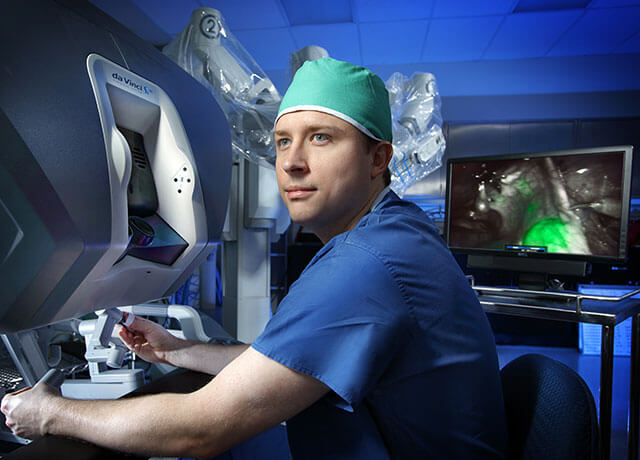
For over a decade, KGOS patients undergoing major surgery have benefited from perioperative care that follows Enhanced Recovery After Surgery (ERAS) protocols. This investment has reduced complications, shortened recovery time and minimized opioids for thousands of women. It has also facilitated the growth of the Surgical Research Program. The diverse research portfolio and a postdoctoral research fellowship are now supported by industry, foundation and NCI grants.
The program brings translational research closer to the bedside through a 24/7 biospecimen processing lab embedded within the inpatient unit. It also serves as an incubator for electronic medical record-based data-streaming solutions, as well as novel patient education and engagement tools. In tandem, KGOS is pioneering and studying novel surgical approaches to minimize the toll cancer takes on patients’ lives and aspirations. Among these, uterine transposition surgery — a fertility-preserving procedure for patients undergoing pelvic radiation — offers new possibilities in reproductive oncology.
Cancer Survivorship Programs
At KGOS, cancer care extends beyond treatment. The Susan L. Burgert Gynecologic Cancer Survivorship Program provides comprehensive, multidisciplinary support focused on physical recovery, emotional well-being, long-term side effect management and survivorship planning. By striving to balance survival and quality of life, the KGOS survivorship work helps create opportunities for recovery and renewal after cancer. The program also emphasizes community by building networks where patients and caregivers find support, shared experience and practical resources. Through a partnership with Hopkins Community Connection, KGOS launched routine screening for social resource needs in the outpatient setting. This effort, called Resource EQuIP (Equity through Quality Improvement Partnerships) — funded by multiple entities, including philanthropy — has connected hundreds of women and their families to resources for food, housing, transportation, utilities and other essential needs. This resource embodies the heart of KGOS because healing from cancer begins with meeting the needs that extend far beyond medical care.