The Johns Hopkins Epilepsy Center has unparalleled experience treating both children and adults with even the most complex seizure disorders. We partner with patients and families throughout all stages of care — from initial seizure diagnosis to long-term management.
The center has earned a Level 4 Center accreditation by the National Association of Epilepsy Centers, which is offered to centers that provide the highest level of comprehensive, specialized epilepsy care.
Schedule an Appointment
Schedule by phone
Adult patients: 410-955-9441
Pediatric patients: 410-955-9100

Schedule online through MyChart

Epilepsy Clinical Trials at Johns Hopkins

Frequently Asked Questions
-
Our center offers advanced diagnostic and treatment approaches for epilepsy, including epilepsy monitoring units, neuromodulation procedures and ketogenic diet therapy. As such, our center is designated as level 4 (highest level) by the National Association of Epilepsy Centers.
-
We treat all types of epilepsy, including focal and generalized epilepsy, as well as epilepsy of unknown origin. We also treat complex forms of epilepsy with mixed seizure patterns such as Dravet syndrome, West syndrome and benign Rolandic epilepsy.
A seizure does not always mean that you have epilepsy. Our team can help patients better understand the reason behind their seizures and how to best address them.
-
Yes, the Johns Hopkins Epilepsy Center provides care for people of all ages who have epilepsy or another seizure disorder. We also have specialized adult and pediatric epilepsy monitoring units (EMUs).
-
Epilepsy care often requires experts from multiple specialties. Our center brings together experts from across Johns Hopkins to create a comprehensive treatment plan and make it easier for patients to coordinate care. Our team includes specialists in these fields:
- Neurology, including epileptology
- Neurosurgery
- Pediatrics
- Genetic medicine
- Nutrition
-
Our center takes a comprehensive approach to epilepsy care. Our services include:
- Diagnostic care:
- First Seizure Clinic for people who have experienced a seizure for the first time.
- Epilepsy monitoring units to help capture and diagnose seizure activity.
- Genetic testing to better understand the type of epilepsy and how effective various treatments may be.
- Treatments
- Consultations to assess current epilepsy care
- Medication management to control symptoms
- Ketogenic diet therapy
- Surgery
- Diagnostic care:
-
Johns Hopkins clinicians participate with many commercial health insurance plans.
Learn more about the insurance plans we accept, and be sure to check with your insurer to confirm your plan’s benefits.
Webinar: Diet Therapy for Adults and Children with Epilepsy
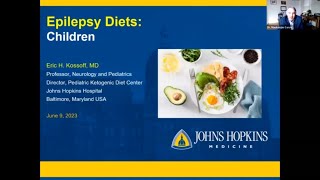
Epileptologists Mackenzie Cervenka and Eric Kossoff discuss the role of diet therapy in epilepsy treatment for both adult and pediatric patients. Watch to learn more about the different types of diets and what to expect.
Patient Stories
Lani's Story
At 3 years old, Lani began suffering from dozens of seizures a day. Johns Hopkins Children’s Center pediatric neurologist Eric Kossoff, M.D., diagnosed Lani with Doose syndrome and recommended she start ketogenic diet, which proved successful for Lani.

Morgan’s Story
Daily seizures were severely affecting Morgan’s quality of life as a teenager in middle school. When her family learned she would need surgery for her epilepsy, they turned to pediatric neurosurgeon Shenandoah “Dody” Robinson at Johns Hopkins.

Jeannie's Story
A viral infection left Jeannie with epilepsy that couldn't be controlled by medication. Drs. Gregory Krauss and William Anderson removed the injured brain tissue. Fifteen months later, Jeannie is seizure-free and enjoying life.