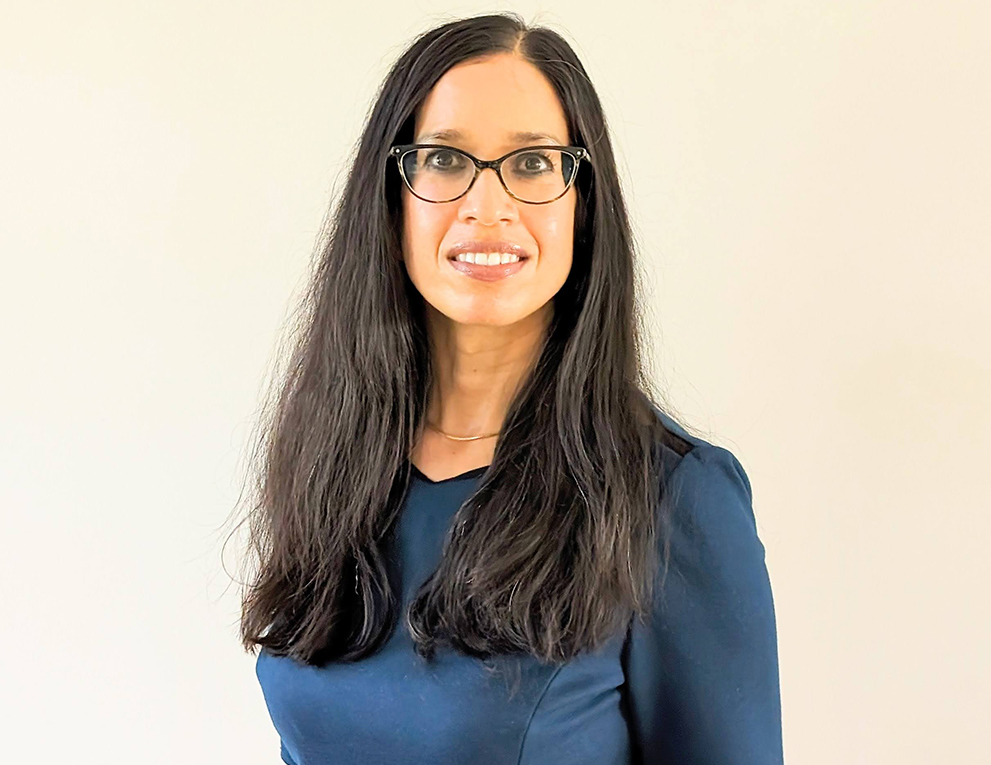
Securing the Future of AI in Cancer Medicine
Learn More About Janet Rathod, M.P.A

Artificial intelligence is reshaping cancer research and treatment at an astonishing pace — so swiftly, in fact, that some experts compare it to the early days of the internet. At Johns Hopkins, leaders are determined that this progress will always be matched with equal care in protecting the sensitive patient and research data that fuel discoveries.
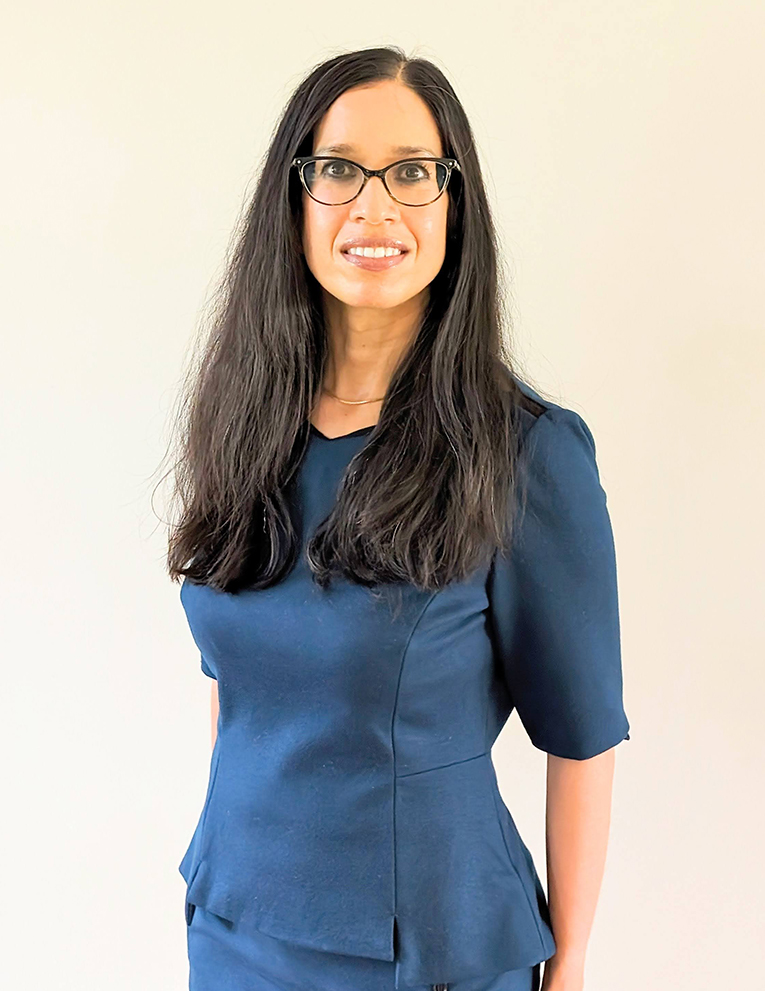
“Cybersecurity is a team sport,” says Janet Rathod, vice president and chief information security officer at Johns Hopkins. With more than two decades of experience leading security efforts in government and industry, Ms. Rathod is guiding Johns Hopkins through a new era in which data is the engine of innovation but also has the potential to be the target of new threats.
As the Kimmel Cancer Center employs the tools of AI to advance cancer discovery and medicine, its experts are looking to Ms. Rathod and her team of technical experts for guidance.
Innovation Meets Security
Kimmel Cancer Center investigators are using AI to read pathology slides, map genomes, interpret imaging scans, and study blood tests, known as liquid biopsy, with unprecedented speed and accuracy. These tools hold the promise of earlier detection, more precise treatments, and faster development of new therapies.
“However, key to using AI to aid in these advances is the certainty that we have gained and will protect the trust our patients and families place in our institution when they share their most personal information,” Ms. Rathod says.
Preserving that trust begins with rigorous safeguards. Johns Hopkins uses what is called a defense-in-depth strategy — multiple overlapping layers of protection so no single point of failure can put information at risk, Ms. Rathod explains. Technical controls, such as advanced firewalls, intrusion prevention systems, network detection tools, and log collection act like security cameras and motion sensors, quietly watching for anything unusual and alerting experts if something doesn’t look right. Regarding AI specifically, Ms. Rathod’s team conducts a thorough security assessment of AI vendors and products. Over the past few years, the cybersecurity team advanced their AI skills by learning how to build large language models. This enabled them to understand the technology from the ground up, so they can better recognize how to secure it.
Governance and Ethics
The practice of medicine is already highly regulated, and has many guardrails in place that prioritize the safety of patients. Government regulations, such as HIPAA, provide strong safeguards for privacy. Building on this, Johns Hopkins has created new councils and committees to guide how AI is used.
The Data Trust Council and its subcouncils are setting standards for research data, privacy, security, and stewardship. A newly established IT Policy Committee oversees IT policies and guidelines for AI, while a privacy subcouncil, co-chaired by Ms. Rathod, works hand in hand with Johns Hopkins attorneys to protect our patients and their medical data. These subcouncils build in checks and balances, policies, and legal oversight to ensure AI at Johns Hopkins is developed and deployed responsibly, protecting patients and upholding the institution’s ethical standards.
Johns Hopkins recognizes that AI systems have the potential to bring about significant benefits when properly vetted and used within a framework that balances privacy, security, ethical, legal and social considerations with a focus on ensuring safe deployment.
“AI is another tool of science, and we are treating it with the same seriousness and responsibility as we make sure it is safely and securely deployed,” Ms. Rathod says.
Collaboration Without Compromise
Advancing cancer research and treatment requires collaboration. The Kimmel Cancer Center is a founding member of the Cancer AI Alliance, a partnership with other leading cancer centers. Instead of sending data back and forth, the alliance uses federated models, systems that let each institution keep its data secure while still contributing to collaborative research. This is an example of how AI allows scientists from different cancer centers to work together without sacrificing the security or privacy of their patient data.
For Rathod, the most reassuring measure of success is that innovation has not slowed.
“We have not compromised on speed or discovery,” she says. “By building strong security from the ground up, we’ve created an environment where scientists can move quickly and safely.”
Building Trust for Tomorrow
Patients and donors alike often ask how their information is being protected. For Ms. Rathod and team, the answer is clear: Security and privacy are not afterthoughts, they are built into the foundation of its AI efforts. That reassurance is vital in an age when headlines about hacked data or manipulated information can easily erode confidence.
“The science is moving fast, but so are we,” Ms. Rathod says. “With strong governance and ethical guardrails, we are ensuring that AI lives up to its promise to bring faster cures, earlier detection, and more personalized care while also keeping patient trust at the center of everything we do.”
Cybersecurity is a team sport
Janet Rathod, M.P.A.