


-
Justin Omar Benabdallah, MD
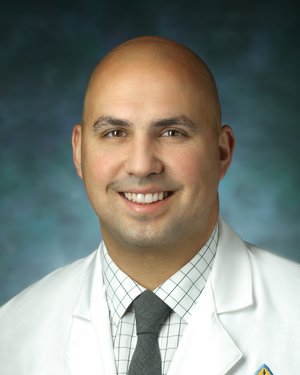
Expertise: Urology
Primary Location: Sibley Memorial Hospital, Washington, DC
-
Arthur Burnett, MD

- Director, Basic Science Laboratory in Neuro-Urology
Expertise: Urology
Primary Location: Levi Watkins, Jr., M.D., Outpatient Center, Baltimore, MD
-
Andrew Cohen, MD

- Division Director, Benign Urology
Expertise: Gender Affirming Care, Reconstructive Urology, Urology
Primary Location: Johns Hopkins Bayview Medical Center, Baltimore, MD
-
Amin Herati, MD

- Director of Male Infertility and Men’s Health
Expertise: Urology
Primary Location: Johns Hopkins Health Care & Surgery Center - Green Spring Station, Lutherville, Lutherville, MD
-
Mahir Maruf, MD

Expertise: Urology
Primary Location: Johns Hopkins Health Care & Surgery Center — Bethesda, Bethesda, MD
-
Naren Nimmagadda, MD

Expertise: Urology
Primary Location: Johns Hopkins Health Care & Surgery Center - Green Spring Station, Lutherville, Lutherville, MD
-
Arun Rai, MD MBA MS

- Director, Brady Urological Institute Quantitative Data Sciences
Expertise: Urologic Oncology, Endourology and Stone Disease, Minimally Invasive Urology, Urology
Primary Location: Johns Hopkins Health Care & Surgery Center - Green Spring Station, Lutherville, Lutherville, MD
-
Jamie Wright, MD

- Director of Urology, Johns Hopkins Bayview Medical Center
Expertise: Urology, Neurourology, Urogynecology
Primary Location: Johns Hopkins Bayview Medical Center, Baltimore, MD
Conditions We Treat: Benign Prostatic Hyperplasia (BPH)
Benign prostatic hyperplasia (BPH) is a noncancerous enlargement of the prostate gland and the most common benign tumor found in men. BPH produces symptoms by constricting the flow of urine through the urethra.
Request An Appointment Request An Appointment
Schedule by phone
Adults: 410-955-6100

Benign Prostatic Hyperplasia: Why Choose Johns Hopkins
- Our team is at the forefront of BPH care, researching new ways to relieve BPH symptoms, boost our patients’ quality of life, including developing effective, minimally invasive treatment techniques.
- Our highly skilled team provides attentive care to the full spectrum of patients, whether symptoms are minor or more severe.
- You will receive thorough and ongoing care management, featuring regular follow-up to ensure your treatment plan is working well for you.
Treatment for Benign Prostatic Hyperplasia
Treatment for BPH, which involves different approaches to increasing urinary flow, is usually only necessary if your symptoms are bothersome. You’ll want to make an appointment with a Johns Hopkins BPH expert to learn more about your treatment options. These may include:
- Monitoring. For patients with minimal symptoms, this strategy includes regular checkups and testing to monitor the condition. Treatment only begins when the condition progresses.
- Medications. A variety of drug treatments work to relieve symptoms by either shrinking the prostate or by relaxing the prostate muscle.
- Prostatic Urethral Lift (PUL). Minimally invasive treatment option that can open the urethra with permanent implants.
- Transurethral prostatectomy (TURP). The gold standard for treating BPH, this procedure requires no incision. Instead, part of the prostate is removed through the penis.
- Aquablation. This minimally invasive procedure uses a robotically guided camera and ultrasound imaging to map the prostate. The map is used to guide a high-pressure, heat-free water jet to remove excess prostate tissue.
- Holmium Laser Enucleation of the Prostate (HoLEP). This minimally invasive procedure uses a light beam called a holmium laser to remove the interior tissue of the prostate and relieve bladder obstruction.
- Simple prostatectomy. During this procedure, the surgeon removes the inner portion of the prostate.
Holmium Laser Enucleation of the Prostate (HoLEP) Procedure | Q&A
Naren Nimmagadda, M.D., assistant professor of urology, explains the HoLEP procedure and answer common questions about who is a good candidate as well as what to expect during recovery.
Benign Prostatic Hyperplasia Experts
Our multidisciplinary team of experienced urologists will work with you to develop a treatment plan.