Pediatric Food Allergy Testing and Treatment
We provide comprehensive care including allergy testing and treatment for children of all ages with suspected or confirmed food allergy in the Food Allergy Clinic at Johns Hopkins All Children’s in St. Petersburg, Florida. We work with families to help them learn how to best manage their child’s allergy at home and school.
Why Choose Johns Hopkins All Children’s
Expert, Specialized Pediatric Food Allergy Care
Our program is the first hospital clinic in Florida dedicated to pediatric food allergy. Our expert team treats children with all types of food allergies, including the most severe, practicing evidence-based medicine to provide your child with the testing and treatment that best meets their individual needs.
Whether your child’s reaction was mild or severe, or due to a single or multiple foods, we will work with you and your children and guide you through the process of additional testing and treatment options.
Comprehensive Testing and Treatment Options
We provide in-depth diagnostic services for food allergies, including skin testing and blood testing. We offer oral immunotherapy as well as Xolair, currently the only FDA-approved biologic for food allergies.
Safe, Hospital-Based Oral Food Challenges
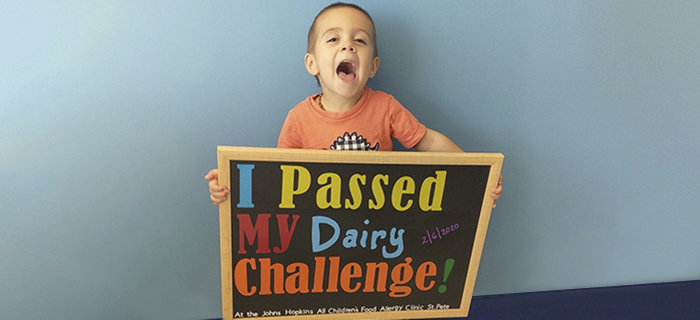
We are among the few centers that provide oral food challenge services. An oral food challenge (OFC) is the "gold standard" medical test used to accurately diagnose or rule out a food allergy. It is a highly supervised medical procedure where a patient is given gradually increasing amounts of a suspected allergen to see if a physical reaction occurs. As a hospital-based program, we are able to offer this service in a safe environment with access to the hospital’s emergency medicine services if a patient has a severe reaction during an oral food challenge.
Our food allergy team is experienced in providing oral food challenge services, and the hospital’s emergency medicine specialists have expertise in responding to a full range of emergency medical needs in children of all ages. We serve as a referral center for providers who refer patients to us for oral food challenges.
Family Education for Food Allergies
Having a food allergy can be stressful for the child and the whole family. We provide patient and family education, including topics like:
- Recognizing the signs of an allergic reaction
- When and how to use emergency allergy medication such as epinephrine (a medication that treats an acute allergic reaction, and is available as an injection or a nasal spray)
- How to read food/nutrition labels
- Dietary guidance and recommendations on food avoidance and safe alternative substitutes
- Safe reintroduction of foods back into the diet under medical guidance
- Recommendations on new and emerging therapies and treatment options
We provide information and guidance to help you manage your child’s allergy outside the home at school, daycare, summer camp, social events like birthday parties and other places.
Conditions We Treat
- Food allergy and its related conditions, such as eczema and anaphylaxis
- Food protein-induced enterocolitis syndrome (FPIES), or inflammation of the digestive tract that causes vomiting and diarrhea triggered by certain foods, usually milk, soy, rice or grains
- Food protein-induced allergic proctocolitis (FPIAP), or inflammation of the rectum and colon that causes diarrhea or blood in stools triggered by certain foods, usually milk or soy
- Food intolerance
- Eosinophilic esophagitis (EOE)
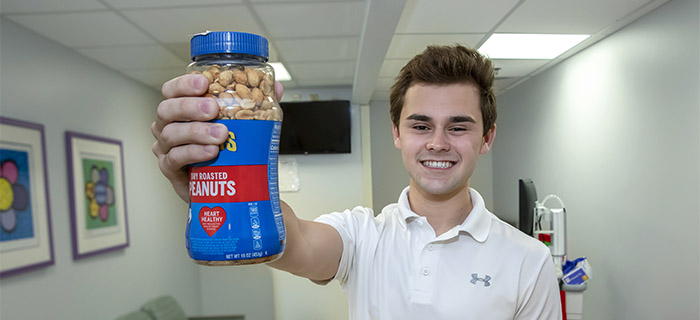
Some of the most common allergens in children are milk, egg, peanut, tree nuts (including walnut, pecan, almond, cashew, hazelnut and pistachio), wheat, soy, fish, shellfish and sesame seed.
Services We Provide
- Skin testing for food allergy
- Blood test for evaluation of food specific Immunoglobulin E (IgE) levels and component resolved diagnosis (CRD). These blood tests help us check for food allergy-related antibodies and learn more about what may be causing symptoms.
- Oral food challenge
- Oral immunotherapy
How We Diagnose Food Allergies
Skin test
During a skin test (sometimes called a prick test), we apply to the child’s back or arm a set of devices coated with the known allergen extracts for which we want to test. The device has small prongs that will create minor scratches on the skin and allow the allergen extracts to penetrate. If your child has a type of food allergy known as “IgE-mediated reaction” a small wheal reaction (which looks like a raised, red bump that flairs from the middle) likely will develop at the testing site and allow us to confirm the allergy.
Skin testing is usually a reliable method for food allergy diagnosis, with results available in 15 minutes. We will carefully select the allergen extracts for your child’s skin test depending on his or her history. Skin testing can be done during a regular clinic visit. Patients should avoid antihistamines for five days prior to testing.
Blood test
Blood testing, now available for a wide range of food items, is used in conjunction with a skin test for food allergy evaluation. The blood test measures the immunoglobulin E (IgE) antibody specific to each food being created by your child’s immune system. Component resolved diagnosis (CRD) to some foods such as peanut, hazelnut, egg and milk may be used in addition to IgE testing.
Oral food challenge
An oral food challenge is an elective test in which the patient slowly eats small amounts of food to confirm or rule out a suspected allergy. An oral food challenge will take three to four hours.
The family will bring the food their child is testing to the appointment. A week before your child’s oral food challenge, we will call you to confirm the foods we will test and the ingredients you should use.
On the day of the appointment, you will be required to bring two epinephrine autoinjectors with you, in case your child has a delayed reaction on the way home from your appointment. After taking your child’s vital signs, we will start by giving him or her a very small amount of the food you prepared for the test and monitor for a reaction. If your child does not have a reaction, we will increase the amount of food given every 15-20 minutes and continue to observe them for an hour after the last dose.
Completing an oral food challenge in a controlled environment allows us to monitor for and treat an allergic reaction to confirm foods your child does or does not need to avoid.
Treatment Options for Food Allergies
There are several treatment options for food allergies. We will discuss which treatments may best meet your child’s needs, depending on their individual condition.
Some treatments include:
FDA-approved treatment Xolair
This is the only FDA approved treatment that can be used to reduce allergic reactions, including severe reactions such as anaphylaxis, following accidental exposure to one or more foods. It may be used alone to reduce the risk of anaphylaxis in some patients, or in some patients it may be used along with oral immunotherapy to help reduce reactions during the process of oral immunotherapy. We will discuss your child’s candidacy for Xolair with you as not all patients are candidates for this treatment.
Oral immunotherapy
We offer oral immunotherapy treatment for common food allergies including peanut, tree nuts (cashews, pistachios, walnuts, pecan, hazelnuts), egg, milk and sesame. Other foods can be considered. Patients ingest very small amounts of the allergen in our office, so they can be monitored and treated for a reaction as needed. The amount ingested is gradually increased over a period of several months to help the patient become desensitized to the food.
Oral immunotherapy will not cure a child’s allergy, but the treatment can desensitize children to their food allergen so that they experience less severe reactions if they come into contact with something containing the allergen, which can help to alleviate the stress many families feel in navigating their child’s food allergy.
Oral immunotherapy is available as a self-pay service due to current insurance billing limitations; eligible patients may be able to use HSA/FSA funds.
What to Expect
Your child’s first appointment will include a physical exam and we will take a complete history, including any reactions they have experienced to foods, and review any past treatments or test results your child may have had.
Families should bring the following to their child’s appointment:
- A list of all suspected reactions, including what food was eaten, symptoms, and timing
- A list of your child’s current medications
- Previous allergy testing results if available
Skin testing for food allergies may be done the same day if the patient is ready and takes about 15 minutes. In most cases you will receive the results of your child’s skin test before you leave. Your child will need to stop taking any antihistamines five days prior to the appointment for skin testing.
This appointment will generally be about an hour. We will recommend additional testing, such as blood testing, as needed.
If your child’s allergist has referred your child for an oral food challenge, please bring allergy testing results, labs, and previous appointment notes to your child’s appointment.
Information for Referring Providers
When patients are referred to our clinic, we will work closely with the patient’s referring provider to coordinate their care. Patients are often referred to us for oral food challenges and continue to follow with their regular specialist.
To refer a patient to the clinic, please fax a referral with visit notes and any allergy test results to 727-767-8711.
Learn More About Food Allergies
Typically, our immune systems work to fight infection and disease. When your child has a food allergy, it means his or her immune system reacts to that particular food as if it is harmful. When your child comes in contact with that food, their body releases chemicals to fight against the food allergen, causing allergic symptoms that can affect different parts of the body, such as the respiratory system or gastrointestinal tract.
Food Allergy Symptoms
The symptoms of food allergies can vary from patient to patient, and can develop very quickly in just a few minutes, or over the course of several hours. Some common symptoms of food allergy include:
- Skin rash, hives or itching
- Swelling of the lips, face, tongue, throat or other body parts
- Difficulty breathing, wheezing, coughing or nasal congestion
- Stomach pain, nausea, vomiting or diarrhea
- Dizziness, lightheadedness or fainting
There is no medication that can cure a food allergy, so avoidance is the most important step in managing your child’s food allergy.
Food allergies can also have similar symptoms as food intolerance, but food intolerance does not involve the immune system and is caused by the person’s inability to digest certain substances, like lactose or gluten. Symptoms of food intolerance include burping, indigestion, gas, loose stool, headaches and nervousness.
- Allergy testing may be needed for children who have experienced:
- Sudden onset of these symptoms after ingesting a food
- Anaphylaxis
- A reaction to the same food more than once
- Have moderate to severe eczema
Allergy testing that is used to screen for foods that have never caused symptoms is generally not recommended because it may identify sensitization without a true allergy, leading to unnecessary food avoidance, anxiety and testing.
When to seek emergency care
Food allergic reaction can lead to anaphylaxis, which is a severe allergic reaction that requires immediate treatment with epinephrine. Families should administer epinephrine immediately and call 911 if their child eats a food and has symptoms that may include:
- Sudden onset of new rash
- Hives
- Breathing problems, including wheezing or coughing
- Facial/throat swelling
- Vomiting
- Feeling dizzy
- Fainting or passing out
Treatment with an epinephrine autoinjector should be given immediately. Do not wait to see if symptoms improve, and do not use antihistamines instead of an epinephrine autoinjector.
Meet our Food Allergies Team
Panida Sriaroon, M.D.
Dr. Sriaroon is an allergy specialist at Johns Hopkins All Children’s, where she leads the hospital’s Food Allergy Clinic. Dr. Sriaroon sees patients with various allergic and immunologic conditions and teaches medical students, residents and fellows.
Dr. Sriaroon has authored several peer-reviewed articles and has ongoing clinical trials on food allergy and immunoglobulin therapy. She has been invited to give presentations nationally and internationally.
Dr. Sriaroon received her medical degree from the Chulalongkorn University in Thailand. She completed her pediatric residency at Mount Sinai Hospital in Chicago and a fellowship in allergy/immunology at the University of South Florida Morsani College of Medicine. She joined the faculty at USF and the medical staff at Johns Hopkins All Children’s in 2009.

Homero Garcia Jr., APRN, CPNP-PC
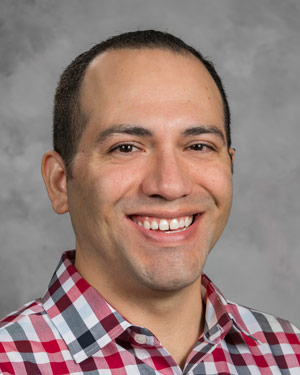
Homero Garcia Jr. is a pediatric nurse practitioner in the Food Allergy Clinic at Johns Hopkins All Children's Hospital in St. Petersburg, Florida. He earned his Associate of Science in Nursing from Kansas City Kansas Community College and later completed both his Bachelor of Science in Nursing and Master of Science in Nursing at the University of South Florida. Prior to his nursing career, Homero proudly served in the United States Navy as a Hospital Corpsman and Field Medical Service Technician. With more than 15 years of experience in pediatric allergy and immunology, Homero has served in clinical, leadership, and research roles at the University of Kansas Physicians, USF Allergy and Immunology, and Johns Hopkins All Children's Hospital.
Since 2019, Homero has specialized in the evaluation and management of children with food allergies and related allergic conditions, including atopic dermatitis, eosinophilic esophagitis, and food intolerances. He played an instrumental role in developing the Food Allergy Clinic and helping establish its oral immunotherapy program. Fluent in English and Spanish and certified at the interpreter level through a Qualified Bilingual Staff Assessment, Homero is committed to providing compassionate, culturally responsive care to children and families from diverse backgrounds.
Contact Us and Location
For more information about the Food Allergy Clinic or to make an appointment, please give us a call at 727-767-8727.


Read more about the Food Allergy Clinic:
New Treatment Gives Hope to Children with Peanut Allergy
The first FDA-approved treatment for peanut allergy in children is helping to give kids like Ian and their families peace of mind.
Dealing with Allergic Reactions in Children
Allergy specialist Panida Sriaroon, M.D. explains how parents can spot an allergic reaction in their children.
Peace of Mind and Pizza: Food Allergy Clinic Changes Nico's Life
Four-year-old Nico has completed more than six food challenges with the Food Allergy Clinic to see if and how he reacts to certain foods he might be allergic to. A better understanding of exactly what causes an allergic reaction for kids like Nico makes a big difference for families and children navigating complicated food allergies.