
-
Ramana Sidhaye, MD
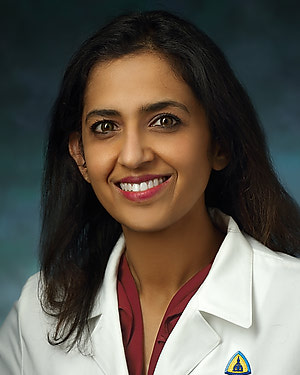
- Director of the Physician-Scientist Pathway, Osler Residency Program
Expertise: Pulmonology
-
Eileen Scully, MD PhD
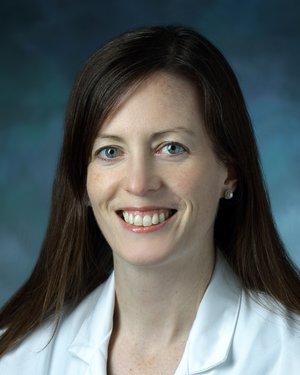
- Director of the Physician-Scientist Pathway, Osler Residency Program
Expertise: Infectious Diseases
Physician Scientist Program
The Physician Scientist Program (PSP) is a track within the Osler Medical Residency that is intended to produce clinically outstanding scientists who go on to shape their respective fields. Our goal is to recruit, inspire, develop, and retain physician scientists who will make scientific breakthroughs for the future of medicine. This program formalizes a long tradition of these goals at Johns Hopkins.
About the Program
Johns Hopkins School of Medicine has long been at the forefront of medical education and the training of physician scientists. This environment affords trainees a wide range of research options within an institution with a strong historical commitment to the physician scientist model and with unparalleled mentorship, depth and breadth of scientific accomplishments, and spirit of discovery and innovation. The program provides continued clinical and scientific education, mentorship, networking opportunities, and career advice.
The goal of the Physician Scientist Program is to provide young physician scientists opportunities to flourish within their research in the biomedical sciences and to facilitate the early career development of individuals with the high potential to conduct transformative research to advance human health.
The Physician Scientist Program aims to:
- Expose trainees to broad intensive clinical training. Some of the most important research questions come from the bedside.
- Foster an environment of intellectual curiosity through exposure to PhD, MD/PhD and MD scientists throughout the University. This will occur through clinical rotations, journal clubs, specialized lectures, and social events with Johns Hopkins scientists.
- Develop research goals and fellowship plans and facilitate meetings with Johns Hopkins researchers in the trainees’ area of interest.
- Match trainees into their chosen fellowship programs at Johns Hopkins, facilitating the continuous development of their research interests over time.
PSP residents may also benefit from engaging in the School of Medicine's Physician Scientist Training Program. Learn more about the JHSOM PSTP here..
Internal Funding Opportunities
Program Structure
The Physician Scientist Program of the Osler Medical Residency has a separate application track through ERAS, and a separate NRMP code (1242140C2). Information on how to apply to this track can be found here. Invited applicants will interview with both the categorical program and the physician scientist program (each held on different days). Eligible applicants include MD/PhDs in biomedical sciences, bioengineering and epidemiology, or MDs without formal doctoral training but with at least three years of biomedical research experience, publications in biological sciences, and who anticipate independent research careers. Upon matching into the Osler Medical Residency as a member of the PSP, participants will be guaranteed a fellowship spot in their stated specialty of interest, contingent upon meeting clinical competency during their time in the Osler Medical Residency and are meeting all other milestones and expectations of Osler residents.
Members of the PSP receive longitudinal mentorship and linkage to research mentors from PSP leadership, and participate in an annual two-week PSP elective (example schedule below).
Some PSP residents choose to pursue 3 years of residency, while others choose the ABIM Research Pathway. This decision to pursue the ABIM research pathway (i.e., “fast track” with 2 years of internal medicine residency) is made in conjunction with the program directors in the middle of the intern year and allows qualified candidates to begin their sub-specialty fellowship training in lieu of their third year of residency. Regardless of the path chosen, the rigors of the Osler Medical Residency ensure our trainees are extremely well prepared for clinical practice in medical subspecialty fellowships and as future leaders in biomedical sciences.
Below is an example of a fast-tracking PSP resident schedule (for non-fast tracking PSP residents, the schedule will be the same as non-PSP residents).
Year 1: Develop superior clinical skill
| Service | Blocks (2 weeks) | Call Cycle | Patients | Role | Inpatient/Outpatient |
|---|---|---|---|---|---|
| Osler | 8 | Q4 call | GIM | Primary provider | Inpatient |
| Brancati | 1 | Day/Night | GIM | Primary provider | Inpatient |
| CCU | 1 | Q3 call | ICU | Primary provider | Inpatient |
| MICU | 2-3 | Q3 call | ICU | Primary provider | Inpatient |
| Subspecialty | 0-1 | Nights | Pulmonary/Liver/Infectious Diseases | Primary provider | Inpatient |
| MPC | 1-2 | Q3 call | IMC | Primary provider | Inpatient |
| Oncology | 1-2 | Day | BMT/Solids/Leuks | Primary provider | Inpatient |
| Emergency Department | 1 | Day/Night | Variable | Primary provider | N/A |
| Ambulatory | 6-7 | Day | GIM /Rheum/Endo | Primary provider | Outpatient |
| Vacation | 2 | N/A | 2 two-weeks + 7d winter | N/A | N/A |
Year 2: Explore subspecialty medicine, investigation, and clinical leadership
| Service | Blocks (2 weeks) | Call Cycle | Patients | Role | Inpatient/Outpatient |
|---|---|---|---|---|---|
| Osler | 2 | - | GIM | Supervising Resident/Primary Provider | Inpatient |
| Carol Johns | 1 | - | Pulmonary | Primary Provider | Inpatient |
| Brancati | 1 | - | GIM | Supervising Resident/Primary Provider | Inpatient |
| Medical Progressive Care Unit | 1 | - | GIM | Supervising Resident/Primary Provider | Inpatient |
| MEG | 1 | - | Hepatology | Primary Provider | Inpatient |
| MICU/CCU | 4 | Q3 or Q4 call | Critical Care | Supervising Resident/Primary Provider | Inpatient |
| PCCU | 1 | Q4 call | General Cardiology and Heart Failure | Primary Provider | Inpatient |
| Polk | 1 | - | Infectious Diseases | Supervising Resident/Primary Provider | Inpatient |
| Oncology | 1 | Q4 call | BMT/Solids/Leuks | Supervising Resident/Primary Provider | Inpatient |
| Jeopardy | 1 | - | - | - | - |
| Ambulatory | 6-7 | - | - | Primary Provider | Outpatient |
| Elective | 2 | - | - | - | - |
| Vacation | 2 | - | 2 two-weeks + 7d winter | - | - |
PSP 2-week Elective Schedule
Over the 10 days you will have daily presentations in the morning from faculty leaders including physician scientists in academics and those who have transitioned to industry or moved to technology outside of academics while remaining faculty.
In the afternoon each day, you will have the opportunity to meet one on one with the PSP Pathway directors, potential mentors and collaborators, and with recent PSP graduates. These discussions are individualized to the needs of the resident and focus on career development and research planning.
Osler R38 Research Track
Beginning in the fall of 2026, the Osler program will be offering a new research experience within the program that will be open to current residents and applicants, including but not limited to those in the Physician Scientist Program. The Osler R38 Research Track (StARR program) will support up to two residents per year to insert approximately 15 months of dedicated research time between PGY 2 and 3 year, focused on topics of interest to NHLBI. During this time, the resident will have salary support and access to funds for research and conference travel.
Track participants will have the support of the PSP co-directors, who will provide support in finding mentors, longitudinal guidance, and more.
This track is best suited for candidates who are interested in careers that include a significant component of research. While it will extend training, it will allow for early skills-building in research, enhance the resident’s research portfolio, and allow for experience building in a subspecialty domain.