Research Lab Results
-
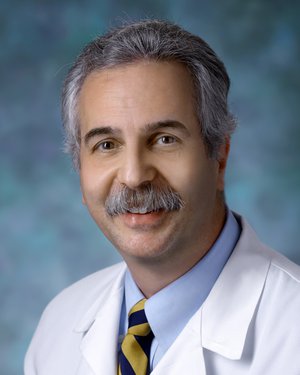
David Thompson Lab
Researchers in the David Thompson Lab examine the outcomes of patients treated in intensive care units (ICUs), patient safety efforts, quality improvement efforts, and multidisciplinary teamwork and safety curriculum development. We're taking part in a study aimed at reducing hospital-acquired infections among cardiovascular surgery patients. Our investigators also participated in a clinical research collaboration that saw an 81 percent reduction in bloodstream infections related to central lines.
-
Wojciech Zbijewski Lab
Research in the Wojciech Zbijewski Lab — a component of the Imaging for Surgery, Therapy and Radiology (I-STAR) Lab — focuses on system modeling techniques to optimize the x-ray CT imaging chain. We’re specifically interested in: 1) using numerical models to improve the task-based optimization of image quality; 2) exploring advanced modeling of physics in statistical reconstruction; 3) using accelerated Monte Carlo methods in CT imaging; and 4) conducting experimental validation of such approaches and applying them to the development of new imaging methods.
-
Vascular Neurology Lab
Vascular research led by Rafael Tamargo, M.D., the Walter E. Dandy Professor of Neurosurgery, explores treatment of aneurysms, arteriovenous malformations, cavernous malformations, and arteriovenous fistulas of the brain and spinal cord. Basic science research has focused on endothelial cell-leukocyte interactions (inflammation) after subarachnoid hemorrhage and identifying drugs that might inhibit this inflammatory response as well as the narrowing of blood vessels. -
Nicholas Rowan Lab
Dr. Rowan is actively involved in both outcomes and translational research relating to chronic rhinosinusitis and endoscopic skull base surgery. He has a keen interest patient-reported quality of life outcomes as well as those that pertain to smell and taste. Dr. Rowan is also involved in sinus-related clinical trials, pursuing new medical therapies and technological advancements for the treatment of patients with chronic rhinosinusitis.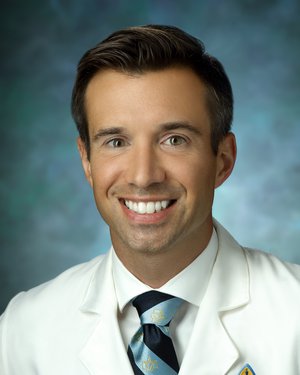
-
Neuromodulation and Advanced Therapies Center
We investigate the brain networks and neurotransmitters involved in symptoms of movement disorders, such as Parkinson's disease, and the mechanisms by which modulating these networks through electrical stimulation affects these symptoms. We are particularly interested in the mechanisms through which neuromodulation therapies like deep brain stimulation affect non-motor brain functions, such as cognitive function and mood. We use imaging of specific neurotransmitters, such as acetylcholine and dopamine, to understand the changes in brain chemistry associated with the clinical effects of deep brain stimulation and to predict which patients are likely to have changes in non-motor symptoms following DBS. Through collaborations with our neurosurgery colleagues, we explore brain function by making recordings during DBS surgery during motor and non-motor tasks. Dr. Mills collaborates with researchers in the Department of Neurosurgery, the Division of Geriatric and Neuropsychiatry in the Department of Psychiatry and Behavioral Sciences and in the Division of Nuclear Medicine within the Department of Radiology to translate neuroimaging and neurophysiology findings into clinical applications.
-
Quantitative Imaging Technologies
Research in the Quantitative Imaging Technologies lab — a component of the Imaging for Surgery, Therapy and Radiology (I-STAR) Lab — focuses on novel technologies to derive accurate structural and physiological measurements from medical images. Our team works on optimization of imaging systems and algorithms to support a variety of quantitative applications, with recent focus on orthopedics and bone health. For example, we have developed an ultra-high resolution imaging chain for an orthopedic CT system to enable in-vivo measurements of bone microstructure. Our interests also include automated methods to extract quantitative information from images, including anatomical and micro-structural measurements, and shape analysis.
-
Interventional Cardiology Research Group
Our group is interested in a broad array of clinical and translational investigations spanning the evaluation of basic pathophysiology in patients undergoing cardiac procedures, development and evaluation of new therapeutic strategies, and improving patient selection and outcomes following interventional procedures. We are comprised of a core group of faculty and dedicated research nurses as well as fellows, residents, and students. Projects range from investigator-initiated single-center observational studies to industry-sponsored multicenter phase 3 randomized controlled trials. We have established a database of all patients who have undergone TAVR at Johns Hopkins, which is providing the basis for several retrospective analyses and will serve as the foundation for future studies of TAVR. We are also engaged in collaborative projects with other groups from the Department of Medicine and other Departments including Cardiac Surgery, Anesthesiology, Radiology, Psychiatry, and Biomedical Engineering. Members of our group are actively involved with the Johns Hopkins Center for Bioengineering Innovation and Design (CBID) in the development of novel minimally-invasive cardiovascular devices.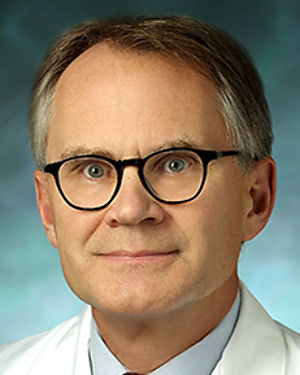
-
Marie Hanna Lab
The Marie Hanna Lab conducts research on key topics within the field of anesthesiology. Our interests include both regional and obstetric anesthesia as well as patient-controlled analgesia, pain measurement, post-operative pain and acute pain management. Examples of our work include researching whether a surgery patient’s perception of pain control affects his or her satisfaction level and a comparison of air and liquid for use in the loss-of-resistance technique during labor epidurals.
-
The Nauen Lab
Epilepsy affects 1-3% of the population and can have a profound impact on general health, employment and quality of life. Medial temporal lobe epilepsy (MTLE) develops in some patients following head injury or repeated febrile seizures. Those affected may first suffer spontaneous seizures many years after the initial insult, indicating that the neural circuit undergoes a slow pathologic remodeling over the interim. There are currently no methods of preventing the development of MTLE. It is our goal to better understand the process in order to slow, halt, and ultimately reverse it. Our laboratory draws on electrophysiology, molecular biology, and morphology to study the contribution of dysregulated neurogenesis and newborn neuron connectivity to the development of MTLE. We build on basic research in stem cell biology, hippocampal development, and synaptic plasticity. We work closely with colleagues in the Institute for Cell Engineering, Neurology, Neurosurgery, Biomedical Engineering, and Radiology. As physician neuropathologists our grounding is in tissue alterations underlying human neurologic disease; using human iPSC-derived neurons and surgical specimens we focus on the pathophysiological processes as they occur in patients. By understanding changes in cell populations and morphologies that affect the circuit, and identifying pathologic alterations in gene expression that lead to the cell-level abnormalities, we hope to find treatment targets that can prevent the remodeling and break the feedback loop of abnormal activity > circuit change > abnormal activity. -
The Boss Lab
The Boss Lab's research focus is on patient experience, health disparities, and surgical outcomes and utilization. Studies include shared decision-making, communication, and patient/parent-reported outcomes for elective surgery in children; patient satisfaction metrics, outcomes, and health correlates in surgery and pediatrics; patient and family-centered care and communication in surgery and pediatrics; racial, ethnic, and socioeconomic disparities in pediatric surgical care utilization and outcomes; and quality and safety in pediatric surgical care