Research Lab Results
-
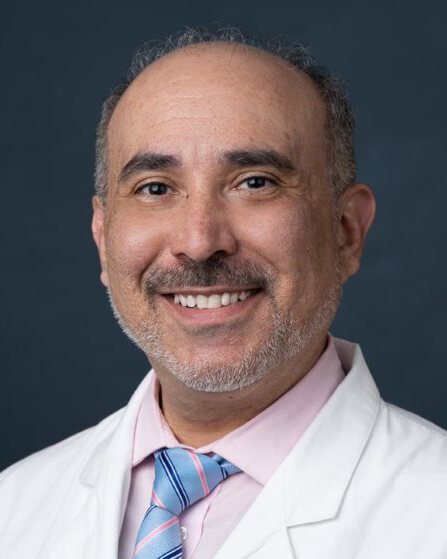
Peter Abadir Lab
The Abadir Lab focuses on uncovering the molecular mechanisms underlying frailty, resilience, and age-related diseases to bridge the gap between basic science and clinical applications. Grounded in translational research, the lab investigates the intricate interplay between mitochondrial biology, the renin-angiotensin system (RAS), and chronic inflammation, with an emphasis on their roles in physical and cognitive decline.
Key Areas of Research
- Mitochondrial and Angiotensin Biology
- Discovery and exploration of the mitochondrial angiotensin system (MAS) as a critical regulator of cellular energy, inflammation, and resilience.
- Investigating age-related mitochondrial dysfunction and its contribution to frailty, chronic inflammation, and neurodegeneration.
- Biomarker Development
- Identification of novel biomarkers for aging-related frailty and resilience, including cell-free DNA fragments and kynurenine metabolites.
- Development of diagnostic tools for early detection of physical and cognitive decline.
- Innovative Therapeutics and Bioengineering
- Designing nano-delivery systems for targeted drug delivery to mitochondria, enhancing wound healing and reversing cellular senescence.
- Integration of artificial intelligence and engineering to create advanced diagnostic tools for assessing frailty and aging-related conditions.
- AI and Technology in Aging
- Leveraging artificial intelligence and bioengineering to address challenges in geriatric medicine through collaborations with the Johns Hopkins AI & Technology Collaboratory for Aging Research (AITC) and the Gerotech Incubator Program.
Our Approach
The Abadir Lab employs a multidisciplinary methodology, combining molecular biology, bioinformatics, and engineering to tackle the pressing health challenges of aging populations. By fostering collaboration between clinicians, scientists, and engineers, the lab ensures that discoveries translate into tangible benefits for older adults.
Translational Impact
With a focus on frailty, inflammation, and cognitive decline, the Abadir Lab contributes to the development of personalized interventions and precision medicine approaches. Our work has laid the foundation for:
- Repurposing drugs like losartan and valsartan for treating aging-related chronic wounds.
- Unveiling the role of mitochondrial dysregulation in Alzheimer’s disease and frailty.
- Innovating tools for clinical assessments of resilience and functional decline.
Collaborations and Mentorship
The Abadir Lab is committed to training the next generation of scientists, fostering an interdisciplinary environment where students and postdocs explore cutting-edge aging science. Collaborations with the Johns Hopkins GeroTech Incubator Program and the Translational Aging Research Training Program (T32) further enrich this ecosystem of innovation.
Join Us
Whether you're a researcher, student, or collaborator, the Abadir Lab welcomes individuals passionate about transforming aging research into clinical practice.
- Mitochondrial and Angiotensin Biology
-
John Schroeder Lab
The John Schroeder Lab focuses on understanding the role human basophils and mast cells play in allergic reactions, as it relates not only to their secretion of potent inflammatory mediators (e.g., histamine and leukotriene C4) but also to their production of pro-inflammatory cytokines. We have long utilized human cells rather than cell lines in order to address the parameters, signal transduction and pharmacological aspects underlying clinically relevant basophil and mast cell responses. As a result, the lab has established protocols for rapidly isolating large numbers of basophils at high purity from human blood and for growing culture-derived mast cells/basophils from human progenitor cells. A variety of assays and techniques are also in place for concurrently detecting cytokines and mediators following a wide range of stimuli. These have facilitated the in vitro testing of numerous anti-allergic drugs for inhibitory activity on basophil and mast cell activation. The lab also studies counter-regulation between the IgE and innate immune receptors on human immature dendritic cell subtypes.
-
Dölen Lab
The Dölen lab studies the synaptic and circuit mechanisms that enable social behaviors. We use a variety of techniques including whole cell patch clamp electrophysiology, viral mediated gene transfer, optogenetics, and behavior. We are also interested in understanding how these synaptic and circuit mechanisms are disrupted in autism and schizophrenia, diseases which are characterized by social cognition deficits. More recently we have become interested in the therapeutic potential of psychedelic drugs for diseases like addiction and PTSD that respond to social influence or are aggravated by social injury, We are currently using both transgenic mouse and octopus to model disease. -
Vascular Neurology Lab
Vascular research led by Rafael Tamargo, M.D., the Walter E. Dandy Professor of Neurosurgery, explores treatment of aneurysms, arteriovenous malformations, cavernous malformations, and arteriovenous fistulas of the brain and spinal cord. Basic science research has focused on endothelial cell-leukocyte interactions (inflammation) after subarachnoid hemorrhage and identifying drugs that might inhibit this inflammatory response as well as the narrowing of blood vessels. -
Intestinal Chloride Secretion
Intestinal chloride secretion is stimulated during diarrhea. Cholera toxin is secreted by bacterium Vibrio cholera and is responsible for the watery diarrhea after cholera infection. Mechanistically, cholera toxin increases intracellular cyclic AMP, which subsequently activates protein kinase A and the cystic fibrosis transmembrane regulator chloride channel (CFTR). However, we recently identified an intestinal cAMP-Ca cross-talk signaling pathway that is initiated by elevation of intracellular cAMP and subsequently elevates intracellular Ca concentrations through the exchange protein activated by cAMP (Epac). This observation suggests that both CFTR and calcium-activated chloride channels are targets of elevated intracellular cAMP signaling molecule. Therefore, we are studying the role of calcium-activated Cl channels in intestinal chloride secretion under physiological conditions and during diarrhea. We are also determining whether the recently identified transmembrane protein 16 family of proteins, which are calcium-activated chloride channels, is also involved in intestinal chloride secretion in addition to the well characterized CFTR channel. Increased understanding of regulation of intestinal Cl secretion provides the necessary background information for the development of therapeutic drugs for the treatment of diarrhea, constipation and cystic fibrosis. The discovery that calcium-activated chloride channels are involved in intestinal chloride secretion provides additional targets for anti-diarrhea drug development.
-
Michael Kornberg Lab
Our laboratory conducts basic and translational research aimed at better understanding the pathogenesis of multiple sclerosis (MS) and the role of the immune system in CNS disease, particularly the processes that drive progressive disability such as neurodegeneration and remyelination failure. We currently have three parallel research programs: 1. Metabolism as a modulator of MS: We are studying how basic metabolic pathways regulate the immune system and how these pathways might be exploited to protect neurons and myelin-forming oligodendrocytes from injury. 2. Identifying pathways by which nitric oxide (NO) and other free radicals cause neuronal and axonal damage. Our lab is identifying specific signaling pathways initiated by NO and other free radicals that can be targeted by drugs to produce neuroprotection. 3. Modulating the innate immune system in MS: In collaboration with others at Johns Hopkins, we are studying ways to enhance the reparative functions of microglia while preventing maladaptive responses. This work has identified bryostatin-1 as a potential drug that may be re-purposed for this task. -
The Hillel Lab
The Hillel Laboratory at Johns Hopkins investigates inflammatory, genetic, and molecular factors involved with laryngotracheal stenosis, or scar formation in the airway. Specifically, we are examining the interrelationship between genetics, the immune system, bacteria, and scar formation in the airway. The lab has developed unique models to study laryngotracheal stenosis and test drugs that may halt the progression of scar or reverse scar formation. We are also developing a drug-eluting stent to treat patients with laryngotracheal stenosis. -
Richard Rivers Lab
The Richard Rivers Lab researches vascular communication with a focus on microcirculation physiology. Our team seeks to determine how metabolic demands are passed between tissue and the vascular network as well as along the vascular network itself. Our goal is to better understand processes of diseases such as cancer and diabetes, which could lead to the development of more targeted drugs and treatment. We are also working to determine the role for inwardly rectifying potassium channels (Kir) 2.1 and 6.1 in signaling along the vessel wall as well as the role of gap junctions.