Research Lab Results
-
Kathleen Sutcliffe Lab
Researchers in the Kathleen Sutcliffe Lab study organizational adaptability, reliability and resilience. Our work examines how factors such as management teams, group dynamics, information search processes, communication and learning processes affect organizational performance. Our team also studies how an organization’s design and culture affect members’ abilities to sense, manage and respond to dynamic demands. Additionally, our work seeks to better understand the factors that promote individual and organizational resilience. -
Kristin Riekert Lab
Work in the Kristin Riekert Lab focuses on methods for improving health care quality and delivery, particularly among underserved and disadvantaged populations. Our research covers a range of important topics, including health beliefs, treatment adherence, doctor-patient communication, self-management interventions, mobile health initiatives, health disparities and patient-reported outcome methodology. We also work with the National Institutes of Health on multiple intervention trials focused on improving adherence and health outcomes in asthma, chronic kidney disease, cystic fibrosis (CF), sickle cell disease and secondhand smoke reduction.
-
Lisa Cooper Lab
The Lisa Cooper Lab is dedicated to researching patient-centered interventions for improving health outcomes and overcoming racial and ethnic disparities in health care. Our primary focus is on the factors of physician communication skills and cultural competence training, patient shared decision-making and self-management skills training. Recently, we have explored patient-centered depression care for African Americans, tactics for improving patient-physician communication about management of hypertension, and reducing ethnic and social disparities in health. In addition, we are currently researching racial disparities in cardiovascular health outcomes for patients living in Baltimore. -
Lee Bone Lab
Research in the Lee Bone Lab uses community-based participatory approaches to promote health in underserved urban African-American populations. We conduct randomized clinical trials on cardiovascular disease, diabetes and cancer detection and control in order to test the success of community interventions. We focus in particular on making interventions sustainable and on implementing electronic education to improve communication.
-
Nicole Shilkofski Lab
Work in the Nicole Shilkofski Lab aims to improve patient safety in critical care settings, with a focus on resuscitation scenarios. Our research is conducted as part of the research group of the Johns Hopkins Medical Simulation Center. We investigate the communication and functionality of teams during medical crisis situations. As part of those efforts, we are designing a web-based curriculum to teach pediatric resuscitation through mannequin simulation and computer-based simulation techniques. -
Mark Dredze Lab
The Mark Dredze Lab investigates topics such as natural language processing, speech, machine learning and intelligent user interfaces. Our team is currently exploring several key health information applications, including information extraction from social media and biomedical and clinical texts. Our recent research in these areas include vaccine communication during the Disneyland measles outbreak; the validity of online drug forums for estimating trends in drug use; and the use of Twitter to examine social rationales for vaccine refusal.
Principal Investigator
-
Timothy Niessen Lab
The Timothy Niessen Lab studies patient outcomes in the ICU. We are particularly interested in the effects of sleep quality, delirium transitions and sedation on the improvement of intensive care patients. Our investigators also focus on the practices of internal medicine interns, studying the variability of hand washing hygiene, etiquette-based communication and time spent in direct and indirect patient care. We have also studied the onset of myelopathy as a result of B12 deficiency from long-term colchicine treatment and recreational nitrous oxide use.
-
S.C.O.R.E. Lab
The mission of the Stroke Cognitive Outcomes and Recovery (S.C.O.R.E.) Lab is to enhance knowledge of brain mechanisms that allow people recover language, empathy, and other cognitive and communicative functions after stroke, and to improve ways to facilitate recovery of these functions after stroke. We also seek to improve the understanding of neurobiology of primary progressive aphasia., and how to enhance communication in people with this group of clinical syndromes. -
Sanjay Desai Lab
Research in the Sanjay Desai Lab focuses primarily on clinical outcomes in survivors of critical illnesses, such as acute lung injury. We also investigate techniques to improve graduate medical education and are conducting a clinical trial on the comparative effectiveness of models that optimize patient safety and resident education. Our research examines factors such as residency work-hour reform, hand hygiene practices and the use of etiquette-based communication.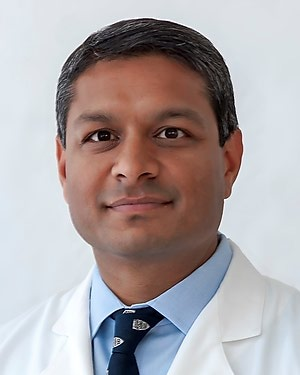
-
Sean Berenholtz Lab
Work in the Sean Berenholtz Lab focuses on patient safety, ICU care, quality health care and evidence-based medicine. Two notable and successful projects include the National On The Cusp: Stop BSI project, which was implemented in 47 states with the goal of eliminating bloodstream infections, and the Agency for Healthcare Research and Quality (AHRQ)-funded Keystone ICU project, which improved communication and teamwork and reduced hospital-acquired infections in more than 100 ICUs in Michigan. One recent study focused on ventilator-associated pneumonia (VAP), one of the most common type of health care-associated infections in the ICU. Existing VAP prevention intervention bundles vary widely on the interventions, but our research team described a structured approach for developing a new VAP prevention bundle.