

The Hackam Lab for Pediatric Surgical, Translational and Regenerative Medicine
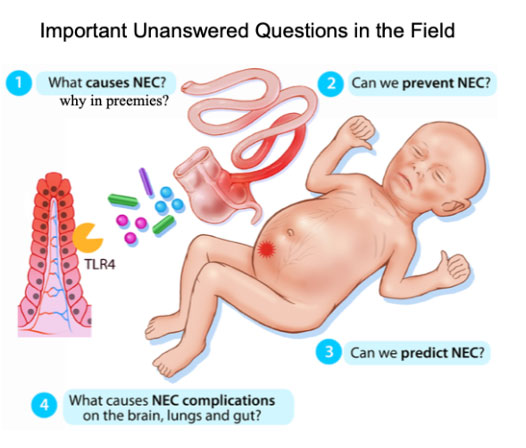
The Hackam Lab investigates the pathogenesis, prevention and treatment of necrotizing enterocolitis (NEC), with a focus on innate immune signaling — particularly TLR4 — in the premature intestine.
We integrate bedside observations with basic and translational research to uncover mechanisms that drive NEC and its brain and lung complications, and to develop novel therapeutics and engineered intestinal tissues. At its core, the Hackam Lab is focused on answering four questions about NEC:
- What causes NEC, and why in preemies?
- Can we prevent NEC?
- Can we predict NEC?
- What causes NEC complications on the brain, lungs and gut?
Principal Investigator
David Joel Hackam, M.D., Ph.D., Professor of Surgery and Chief of Pediatric Surgery, The Johns Hopkins University
David Hackam is Professor and Chief of Pediatric Surgery at Johns Hopkins. Trained as a surgeon-scientist in Toronto and Pittsburgh, he leads pioneering research on necrotizing enterocolitis (NEC)—uncovering how TLR4-driven immune pathways cause intestinal injury in premature infants and developing novel therapies rooted in maternal diet, breast milk bioactives, and tissue engineering.
Lab Members
- William (Benj) Fulton, M.S.
- Thomas J. Prindle, Jr. B.S.
- Heeseong Jang, Ph.D.
- Menghan Wang, M.S.
- Sanxia Wang, B.S.
- Sierra Williams-Mcleod
- Jeremy Young, B.S.
- C Sodhi, Ph.D.
- Hongpeng Jia, Ph.D.
- Madeline Raudat, M.D.
- Makenna Laffey, M.D.
- Jonathan Guevara, M.D.
- Raina Parikh, M.D.
- Yiwei Ai, MD, Ph.D.
- Lena Bode, M.D.
- Leonard Lawandos M.D.
Research Areas
NEC Pathogenesis and Therapeutics (TLR4-focused)
Defining how dysbiotic microbes activate TLR4 on the premature intestinal epithelium and endothelium to impair mucosal repair and blood flow, and advancing inhibitors and protective factors (e.g., breast milk components, amniotic-derived factors) as candidate therapies.
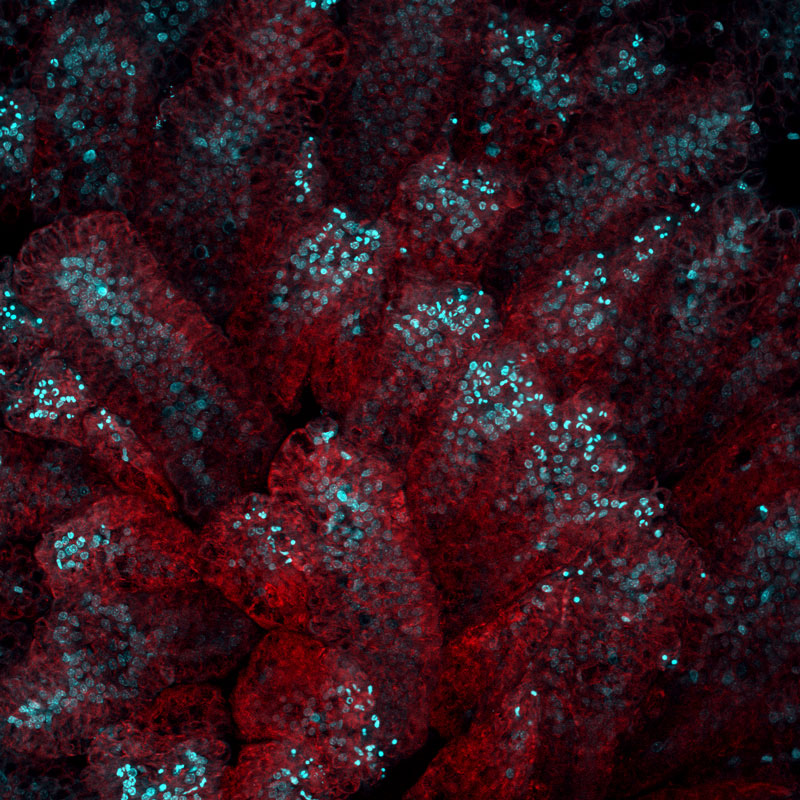
image: mouse small intestine with stain for mitochondrial stress images using whole mount confocal microscopy.

NEC-Associated Brain Injury
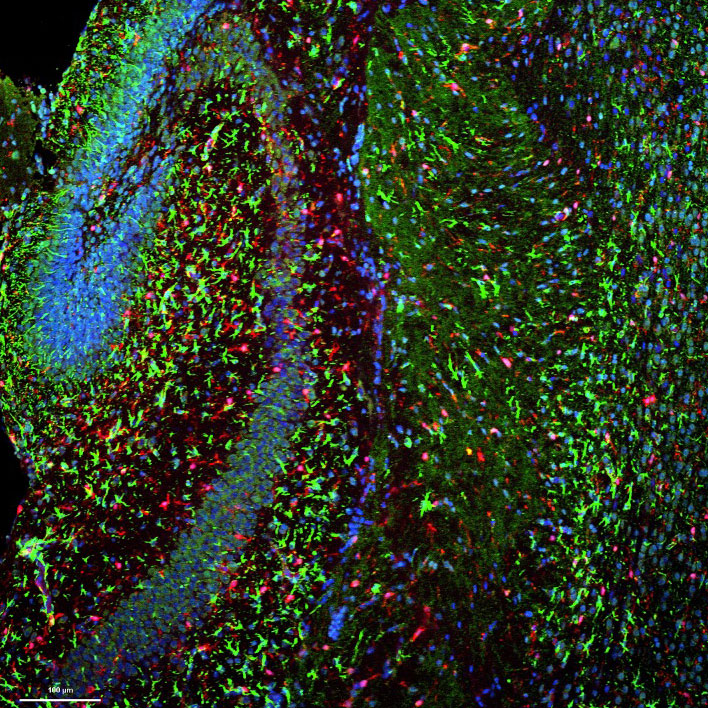
Elucidating gut-brain inflammatory crosstalk, including HMGB1-mediated microglial activation and T-lymphocyte–driven white matter injury, and testing targeted neuroprotective strategies.
image: Mouse brain stained for activated immune cells in the setting of NEC.

Maternal Immune/Dietary Influences and Breast Milk
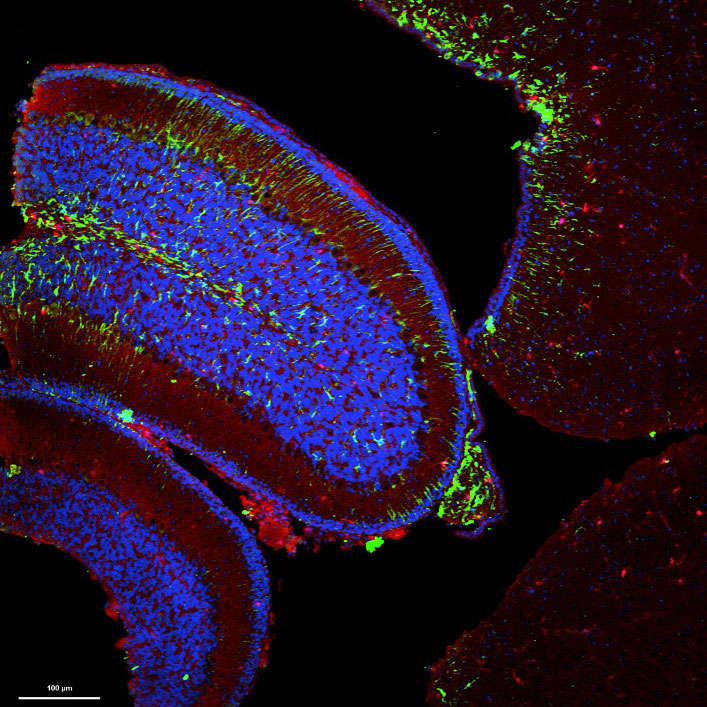
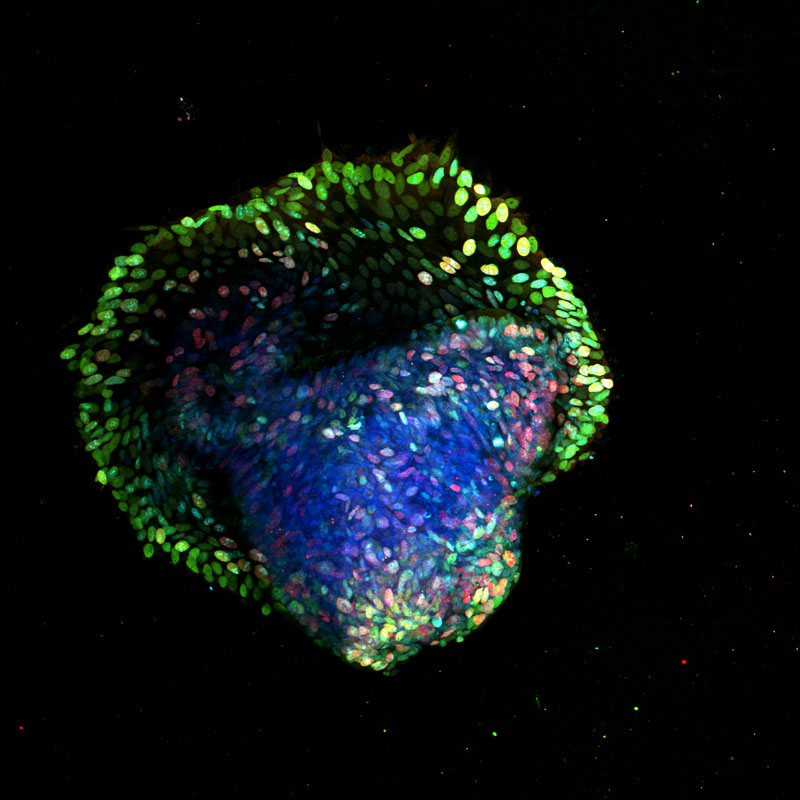
Investigating how maternal diet (aryl hydrocarbon receptor ligands), amniotic fluid components and human milk oligosaccharides modulate intestinal inflammation and reduce NEC risk.
image: intestinal organoid created from human stem calls demonstrating increase cellular proliferation following treatment with zinc.

Gut-Lung Axis in NEC
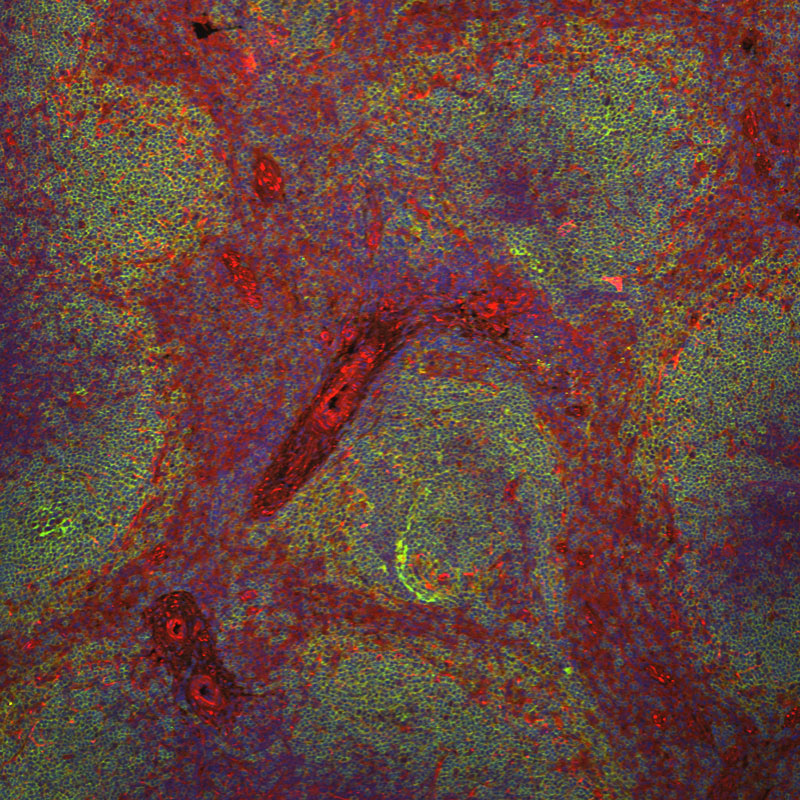
Defining mechanisms by which intestinal inflammation drives severe pulmonary injury in NEC via HMGB1-TLR4 pathways and lymphocyte imbalance, and evaluating lung-directed interventions.
image: Spleen from mouse with multichannel staining for identification of different immune cell types.

Tissue Engineering: Artificial Intestine
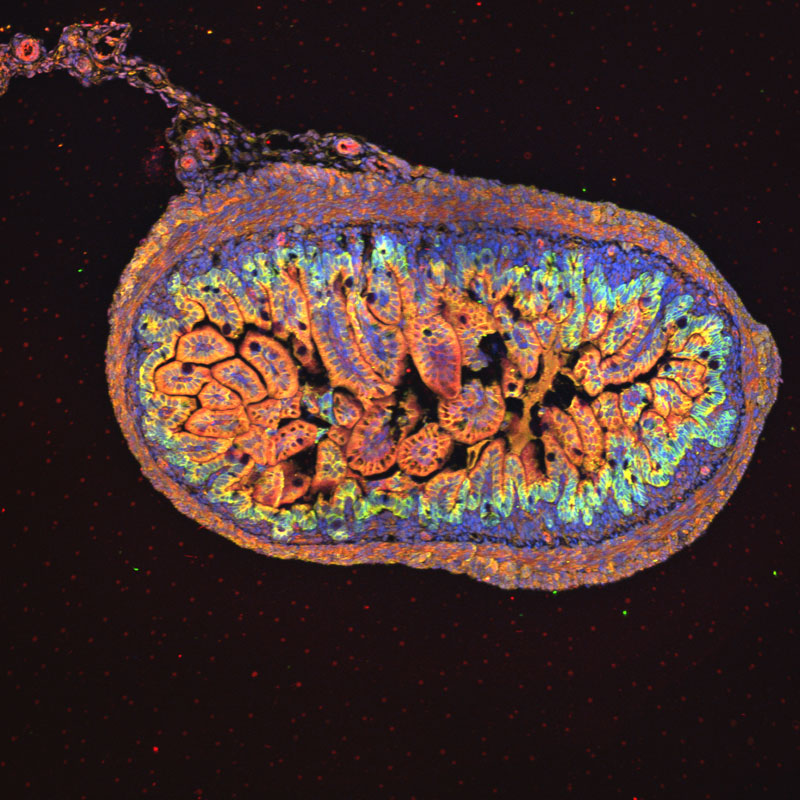
Engineering absorbable, villus-mimetic scaffolds seeded with intestinal stem cells to restore nutrient and fluid absorption as a future therapy for short bowel syndrome.
image: Small intestine from mouse with staining for cellular stress and intestinal barrier integrity.

Research Projects
Targeting TLR4 Signaling to Prevent NEC
Building on evidence that TLR4 activation drives epithelial injury and impairs endothelial nitric oxide-mediated perfusion in the premature intestine, we evaluate small-molecule and biologic inhibitors, along with protective factors from breast milk and amniotic-derived preparations, in mouse and piglet models.
Neuroinflammation in NEC: HMGB1 and T-Lymphocyte Pathways
Defining the sequence by which intestinal HMGB1 and proinflammatory lymphocytes trigger microglial activation and white matter injury in the developing brain, and testing nanomedicine and immunomodulatory interventions for neuroprotection.
Maternal-Fetal Modifiers of NEC
Determining how maternal diet-derived aryl hydrocarbon receptor ligands and amniotic fluid components condition the premature intestine to resist inflammation, with the goal of maternal or perinatal preventive strategies.
Mechanisms and Mitigation of NEC-Induced Lung Injury
Decoding how intestinal TLR4 signaling promotes pulmonary epithelial injury and lymphocyte imbalance and evaluating aerosolized or systemic approaches to blunt lung damage.
Engineered Intestinal Scaffolds for Short Bowel Syndrome
Designing and validating 3D, villus-like, absorbable scaffolds that support intestinal stem cell growth for eventual restoration of absorptive function in large-animal models.
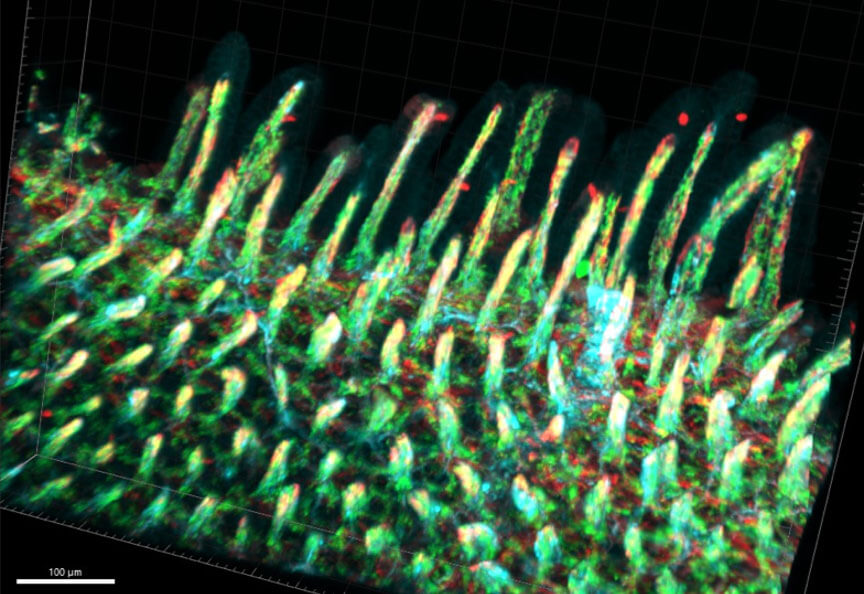 Microscopy showing the cellular organization
Featured Papers
Scheese D, Lu P, Moore H, Tsuboi K, Tragesser C, Duess J, Raouf Z, Sampah MF,Klerk D, El Baassiri M, Jang HS, Williams-McLeod S, Ishiyama A, Steinway SN,Wang S, Wang M, Prindle T Jr, Fulton WB, Sodhi CP, Hackam DJ.
Cell Mol Gastroenterol Hepatol. 2025;19(6):101473. doi:10.1016/j.jcmgh.2025.101473. Epub 2025 Feb 13. PMID: 39954728; PMCID:PMC12008672.\
Sampah MES, Moore H, Ahmad R, Duess J, Lu P, Lopez C, Steinway S, Scheese D,Raouf Z, Tsuboi K, Ding J, Caputo C, McFarland M, Fulton WB, Wang S, Wang M,Prindle T, Gazit V, Rubin DC, Alaish S, Sodhi CP, Hackam DJ.
Nat Commun. 2024 Oct 7;15(1):8613. doi:10.1038/s41467-024-52216-6. PMID: 39375337; PMCID: PMC11458589.
Sodhi CP, Scheese DJ, Tragesser C, Fulton WB, Duess JW, Tsuboi K, Sampah MES, Buck RH, Hill DR, Sabag-Daigle A, Prindle T, Wang S, Wang M, Hackam DJ.
Pediatr Res. 2025 Oct;98(4):1500-1510. doi: 10.1038/s41390-025-04077-y. Epub 2025 May 10. PMID: 40348872
Bench to Bedside - New Insights into the Pathogenesis of Necrotizing Enterocolitis.
Hackam DJ, Sodhi CP.
Nat Rev Gastroenterol Hepatol. 2022 Jul;19(7):468-479. doi: 10.1038/s41575-022-00594-x. Epub 2022 Mar 28. PMID: 35347256.
