
Veronica’s Victory: A Young Girl Battles Her Way Back to Health After a Life-threatening Traumatic Injury
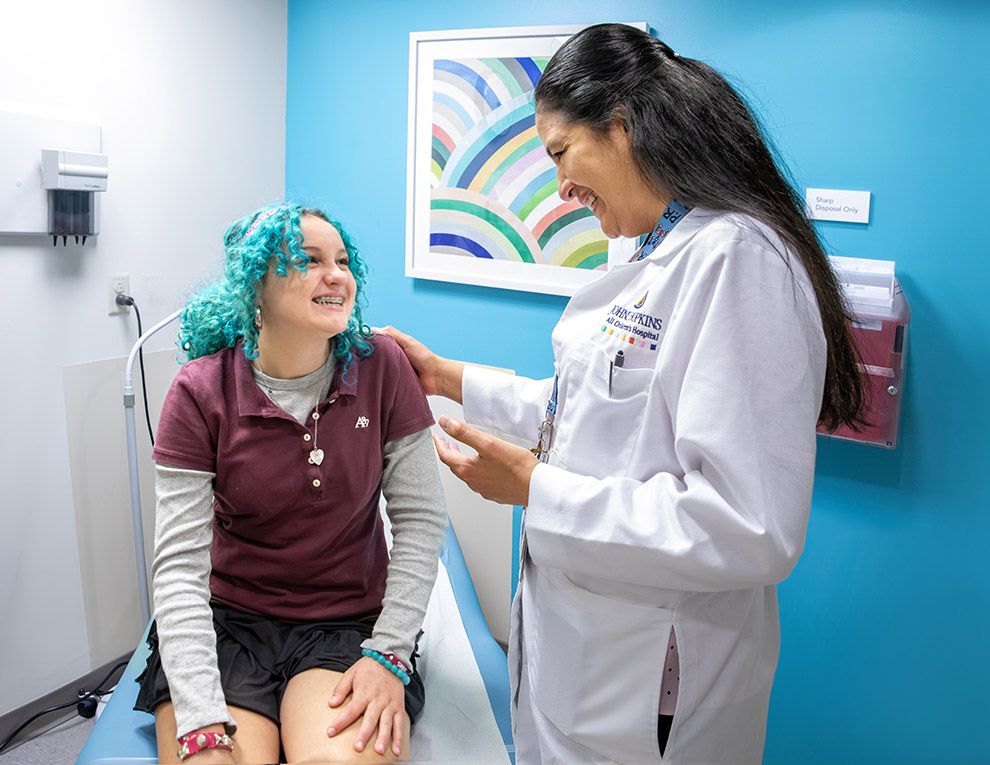
Twelve-year-old Veronica could not have imagined how her life would change this year.
One unexpected moment would lead to challenges she never could have anticipated — and a life-altering road to recovery.
The fateful day in April began joyfully. Veronica, her dad, Alex, and other family members and friends were enjoying a fun day on the water in the Indian Rocks Beach, Florida, area, taking turns riding a personal water scooter and pulling one another on a float behind the vessel.
The accident happened in a split second.
Veronica was sitting on the water scooter, facing backward to look out for the riders on the float they would be pulling. As a family member driving the vessel began to accelerate in the deep water, Veronica suddenly lost her balance and fell off.
For a moment, things went blurry.
“I don’t remember clearly … but I just kind of ‘saw the light,’ you know what I mean?” Veronica says. “It was like I was in a dream. I must have been in shock, because I couldn’t move or feel anything.”
In that instant, the only part of her body Veronica had any command over was her vocal cords. She found her voice — and she used it.
“She was screaming,” Alex says. “I could see what I thought was her kneecap, but it was actually her femur, which had been broken. I jumped in the water, and there was just blood everywhere.”
Chaos ensued as Veronica’s dad and cousin struggled to get Veronica back onto the water scooter so that they could get her to the nearest dock to call for help.
A local Fire Rescue team helped to get the critically injured girl onto dry land. From there, an ambulance took her to meet an emergency transport helicopter, which rushed her to Johns Hopkins All Children’s Hospital in St. Petersburg.
Level of Care
Johns Hopkins All Children’s is certified as a designated Pediatric Trauma Center, equipped to provide the surgical and medical needs of the most seriously injured pediatric patients, including a deep bench of specialists to respond to the most complex situations.
Veronica was stabilized and taken to the Emergency Department as a Level 1 Trauma, where expert surgeons and emergency physicians worked collaboratively to assess and treat her injuries.
“She clearly had a very large wound, and left leg deformity, so we knew there was a fracture. However, we were uncertain of a vascular injury," says pediatric trauma surgeon Raquel González, M.D.
The massive soft tissue injury to her leg measured more than 10 inches long and nearly 15 inches wide.
Had she hit part of the body of the water scooter in her fall? Had she become tangled up in the rope pulling the float? Or both? Even the family was unsure exactly how the injuries occurred. It had all happened so fast.
Surgeons quickly moved Veronica into the O.R. to further assess and treat her injuries. They determined that her major blood vessels were intact, which was good news.
Pediatric orthopaedic surgeon Brian Piazza, M.D., pulled Veronica’s broken femur into place, aligned it, and secured the screws and hardware needed to keep the leg stabilized.
González was then able to fully inspect the extent of the wound, thoroughly clean it out with a specialized irrigation device, and to cut away any dead tissue. The goal for this patient was to help save as much viable tissue as possible, in hopes the wound may eventually be closed and heal without the need for skin grafting.
In the interim, she closed Veronica's wound with a negative pressure dressing, which is used to help promote faster healing by applying a continuous suction to the wound to remove excess fluid and bring the edges closer together.
In her week-long stay in the hospital, Veronica would make additional trips to the operating room, each proving to be more hopeful than the last.
“There was good progress,” González reports. “The second trip I was able to repair the muscle, close the complex wounds, replace drains, and replace the negative pressure dressing. During the third trip, I was able to assess the integrity of the closure."
Once Veronica and her dad were educated on how to care for her wound, and once she was able to demonstrate that she could get around well (at times with a wheelchair), she was able to go home, with a plan to return for regular outpatient clinic visits.
As Veronica healed, she was determined to keep doing some of the things she loved, including remaining active in local theater, even playing the role of Shrek in a production — which she performed in her wheelchair.
Things were looking up. Summer was coming, and Veronica was planning to make the most of it, even under difficult circumstances.
The Blues
One day, about a month after her accident, Veronica and her dad were changing her wound dressing when they noticed something strange. The gauze on her dressing looked blue … an unwelcome sign of infection.
Veronica was admitted back into the hospital and was taken back into the O.R., so that her complex wound could be cleaned out once again. She was given specialized antibiotics to control the infections.
After spending Memorial Day weekend in the hospital, she was eventually able to go home with a portable device to deliver negative pressure wound therapy, which is designed to accelerate healing.
The reality of her situation was setting in for Veronica. There were no quick fixes for complex injuries. Might she need skin graft surgery after all?
With so much effort already, now it appeared her summer was going to change. Trips and activities were cancelled. Summer camp was no longer part of the plan. There were days when this seventh-grader felt more than a little discouraged.
But over time, something clicked for Veronica. She began to understand that she had agency in her own healing. She became diligent. She started to take a more active role in her wound care. She increased the amount of protein in her diet to help boost her body’s immune response.
Progress
In Veronica’s regular trips to the outpatient clinic, González helped to encourage her very real progress.
“We were measuring the wound every week, and it was contracting,” González says. “Even a half a centimeter is important, right? We celebrated every millimeter of her progress.”
Veronica’s wound continued to heal. She would not need the skin grafting after all. There was so much she had done to help herself, and so many others who had helped too. Veronica had been cared for by her family, and by pediatric trauma surgeons, orthopaedic surgeons, plastic surgeons, infectious disease specialists, expert advance practice providers and wound care team members, amazing nurses, physical therapists, and so many others on her journey to healing.
“The staff was absolutely wonderful,” Alex says. “From the moment we went in, all the way through her recovery, they were fantastic.”
On a bright October day, Veronica and her dad would make a final visit to the outpatient care clinic to see González. It was more of a celebration than a clinic visit.
Today, Veronica continues to get stronger. She is pursuing the things she loves, including theater and art. She is active and mobile, riding her bike to school, and even testing her skills in indoor rock climbing.
“I’m prouder of her than words can say,” Alex says. “She has accomplished so much more than she or I ever thought possible.”
Veronica shares some wisdom for other kids facing tough moments in their lives.
“I would say to them, don’t doubt yourself, even when you’re going through hard things. You’ve got this. You can always push through.”
Brian Piazza, M.D., is on the medical staff of Johns Hopkins All Children’s Hospital, Inc. (“JHACH”) but is an independent practitioner who is not an employee or agent of JHACH.
Treatment Pediatric Trauma Program at Johns Hopkins All Children's
Johns Hopkins All Children’s Hospital in St. Petersburg, Florida, provides specialized trauma care 24 hours a day, seven days a week, for infants, children and adolescents with severe or life-threatening injuries. Our specially trained pediatric trauma team works together to provide comprehensive emergency, surgical and follow-up care.