
Preventing Hospitalization for Dementia Patients
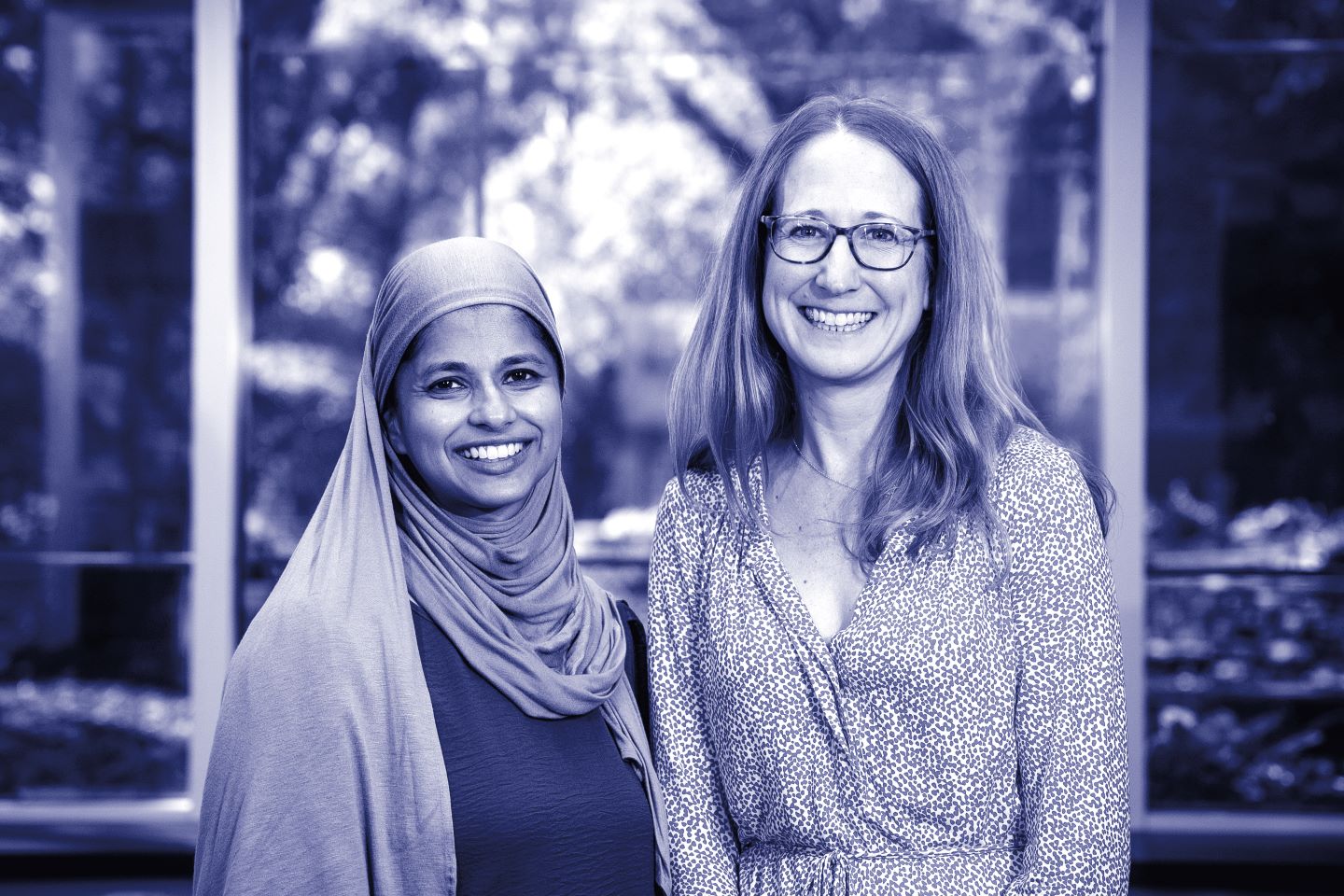
Halima Amjad, M.D., Ph.D., and Stephanie Nothelle, M.D.
Photo credit: Larry Canner
In 2024, the Centers for Disease Control and Prevention projected that by 2060, almost 14 million adults in the U.S. will have dementia, up from about 7 million today. This means a significant portion of the population will be affected by this illness, either developing dementia themselves or caring for someone who has it.
The multiple challenges of living with dementia have ripple effects throughout a person’s healthcare. For many people, the chance of hospitalization increases as we age. But going into the hospital is especially risky for anyone with cognitive decline because hospitals often aren’t equipped to properly handle those issues. That’s why geriatricians Halima Amjad and Stephanie Nothelle are researching whether hospitalization can sometimes be prevented for older adults with dementia, looking at which individual, health system and behavioral factors might help. Along with colleagues, including Alicia Arbaje and Phillip Magidson, they’ve recently received an R01 grant from the National Institute on Aging to assist with this work. Nothelle says, “This is the culmination of a lot of different projects that provided context to this issue.”
From Colleagues to Grant Partners
Amjad and Nothelle have known each other for years and have joked about leading parallel lives, down to the fact that their husbands worked together, they were both Johns Hopkins geriatrics fellows, and they even had the same due date for their first children. Applying for the R01 together was, as Nothelle says, “a natural thing because we’ve been good colleagues and have so many overlapping interests. It made it fun to write our first big grant together.”
Amjad, who completed her geriatrics fellowship in 2016 under the mentorship of Quincy Samus stayed at Johns Hopkins to conduct research and provide care at the Memory Clinic. In 2022, she became the clinical co-director for MIND at Home alongside Cindy Fields. MIND at Home is a care model that helps patients stay at home as long as possible despite cognitive impairments. As a clinician, researcher and daughter, this is an outcome close to Amjad’s heart, and one that she knows is challenging because many caregivers are themselves older adults with their own health issues. She says, “My research is focused on thinking about how we can improve dementia diagnosis and care.”
“When you treat a patient with dementia, you aren’t just treating the person with dementia or just the care partner – they both experience it.”
— Stephanie Nothelle
Nothelle’s research and clinical care work have also always looked at older adults with dementia and their care partners together. Since graduating from the geriatrics fellowship in 2018 and becoming part of the faculty, she’s done primary care and inpatient care, including seeing patients with dementia and their care partners in the hospital. “I’ve approached my research in the same vein as I deliver care,” she says. “When you treat a patient with dementia, you aren’t just treating the person with dementia or just the care partner — they both experience it.” And, as Amjad points out, both patient and care partner are deeply affected by the quality and type of interventions care teams provide. She says, “There seems to finally be recognition that the health and well-being of the caregiver and the person with dementia are closely intertwined.”
Collaborating to Help Patients and Caregivers
What makes Amjad and Nothelle’s R01 work so important is that it’s looking to find ways to keep patients from going into a situation that isn’t ready for them and may thus put them at risk. “The system in the emergency department is really set up for people who are cognitively intact,” Nothelle says. “So in the ED, people with dementia usually end up developing delirium and not being able to cooperate with care.” This starts a problematic loop where both overall health and cognitive health continue to decline, and where patients and their caregivers are reluctant to go back to the hospital even when it’s needed because of their previous bad experiences.
“It’s important to understand and tackle a complex challenge like hospitalization in dementia from different perspectives.”
— Halima Amjad
Their R01 research aims to address that partly through a review of the quality metric of preventable hospitalization, meaning the underlying reasons someone is admitted. If you go to the ED for high blood pressure, for example, is that a situation that can be managed by your primary care provider? As Nothelle says, “What are the modifiable factors we can influence that might prevent hospitalization?”
For Amjad, a key factor in this work is the collaboration, not just between herself and Nothelle, but across groups at Johns Hopkins and partners at Wake Forest University. “This research involves working with very bright, engaged, interdisciplinary teams on the clinical front as well as the research side of dementia care,” she says. “It’s important to understand and tackle a complex challenge like hospitalization in dementia from different perspectives. We’re excited to learn from patients, caregivers and all the clinicians involved in the pathway that takes someone from their home to the hospital, including primary care, the emergency room and hospital admitting teams.”
It’s often said that it takes a village to care for someone living with dementia. Amjad and Nothelle’s research recognizes that it will also take a village to proactively and safely keep this vulnerable population out of the hospital. Such an outcome would be beneficial for caregivers as well.