
Bringing the Hospital to the Patient
Most people don’t think about the hospital until they or a loved one end up in the emergency room. But hospitals have regularly been on geriatrician Bruce Leff’s mind since 1994. Specifically, he’s interested in how to bring them into the home.
After Leff completed medical school at New York University and his residency at Johns Hopkins Bayview Medical Center, he did a geriatrics fellowship with clinicians John Burton and Tom Finucane, during which he started seeing patients at home. He quickly realized that many of the older adults he cared for resisted going to the hospital, even when they couldn’t safely stay home. “There were lots of experiences where folks with multiple chronic conditions would become acutely ill but refuse to go to the hospital because they had had lousy experiences there,” Leff says. “For people who are frail, the hospital can be a pretty dangerous place.”
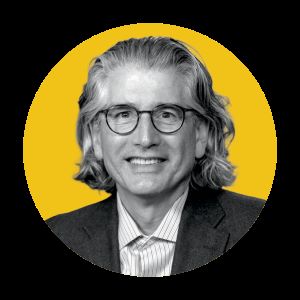 Bruce Leff, M.D.
After one of Leff’s patients refused hospital admission for pneumonia, Leff decided he had to find another way to treat the man’s flare-ups of chronic obstructive pulmonary disease and congestive heart failure. Although these are serious health issues — what Leff calls “hospital-qualifying conditions” — they can be safely, effectively treated in the home with the right supports. So Leff and his mentors, supported by funding from The John A. Hartford Foundation, set about building a system of such supports.
How to Create a Hospital at Home
Leff’s team developed a pilot program to test their idea that some acute illnesses that typically require hospital admission could be better treated at home. Meant to be a decentralized system that kept patients in the environment where they were most comfortable, the pilot’s first iteration happened at Johns Hopkins partly because of the vision of Ronald Peterson, then the president of Bayview Medical Center. He agreed to give some funding to the group, including geriatricians John Burton and William Greenough and public health researcher Lynda Burton. “He gave us around $30,000 or $40,000 back in the mid-90s,” says Leff. “He was very prescient; he said, ‘We’re going to need this in the future.’”
“For people who are frail, the hospital can be a pretty dangerous place.”
— Bruce Leff
The future, however, took its time arriving. The pilot identified pneumonia, cellulitis, congestive heart failure and exacerbation of chronic airway disease as conditions that could be treated at home using the same healthcare professionals to run the same tests as would happen in the hospital. But although the funded pilot program delivered top-notch care that patients loved and led to fewer complications, no one could agree on how to pay for it when the pilot ended.
Hospitals that get payments for Medicare patients receive a set amount when a person shows up with a certain illness. Depending on how they treat that individual, hospitals either make or lose money. This incentivizes them to admit emergency department patients because there’s no way to make money if they provide care at home.
“We went to the Centers for Medicare and Medicaid Services (CMS) asking for a payment mechanism for Hospital at Home care in traditional fee-for-service Medicare,” Leff says. They hoped for a waiver system allowing hospitals to bill Medicare for hospital care even if that care was provided in patients’ homes. But CMS didn’t go for it. “They suggested we do additional studies in people who were enrolled in Medicare Advantage plans (currently just over half of Medicare patients have these), because those plans, in which payment is done as a lump sum, have more freedom to adopt innovative care approaches.”
So with the Hartford Foundation’s continued support, Leff’s team did a national study in several Medicare Advantage plans plus a Veterans Administration hospital; in 2005, they also started providing free technical assistance to health systems who wanted to build their own Hospital at Home model. “We proved out all our hypotheses that patients would opt in at high rates, that we would have very high-quality care comparable to the hospital, that we would actually have lower rates of important geriatric complications like delirium,” Leff says. “We had a lower mortality rate, and we got published in a very high-tier journal.” Still, CMS didn’t agree to a payment mechanism in traditional Medicare.
A Leap Forward
Between 2013 and 2020, several things moved the needle. First, the Affordable Care Act passed, allowing Leff and his colleagues’ group at the Icahn School of Medicine at Mount Sinai in New York City to get about $10 million in grants from the Center for Medicare and Medicaid Innovation to implement Hospital at Home and test a fee-for-service bundle payment. Next came the chance to present an alternative payment model to the secretary for Health and Human Services. Then COVID-19 happened. As the country grappled with the pandemic, multiple services and systems had to pivot. Suddenly, CMS leaders were approaching Leff and other Hospital at Home leaders to ask about their program. Three weeks later, the long-awaited waiver was in place, providing a hospital-level payment for Hospital at Home care. Hospitals had to apply to CMS for the waiver and prove they had the ability to provide safe, high-quality care at home, but applications were evaluated fast and often cleared. At its peak, Leff estimates there were 400+ hospitals with the waiver, many of which ultimately implemented their Hospital at Home programs.
Importantly, Congress extended these waivers, which were initially tied to the COVID-19 public health emergency, through 2030, giving hospital executives time to work on building out their programs at scale. Executives “cannot start off with a ‘small pilot,’” Leff says. “You need to tell your team that you’re building a new hospital from the ground up. It’s like building a hotel. You have to build the whole hotel before you can take care of your first guest.” He acknowledges that this change feels huge to people who haven’t been thinking about the possibilities of Hospital at Home care for decades like he has. But he believes that with the right leadership and vision, the time has finally come. He says, “It’s about making sure a lot of people are getting up every morning, and this is the thing they’re thinking about.”