
From Field to Impact: How Global Research Is Shaping Lung Health Worldwide
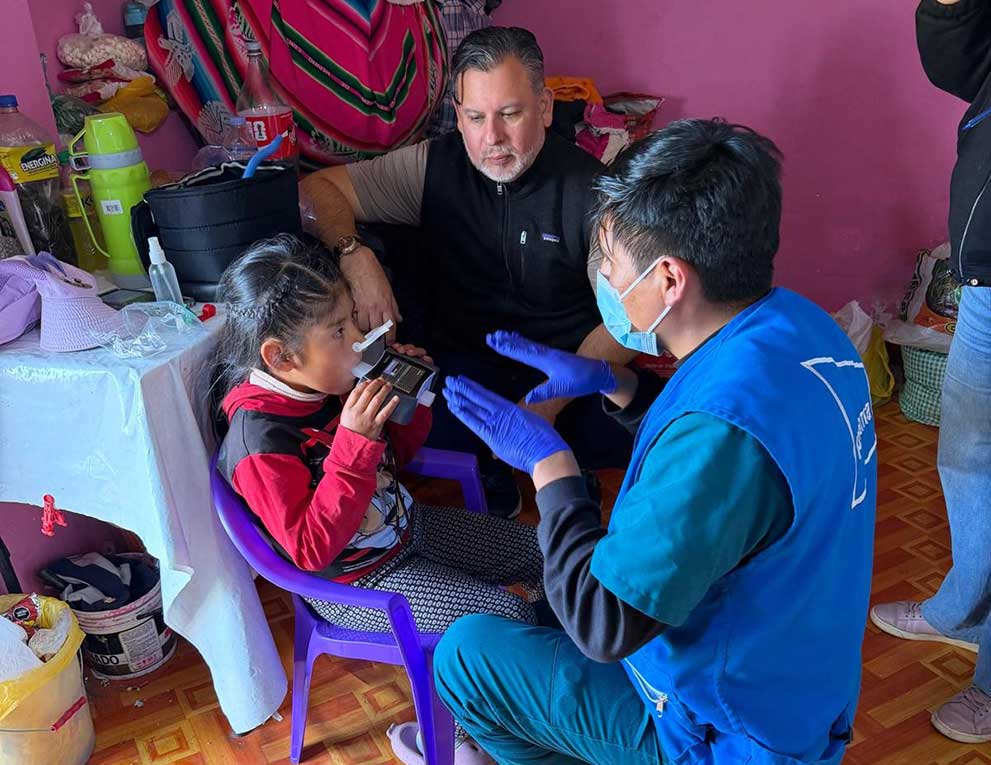
Prof. Checkley observing spirometry testing in Puno.
Health challenges do not stop at borders, and neither does the research conducted by the Johns Hopkins Division of Pulmonary and Critical Care Medicine. Lung diseases, including chronic obstructive pulmonary disease, asthma and post-tuberculosis lung disease, remain leading causes of illness and death worldwide. Addressing these challenges requires collaboration across disciplines, countries and communities.
The Johns Hopkins Center for Global Non-Communicable Disease Research and Training (GlobalNCD), led by intensive care medicine physician William Checkley and research scientist Laura Nicolaou, is advancing understanding of pulmonary diseases in diverse global settings, including long-standing work in Peru, Uganda and Nepal. Insights from these global studies also have direct relevance to the United States, helping to inform prevention strategies against similar environmental and occupational exposures affecting respiratory health.
From Mentorship to a Global Lung Health Program
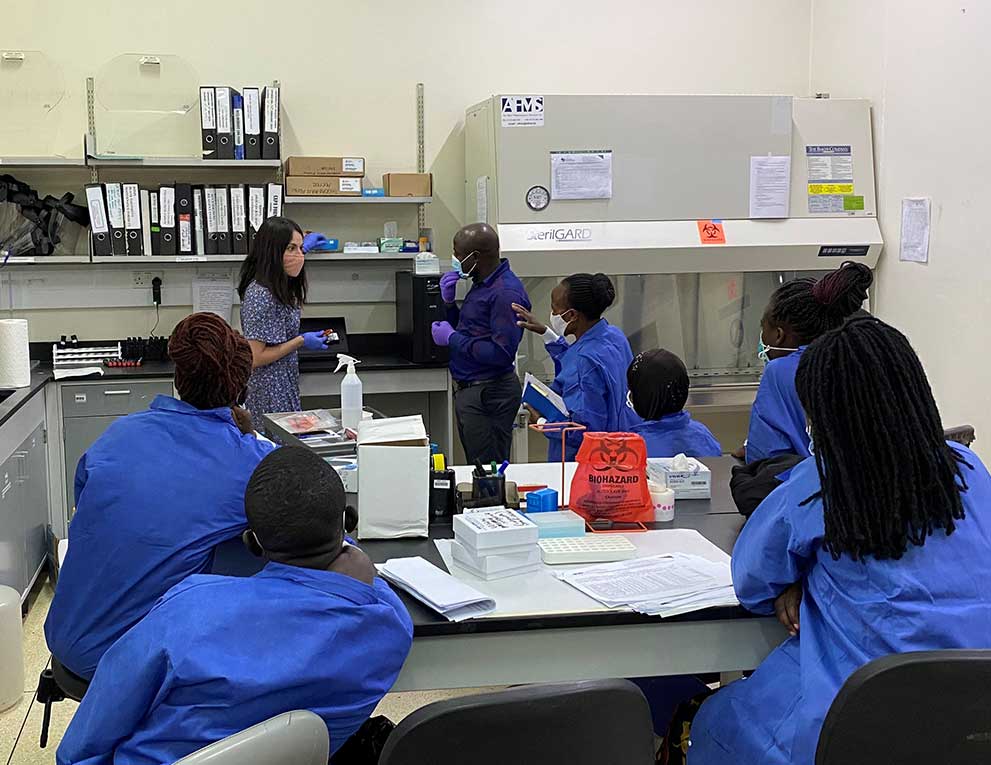 Dr. Nicolaou training staff in Uganda on exposure assessment.
What began as a mentorship-driven opportunity during Checkley’s fellowship evolved into a global research program focused on understanding how environmental, occupational and social exposures shape lung health throughout life. Encouragement from division leaders and early collaborators helped transform initial training efforts into sustained international partnerships. Today, this work spans Peru, Uganda, Nepal and other countries, bringing together more than 100 investigators, staff members and collaborators working toward a shared goal: improving lung health where the burden is greatest.
Over the past 15 years, the program has secured more than $60 million in external funding and supported population-based cohorts, randomized trials and environmental health initiatives designed to generate evidence that informs prevention and care worldwide.
A defining feature of the program is its commitment to training the next generation of global lung health scientists. Through sustained mentorship and partnership, more than 130 trainees, including over 30 postdoctoral fellows, have gained hands-on research experience at international sites. Many now lead research programs of their own, reflecting a deliberate focus on capacity building and long-term collaboration.
Understanding Lung Health Across Environments
Environmental exposure is a central theme of the program’s work. In Peru, the research team has built one of the most comprehensive environmental monitoring systems in the region, deploying approximately 160 low-cost air pollution monitors nationwide across urban, rural and high-altitude communities. This network provides real-time data that help researchers identify exposure patterns, anticipate pollution-related health risks and inform targeted prevention strategies.
By studying lung health across diverse geographic settings, the team can better understand how risk factors differ among environments. Urban air pollution, household smoke exposure, occupational hazards, altitude and early-life conditions all influence respiratory outcomes in ways that vary across populations. Comparing these settings allows investigators to refine screening approaches, identify new risk pathways and develop prevention strategies tailored to local context.
These insights are increasingly relevant beyond the regions where studies take place, helping clinicians and researchers rethink how chronic respiratory disease develops throughout the course of life. They could also inform air quality monitoring strategies in the United States, where expanding use of low-cost sensors is improving understanding of exposure patterns, particularly in rural communities that have been historically understudied. Insights from global studies may also advance risk prediction, including episodic events such as wildfires, which are more commonly affecting communities across the country.
“Global collaboration accelerates lung health science because it brings diverse populations and local expertise together to produce evidence and solutions that work in the real world.” –William Checkley
Turning Field Research into Practical Solutions
Occupational health research represents another major area of impact. GlobalNCD investigators partnered with local organizations and the Bhaktapur Brick Industry Traders Association, which represents local kiln owners and employers located in Nepal, to study lung health among a highly underserved migrant workforce that often lacks formal occupational protections. Screening programs involving more than 2,400 workers helped identify early lung function decline related to silica and dust exposure while supporting education initiatives and pilot protective equipment programs developed with direct worker feedback.
These efforts demonstrate how research can translate directly into real-world change. Workers gained access to lung health screening and education, local partners used findings to raise awareness, and pilot interventions helped identify practical protective strategies that were acceptable in daily work settings.
Importantly, discoveries from these studies extend beyond the communities where research is conducted. Findings related to silica exposure are informing understanding of respiratory risks among workers in the United States who handle natural and engineered stone, reinforcing how global research strengthens prevention strategies at home.
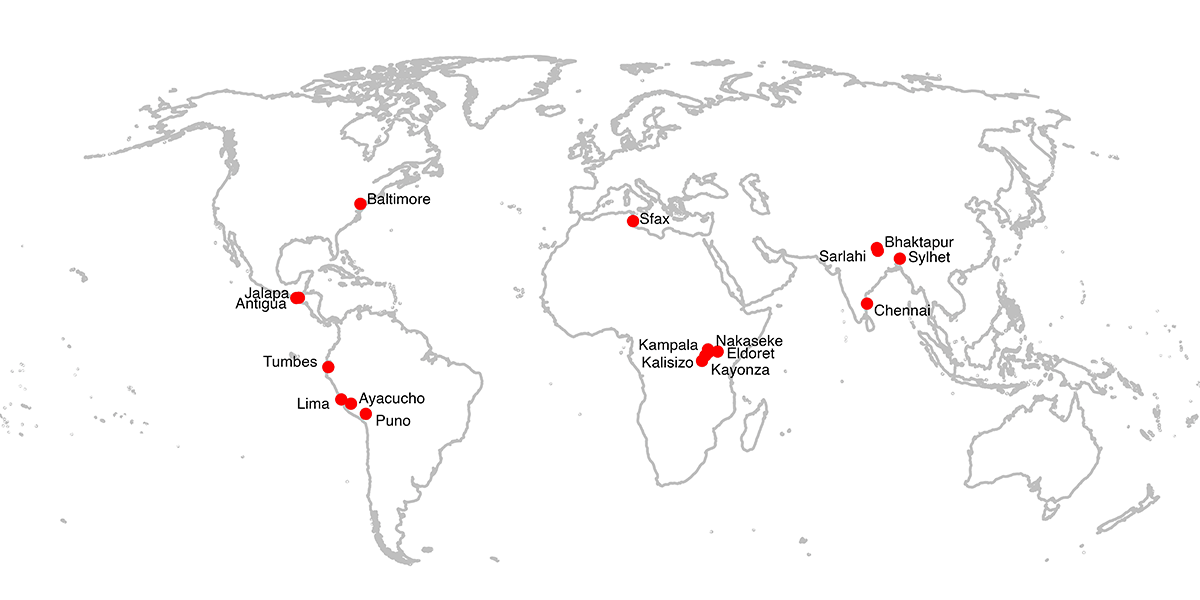 Map of places where GlobalNCD has worked.
Partnership as the Engine of Discovery
At the core of this work is partnership. International collaborators shape research questions, ensure that studies reflect local priorities, and contribute essential expertise that strengthens scientific rigor and relevance. This bidirectional learning challenges assumptions, supports innovation and ensures that findings translate into meaningful action.
Global collaborations also support career development for trainees and early-career investigators, embedding mentored research in long-term programs and creating pathways to independent scientific leadership. This sustained investment in people allows discoveries to continue beyond any single project.
Together, these efforts reflect a wider vision for pulmonary and critical care medicine. Scientific progress accelerates when research spans populations, when training pipelines are sustained, and when communities most affected by disease are engaged as partners. They not only address the global burden of lung disease but also generate evidence that informs clinical care, prevention and policy in the United States.
Finally, through multidisciplinary collaboration, sustained mentorship and a commitment to prevention, the global lung health program demonstrates a simple but powerful principle: Improving lung health anywhere requires partnership everywhere.
For Clinicians Clinical Connection
Clinicians, discover the latest in research and clinical innovation from Johns Hopkins experts. Access educational videos, articles, CME courses and other resources from our world-renowned institution.