
Adding Vents to Long Fiberglass Arm Casts Could Be No-Sweat Way to Ditch the Itch
A Johns Hopkins Medicine study shows that adding ventilation gaps to fiberglass casts does not sacrifice structural integrity.
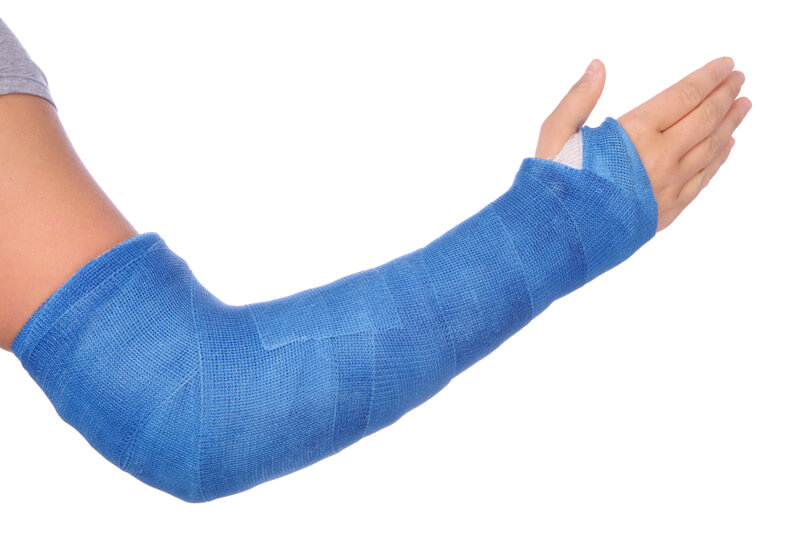
Adding vents to a cast like this could reduce itchiness and skin breakdown.
Key Points
- Pediatric patients who wear long arm casts, particularly in summer, experience itchiness and skin maceration because of trapped heat and moisture.
- A study finds that adding a ventilation gap does not sacrifice cast strength.
- The vent is formed by bunching the fiberglass as it is rolled out to create the cast.
Adding a ventilation gap to long fiberglass arm casts could reduce itchiness and skin breakdown without sacrificing protection, finds a new study led by pediatric orthopaedic surgeon R. Jay Lee.
Casts are typically made with layers of padding and fiberglass that trap heat and moisture. “They are itchy and uncomfortable, particularly in hot and humid weather,” says Lee, whose patients often wear the mid-upper arm to knuckle protection for four to six weeks while broken bones heal.
Adding the vent requires no additional materials or tools, says Lee, director of pediatric sports medicine in the pediatric orthopaedic surgery division.
Children are famously rough on casts, which must retain their integrity through weeks of activity, from general use to falls.
Lee’s study, published May 21 in the Journal of Pediatric Orthopaedics, compares the strength of four cast designs constructed with rolls of 3-inch fiberglass: a traditional cast with no vents, one with an elliptical gap at the posterior elbow, one with a circular hole at the posterior elbow, and one with a circular hole at the lateral elbow.
For the strength test, researchers used a model of a pediatric arm made from 40-centimeter PVC segments, applied the various casts and, for each, simulated several times the motion of a patient falling on a casted arm.
The cast with a circular hole at the posterior elbow was strongest, followed by the lateral hole design, and both were stronger than a standard cast. The elliptical shape was not as strong as a standard cast, but all designs surpassed estimated fracture thresholds for pediatric upper-extremity bones, according to the report.
“These results suggest that incorporating vent modifications, particularly a posterior vent with the associated bunching of fiberglass around the vent, maintains and possibly enhances cast strength,” the study notes.
The designs were created in collaboration with Stephen Belkoff, associate research professor of structural engineering in the Johns Hopkins University Whiting School of Engineering, with the instruction that they could not require additional tools beyond what is already used for casting, says Lee.
The challenge now, Lee says, is selling the concept to the orthopaedic technicians, advanced practice providers and surgeons who apply the casts, a task he’s undertaking himself one patient at a time at Johns Hopkins Medicine.
This is a very simple thing,” says Lee. “It’s the same material, you’re just doing one additional step. A vent is doable as long as you’re mindful about making sure the rest of the cast is well structured.”
Medically reviewed by R. Jay Lee, M.D.
For Clinicians Clinical Connection
Clinicians, discover the latest in research and clinical innovation from Johns Hopkins experts. Access educational videos, articles, CME courses and other resources from our world-renowned institution.