
Johns Hopkins All Children's Researchers Uncover Genome-Level Checkpoint That Controls Inflammation
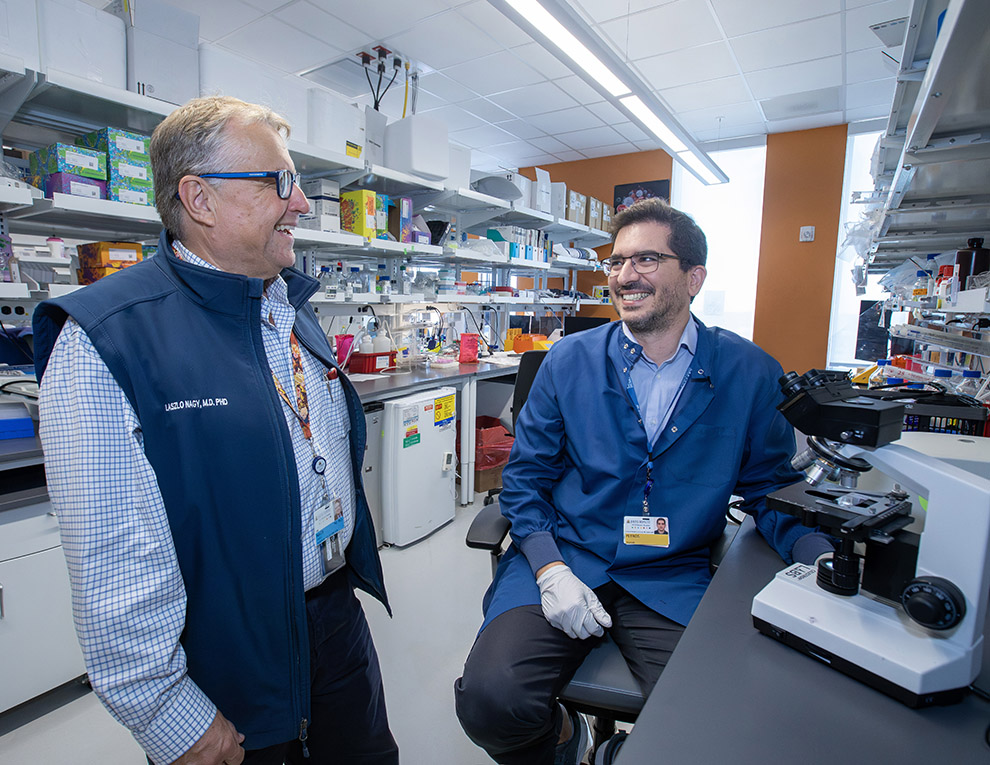
Scientists from Johns Hopkins Medicine have identified a genome-level control mechanism that helps macrophages — specialized immune cells that respond to infection, injury, and tissue damage — remain ready for action without becoming prematurely inflammatory or hyperinflammatory.
The study, led by Laszlo Nagy, M.D., Ph.D., co-director of the Johns Hopkins All Children's Institute for Fundamental Biomedical Research in St. Petersburg, Florida, was published Sept. 8 in Immunity. The journal also highlighted the work with an invited preview in its September issue, recognizing the study as part of an emerging area of research focused on how three-dimensional chromatin architecture shapes immune-cell responses.
Macrophages are white blood cells that help coordinate inflammation, tissue repair and immune defense. When their responses are poorly controlled, they can contribute to chronic inflammatory conditions, impaired tissue regeneration and cancer progression. The new study focused on BACH1, a transcription factor that helps control how macrophages interpret inflammatory and tissue-derived signals.
“Our findings reveal a new way macrophages are controlled at the level of the genome,” says Nagy, also a Professor of Medicine, Biological Chemistry and Biomedical Engineering in the Department of Medicine at the Johns Hopkins University School of Medicine. “Rather than acting only as an on-off switch for inflammation, BACH1 helps keep macrophages both prepared and restrained, allowing them to respond appropriately to different tissue and inflammatory contexts.”
The researchers found that BACH1 has a paradoxical dual role. It acts as a repressor, preventing inflammatory genes from being activated too early or too strongly. At the same time, it also behaves like a priming factor, helping establish accessible regions of DNA that allow macrophages to respond rapidly when the right signal arrives.
“BACH1 is paradoxical. It behaves almost like a factor that holds both a key and a brake: it helps unlock parts of the genome so macrophages can respond to future signals, but at the same time it prevents inflammatory genes from being switched on too early,” says Petros Tzerpos, first author of the paper and currently a visiting Research Fellow in Nagy’s laboratory in St. Petersburg.
Using genomic mapping approaches, the team showed that BACH1 binds to regulatory regions of DNA in resting macrophages and helps maintain a chromatin landscape that is poised but restrained. When macrophages encounter inflammatory signals, including heme, BACH1 rapidly changes its binding pattern across nearby regulatory regions and promoters. These changes are linked to shifts in 3D enhancer-promoter communication, transcription factor binding and activation of macrophage response programs.
The researchers describe this activity as “pioneer repression” — a mechanism in which a transcription factor helps prepare the genome for future activation while simultaneously preventing premature gene expression.
In mouse models, the team found that loss of BACH1 in myeloid cells disrupted macrophage adaptation during inflammatory and tissue contexts. In muscle injury, macrophages lacking BACH1 failed to properly coordinate the transition from inflammatory to regenerative programs, impairing tissue repair. In systemic inflammatory challenge, loss of myeloid BACH1 led to exaggerated inflammatory responses. Together, the findings suggest that BACH1 acts as an important checkpoint that helps macrophages maintain flexibility without losing control.
The next step, Nagy says, is to understand the mechanism more deeply. The laboratory is now investigating which chromatin complexes cooperate with BACH1, and whether other transcription factors may act as pioneer repressors in immune cells.
The Nagy laboratory is also extending its work on myeloid BACH1 into additional disease models, including asthma and carcinogenesis, to understand how this regulatory mechanism contributes to chronic inflammatory disease and cancer-related immune responses.
In the future, BACH1 may be a helpful target for therapeutics that can finetune its response, keeping macrophages in check and preventing chronic inflammation from occurring to begin with.
The study was an international collaboration involving researchers from the United States, Hungary, Greece, Poland, the United Kingdom and France. The work was supported by NIH funding, along with Hungarian research funding sources.