
Research into Deprescribing Reveals Potential Strategies for Care Teams

Optimizing medications starts with a conversation
One of the great challenges of medical care is that it can cause complications even as it solves problems.
Balancing potential benefits and harms of medications is an art, one that Ariel Green has studied for most of her career. Her interest in deprescribing began in 2022 with her work as a research assistant at the Center on Aging and Health (COAH) and continued during her medical training with Johns Hopkins Medicine, she says.
“I saw more and more examples of times where we were trying to help older adults, but sometimes this led to a cascade of negative downstream consequences for people with multiple conditions, frailty and cognitive impairment,” Green says. She observed this in particular with respect to medications such as opioids or sleeping pills causing falls or confusion.
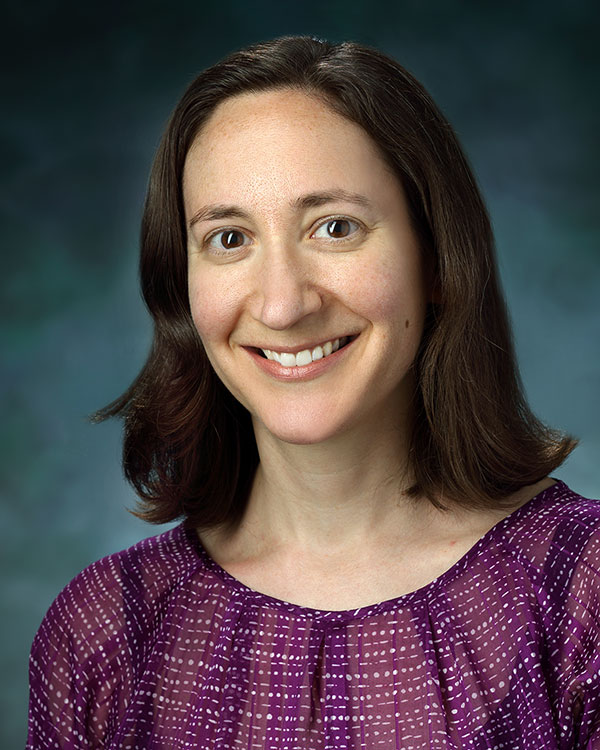 Ariel Green
During her geriatric medicine fellowship, also at Johns Hopkins Medicine, Green became involved with the American Geriatrics Society’s Choosing Wisely campaign, which raised awareness for clinicians and patients about medical treatments and tests that may be unnecessary given a particular patient’s situation and healthcare goals. For people juggling multiple medicines and conditions already, this kind of awareness can have a significant impact. “That got me really interested in [the question of] how we can make these medication decisions more rational and safer and aligned with older adults’ goals for their health,” she says.
Since 2021, Green has led ALIGN: Aligning Medications with What Matters Most, a program that helps pharmacists optimize medications for older adults with dementia and their caregivers according to their care goals. These goals vary by person but often include things like the ability to dress and walk, to play with grandchildren, to think clearly, and to live longer and prevent heart disease. When a patient’s medications are reviewed with their goals in mind, some of the medications might be cut if they have potential harms that would likely outweigh the benefits of use.
With the help of clinical pharmacists who are already connected to care teams within Johns Hopkins Community Physicians, the ALIGN team creates educational materials for patients and caregivers and writes scripts or talking points for pharmacists to use when talking to patients about their medications within the context of their health priorities.
“The pharmacists use the scripts to try to elicit what matters most specifically relating to medicines, what people’s priorities are, what they feel like medicines are helping with or not helping with,” Green says. The team then has the pharmacists offer recommendations for deprescribing to primary care providers (PCPs) based on their patients’ responses. If the PCP agrees, the pharmacists call the patient and their caregiver to talk about making medication changes, although sometimes certain medications are continued or safer medications are prescribed instead.
The reason for using clinical pharmacists to start this conversation is twofold, she says. First, they are already embedded in the care team and know the PCPs well, and second, they have the time to have these important conversations with patients and caregivers. “Simply sending patients or clinicians a brochure about deprescribing, that’s often not enough,” Green says. “But it’s a lot for PCPs [to be having these conversations with patients] as well as all the other things that have to happen during a 15-minute primary care visit.”
Of course, not every health system has clinical pharmacists as part of their care teams, which makes it tricky for some systems to follow this blueprint.
As the conversation around deprescribing gains traction, one of the goals is not only to spread awareness, but also to get strategies for deprescribing into clinical practice guidelines in a variety of areas. That will help ensure that anyone being treated for a chronic condition will have a possibility of having their list of medicines reviewed with an eye to unintended harm.
“I have a study now where I’m trying to provide education and awareness about deprescribing to patients and families through MyChart,” Green says. “We’re trying to get the information out there to clinicians and remind them about this, and to get it out to patients and families at the same time.”
Green notes that patients, their care teams and, in many cases, their caregivers have to make these critical medication decisions together. Then the conversations can happen, and what matters most to the patient can be centered. That’s the best way to deprescribe, she says.
For Green, the biggest surprise from her research is the fact that cutting down the amount of medication a patient takes is not always their best option or desired end point.
“Deprescribing studies often measure their success as, can we reduce the number of medicines? But we found that, especially for patients with dementia and their care partners, just cutting back on a medicine isn’t necessarily going to help the big picture,” Green says. “The needs are more holistic. Sometimes you have to replace something that you’ve removed with physical therapy or caregiver support or even another medication, but a safer medication.”
For Clinicians Clinical Connection
Clinicians, discover the latest in research and clinical innovation from Johns Hopkins experts. Access educational videos, articles, CME courses and other resources from our world-renowned institution.