
Computational Nuclear Oncology: Tahir Yusufaly’s Quest to Personalize Radiopharmaceutical Therapy
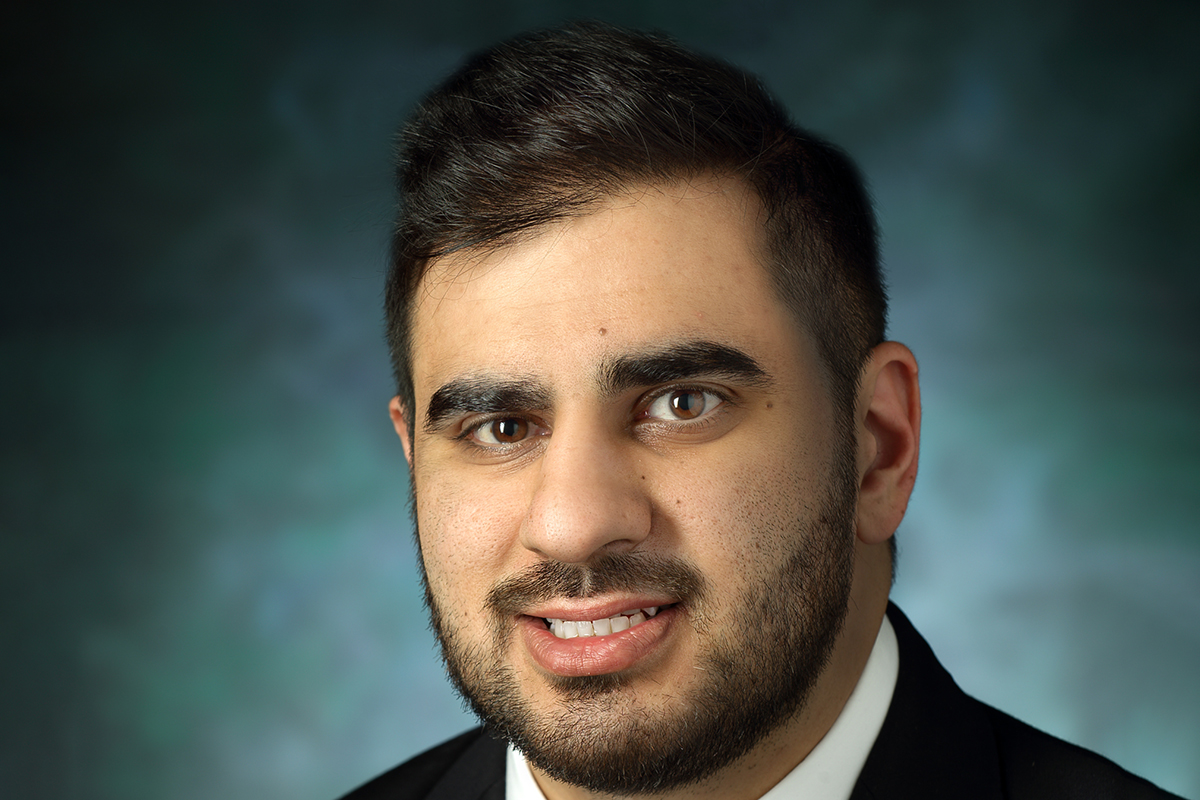
Tahir Yusufaly, assistant professor of radiology, is pioneering a new approach to radiopharmaceutical therapy (RPT) that could help physicians tailor cancer treatments for greater efficacy with fewer side effects.
RPT is a form of theranostics, a personalized medicine approach that combines molecular imaging and therapy to find and treat specific cancers. During treatment, a radioactive isotope attached to a targeting molecule is administered to the patient, where it seeks out and, ideally, eradicates cancerous tumors. This approach combines key strengths of other modalities. Like chemotherapy, RPT can treat cancers that have already spread throughout the body; like external-beam radiation therapy (EBRT), it offers the possibility of imaging and predicting the distribution of radiation in real time.
Despite this potential, current RPT mostly remains a one-size-fits-all approach, with each patient receiving a standard dose at a fixed number of administrations. But what if clinicians could tailor dosing to each patient’s physiology as captured by nuclear medicine imaging? This question is at the heart of Yusufaly’s work.
He is developing what he calls “computational nuclear oncology,” which involves building mathematical models grounded in physics and biology that describe how the body responds to RPT across multiple scales. His models connect processes at the molecular level, such as DNA damage and repair within individual cells, to tissue-level dynamics like wound healing and, ultimately, to drug distribution and response patterns across patient populations.
“The goal is to build models rooted in mechanism, in the actual physics and biology, rather than just pattern-matching from data,” Yusufaly explains.
This is where machine learning enters the picture, but not in the way it’s typically used. Rather than training AI on massive datasets to find correlations, Yusufaly uses computational inference, which uses computer algorithms to draw statistical conclusions and make predictions to discover the underlying mechanistic forms themselves. This allows data to guide which biophysical models best describe reality. The result is what researchers call explainable AI: predictions that aren't just accurate, but that reflect genuine biological understanding.
“We're not letting AI take the wheel,” he says. “We’re using it to help uncover the right equations, which is models we can interpret, trust and build upon.”
To validate their models, Yusufaly and his team collaborate with colleagues at Johns Hopkins Medicine, including members of the Radionuclide Therapy and Dosimetry Research Lab pioneered by the late George Sgouros, and the Department of Radiation Oncology, as well as researchers at external institutions.
In one recent project, they received data from radiation oncology colleagues on salivary gland radiation toxicity in patients with head and neck cancers. By combining this clinical data with biophysical modeling, Yusufaly’s team aims to predict side effects not only for head and neck patients treated with EBRT, but also for RPT patients treated systemically. Eventually, Yusufaly hopes to help build an integrated database of RPT data across institutions, enabling increasingly precise, personalized therapies.
The implications extend beyond individual patient care. Yusufaly envisions using these computational models to evaluate treatment strategies before committing to costly clinical trials, a concept sometimes referred to as virtual clinical trials.
“Currently, the clinical trial process is very costly and time-consuming,” he explains. “If we can predict through modeling that a new agent is unlikely to work, we avoid unnecessary iterations and accelerate the development of treatments that do work for a broader range of populations.”
By grounding AI in the explanatory power of physics and biology, Yusufaly aims to move RPT beyond a one-size-fits-all approach, making it more effective, more accessible and more efficient for patients worldwide.
For Clinicians Clinical Connection
Clinicians, discover the latest in research and clinical innovation from Johns Hopkins experts. Access educational videos, articles, CME courses and other resources from our world-renowned institution.