
Protecting the Cognitive Health of Older Adults
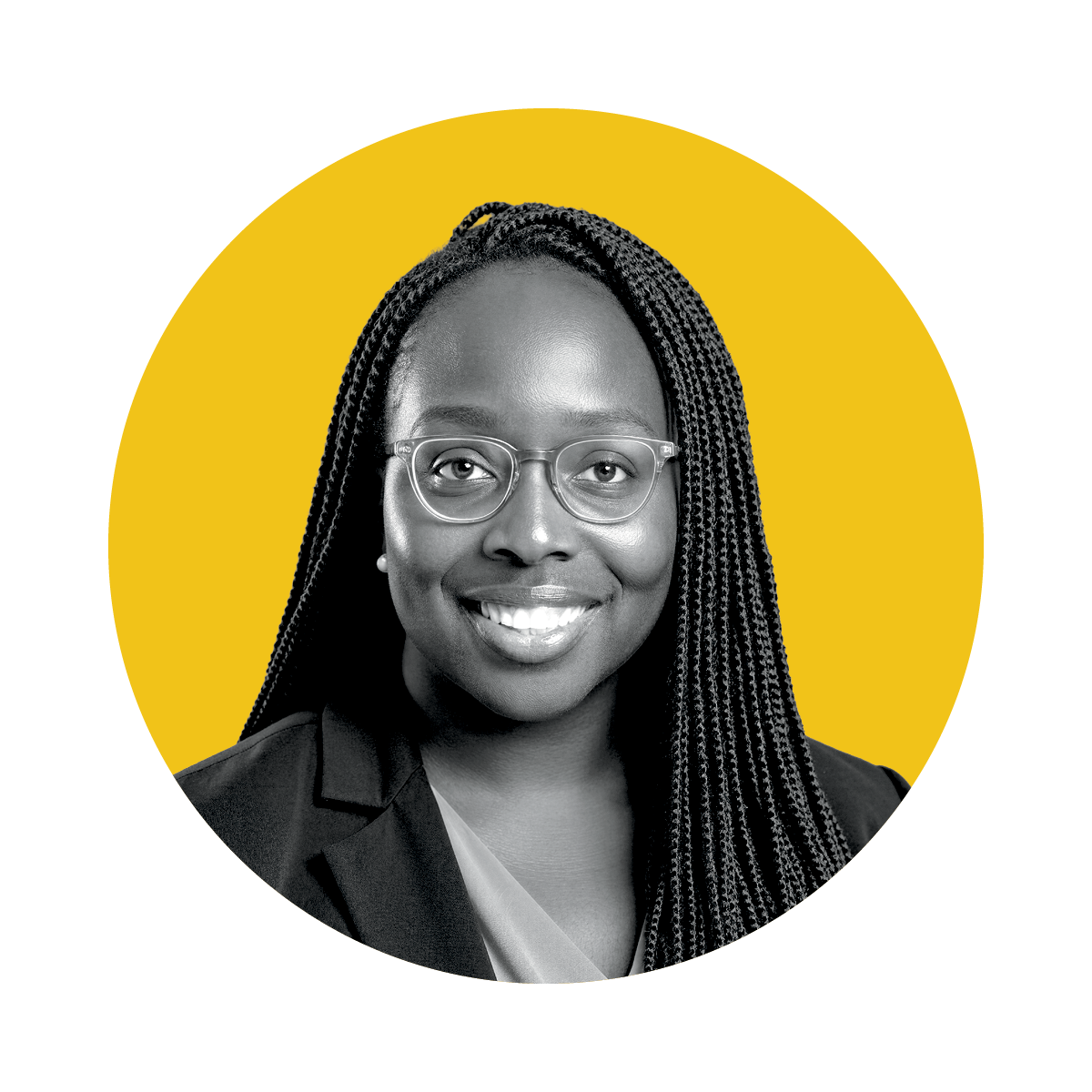 Mfon Umoh
Assistant Professor Mfon Umoh has always known that healthy older adults are an integral part of a thriving community. Raised in a Nigerian family by her parents and her grandmother, who joined her family in the U.S. when Umoh was in elementary school, she saw up close how she and her sisters benefited from her grandmother’s presence. In college, she started out studying bioengineering and minored in the biological basis of behavior, which ignited her fascination with the brain, and she discovered her love of research early on. “I really enjoyed asking a question, refining it and coming up with an experiment to test that question,” she says. But once she came to Johns Hopkins Bayview Medical Center for her internal medicine residency and the geriatrics fellowship, she connected with geriatricians, including her mentors to this day, Thomas Cudjoe and Esther Oh. It was then that Umoh, now a K12 Clinical Research Scholar and the Sarah Miller Coulson Center for Innovative Medicine Human Aging Project and Next Generation Scholar, realized she also loves being with patients and their families. This has motivated her to continue her work as a clinician while being an educator and a researcher.
The areas of social isolation, dementia and delirium are Umoh’s main research focus currently, work she shares with Cudjoe and Oh. “I became really passionate about the impact that social isolation can have because it’s something that we can intervene on,” she says. “A lot of work has shown that social isolation is really detrimental in terms of health outcomes, and related to cognitive decline and dementia in older adults.” The other thing driving Umoh’s research is whether her results can be translated into clinical applications that have a real-world effect on older adults.
“About a quarter of older adults in the U.S. are socially isolated, meaning an objective lack of social contact with others,” she explains. Because social isolation is one of 14 modifiable risk factors for dementia, per a list created by a Lancet Commission, it’s a key variable to focus on for anyone hoping to protect the mental health of older adults. Additionally, it has physical impacts, such as negative effects on functional abilities. One of Umoh’s passions is working on factors like this, that can be changed to offer potentially significant health benefits.
Since delirium also increases risk of cognitive decline, delirium is another natural focal point for Umoh. “We’ve seen that individuals who have episodes of delirium also have long-term poor cognitive outcomes, and I’m trying to uncover evidence that delirium is a modifiable risk factor for dementia,” she says. Her hope is that it will end up on the Lancet’s report, too. “Some of the work we’ve done looks at individuals who are cognitively normal and what happens to their cognitive abilities after an episode of delirium. We see a decline in their abilities, and that result has been really important and surprising because we oftentimes forget that [preventing delirium] is something we can do to prevent dementia.”
“A lot of work has shown that social isolation is really detrimental in terms of health outcomes, and related to cognitive decline and dementia in older adults.”
— Mfon Umoh
New Horizons in Delirium Research
Umoh credits her supportive mentors and the culture of collaboration across Johns Hopkins with her ability to build the career she wants. They’re also among the top reasons she chose to join the faculty here. “There are so many mechanisms of support here at Hopkins that excite me. It has the best support for junior investigators trying to establish themselves and grow new projects.”
Speaking of new projects, Umoh is currently working on a pilot supported by the Johns Hopkins Economics of Alzheimer’s Disease and Services Center on the impact of delirium on cognitive outcomes using a longitudinal study begun in the 1980s. “The study has detailed cognitive screens on older individuals that’s also linked to hospital claims,” she explains, “to see whether they had delirium episodes to see what impact that had on their cognitive trajectory.” With projects like these, Umoh is hopeful that she can examine whether older adults who started off with a normal cognitive baseline but experienced delirium also experience a negative cognitive change. That would indicate that interventions that prevent delirium can help a person’s long-term cognitive health. Just as with her social isolation work, the most important question to Umoh is whether an intervention will have effects on health outcomes in a patient’s everyday life.
“I really want to improve cognitive outcomes for older adults by improving clinical care, advancing research, and teaching and mentoring others in aging research and memory care,” she says.