
Collaborative Care for Children Undergoing SDR Surgery
Johns Hopkins Children’s Center, Kennedy Krieger Institute and Mt. Washington Pediatric Hospital work together to provide multidisciplinary care to children who have selective dorsal rhizotomy.
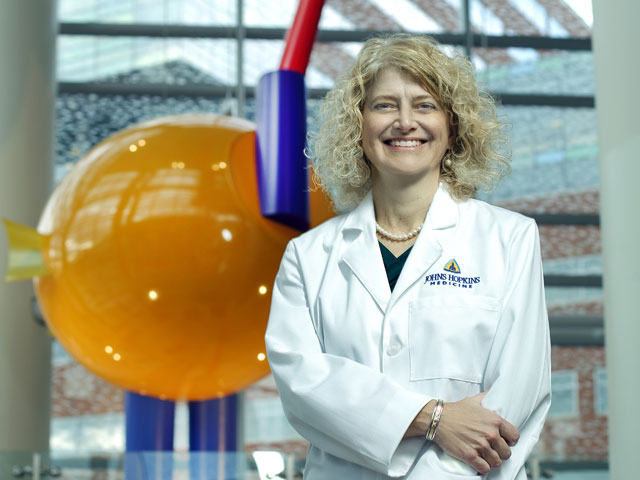
Shenandoah “Dody” Robinson
For children with cerebral palsy who undergoing selective dorsal rhizotomy (SDR) — a neurosurgery performed in the lower spine to relieve leg spasticity — Johns Hopkins Children’s Center (JHCC) offers multidisciplinary clinics and extensive rehabilitation programs through its collaborations with Kennedy Krieger Institute and Mt. Washington Pediatric Hospital.
In addition to seeing patients at JHCC, pediatric neurosurgeon Shenandoah “Dody” Robinson, a nationally recognized expert in treating and researching cerebral palsy and spasticity, also sees patients at Kennedy Krieger and Mt. Washington, which both have multidisciplinary clinics for cerebral palsy. Those teams include experts in orthopaedics, physical medicine and rehabilitation, neurology, physical therapy, child development and social work. Kennedy Krieger clinicians can also perform genetic testing to determine whether patients have a genetic mutation associated with cerebral palsy.
“We try to have the whole team present at the initial appointments, so we can best serve the patients and their families,” Robinson says. “Our goal is to have each child be as independent, functional and comfortable as they can be as they head into young adulthood, and that often takes a combination of interventions.”
Some patients, as recommended by their multidisciplinary team, may receive other treatments prior to the SDR surgery, including oral medications as well as Botox injections and serial casting to hold their feet in place. These treatments can also tell the team how much a patient may benefit from SDR surgery.
Around 30 centers nationwide offer SDR surgery, yet very few have the multidisciplinary team and rehabilitation options that Johns Hopkins Children’s Center, Kennedy Krieger and Mt. Washington provide collaboratively. Patients can be seen at clinics and complete their extensive rehabilitation at either Kennedy Krieger or Mt. Washington. Surgery is performed at Johns Hopkins Children’s Center — all with the same team of experts treating patients throughout their care.
SDR surgery, performed under general anesthesia, takes about four hours and involves using a microscope and electrophysiological readings to guide the cutting of abnormal sensory nerve rootlets that originate from the dorsal side of the spinal cord.
SDR is typically recommended for patients with spastic diplegia — muscle tightness that affects both legs — and can also be effective for children with hemiplegia, when one leg is affected more than the other.
The surgery is most often performed on patients ages 4 to 8, but can also be helpful for older children. Patients who have spasticity primarily in their legs usually benefit from SDR more than those with spasticity in their arms and legs.
To maximize the benefits of SDR surgery, children should be able to participate in extensive rehabilitation after surgery. Those with the potential to walk with the aid of braces or walkers have the biggest opportunity to benefit from SDR. Robinson performs the surgery one to two times per month.
Following surgery, children are in the intensive care unit for 24 to 36 hours.
“We work with the anesthesia pain service, and the kids are comfortable,” Robinson says. “Usually, if the pet therapy dogs come by, that’s about the only thing the kids remember during their whole hospital stay.”
Once the patients are awake, they are transferred to either Kennedy Krieger or Mt. Washington for inpatient rehabilitation for four to six weeks. Both facilities offer intensive outpatient rehabilitation as well.
In rehabilitation, patients learn how to improve their walking and develop better gait patterns. After one to two years, some children may become less dependent on devices such as walkers or braces. Prior to surgery, many walk on their toes and walk quickly, rather than with a proper heel-to-toe gait. Additionally, many have trouble isolating movements that would allow them to do things like walk up and down stairs, which requires landing on toes and rolling back to the heel. Sometimes their nerves prevent them from being able to separate movement in the left and right legs.
After surgery, with rehabilitation, these movements become possible and more natural.
“That’s one of the unique aspects of what we offer, that families can choose which facility works well for them,” Robinson says. “Children can make tremendous gains, and it opens doors for them to more activities.”
To refer a patient for SDR surgery, call 410-955-7337.
For Clinicians Clinical Connection
Clinicians, discover the latest in research and clinical innovation from Johns Hopkins experts. Access educational videos, articles, CME courses and other resources from our world-renowned institution.