
Off-Pump Coronary Artery Bypass Surgery Reduces Risk for Patients with Comorbidities
Johns Hopkins cardiac surgeon Hiroyuki Tsukui is expanding the patient pool for the technique, which involves operating on a beating heart.
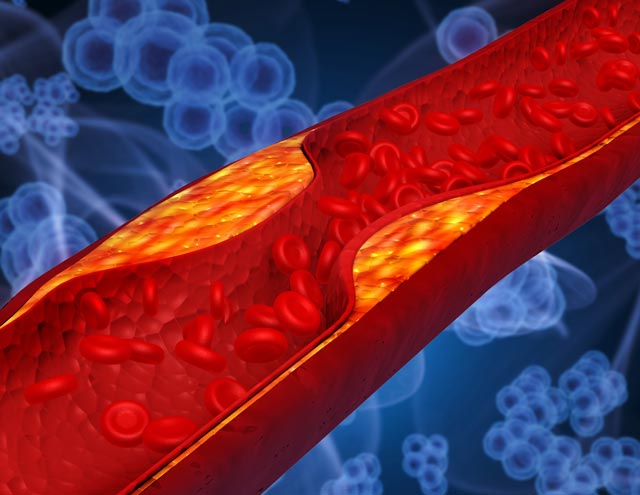
For patients who have comorbidities that make traditional coronary artery bypass grafting (CABG) too risky, Johns Hopkins offers minimally invasive off-pump coronary artery bypass (OPCAB) surgery, which involves operating on a beating heart without the aid of a heart-lung machine.
Cardiac surgeon Hiroyuki Tsukui, an expert in OPCAB, mitral valve repair and robotic cardiac surgery, joined Johns Hopkins in fall 2025, and his expertise has allowed for wider use of the technically challenging procedure. Nationwide, OPCAB accounts for only 10%–12% of bypass surgeries. With specialized surgical expertise, Johns Hopkins is expanding advanced beating-heart revascularization, with its OPCAB program achieving off-pump rates exceeding 60% — making the center a regional destination for complex beating-heart surgery.
OPCAB carries a lower mortality rate than on-pump CABG procedures. Other advantages include a shorter operation time, less bleeding, reduced risk of needing a transfusion, lower risk of postoperative atrial fibrillation and lower risk of infection.
The OPCAB procedure is virtually the same as an on-pump CABG operation, but with a beating heart instead of one that has been arrested. Surgeons use a device with three negative-pressure suction cups on it, allowing them to visualize the target vessel and turn the heart if necessary, and a stabilizer that further isolates the target vessel to reduce movement as the heart continues to beat.
The procedure involves tools unique to OPCAB, including an elastic suture as well as a CO2 blower and coronary shunt, both of which provide a bloodless surgical field to help prevent anastomosis failure. The shunt also keeps blood flowing in the coronary artery.
By avoiding the use of a heart-lung machine, OPCAB eliminates the physical stress this equipment can place on the body. This significantly reduces the risk of stroke, kidney injury and lung damage, Tsukui says, making the operation a safer option for patients with a high risk of stroke, chronic kidney disease or COPD. Those with a high risk of bleeding are also good candidates because OPCAB requires less blood thinner medication, with bleeding stopping faster compared with cardiopulmonary bypass when an anticoagulant reversal medication is used. Patients with porcelain aorta or advanced age can also benefit from OPCAB.
“The key is to select the appropriate patient for off-pump. If we select the appropriate patient, we can have a really good outcome.”
Hiroyuki Tsukui
In patients with porcelain aorta, for example, connecting a heart-lung machine to such a fragile vessel — one so calcified and brittle it resembles a porcelain teacup — carries an extremely high risk of causing a major stroke. Since OPCAB allows Tsukui to perform the bypass on a beating heart without touching the aorta or needing the machine, it is the only viable way to restore healthy blood flow in this kind of patient.
Some patients are not ideal candidates for OPCAB, including those with unstable hemodynamics prior to surgery, intractable malignant arrythmia or severe pulmonary hypertension. Patients with anatomical issues such as deep intramyocardial target vessels; severe cardiomegaly; small, calcified or diffusely diseased target vessels; and complex reoperations are also not ideal OPCAB patients.
“Not all patients are good candidates for OPCAB, but for some, revascularization cannot be achieved without it,” Tsukui says. “In my experience, around 60% of patients can have the off-pump technique for isolated CABG.”
In addition to expanding the patient pool for off-pump coronary artery bypass grafting, Tsukui brought a new technique to Johns Hopkins — using an ultrasonic scalpel to harvest arterial grafts using a skeletonized technique, which frees the internal thoracic artery (ITA) entirely from its surrounding tissue. This results in a significantly longer graft and makes for easier sequential grafting — connecting a single artery to multiple blockages in a chainlike fashion. As a result, Tsukui can maximize his innovative multiarterial grafting strategy, which involves the ITA, radial artery and gastroepiploic artery, and use these more durable, natural arteries to achieve complete revascularization.
This method relies on high-frequency sound waves rather than extreme heat to gently divide tissue, which helps preserve conduit integrity, reduces surgical trauma and increases graft longevity. Additionally, because this technique leaves the surrounding chest tissue and blood supply intact, it preserves the breastbone’s natural healing capacity. This greatly reduces the risk of deep sternal wound infections, offering a crucial benefit for patients, especially those who are elderly or have diabetes.
Expertise and Experience
Tsukui earned his medical degree at Niigata University in Japan and his doctorate at Tokyo Women’s Medical University, where he completed a residency in cardiovascular surgery. From 2003 to 2008, he was a fellow at the University of Pittsburgh Medical Center, where he focused on thoracic transplant and artificial heart devices as well as advanced adult cardiac surgery.
He was the CEO and attending surgeon of Hokkaido Cardiovascular Hospital in Sapporo, Japan, from 2016 until 2019. Prior to joining Johns Hopkins, Tsukui was director of cardiothoracic surgery at Independence Health System Westmoreland Hospital in Greenburg, Pennsylvania.
During Tsukui’s time with Independence, the hospital performed 1,355 isolated CABG procedures, 64% of which were OPCAB procedures. Tsukui led 535 of those CABG surgeries. The hospital’s mortality rate was below national averages across CABG surgeries.
“The key is to select the appropriate patient for off-pump,” he says. “If we select the appropriate patient, we can have a really good outcome.”
For Clinicians Clinical Connection
Clinicians, discover the latest in research and clinical innovation from Johns Hopkins experts. Access educational videos, articles, CME courses and other resources from our world-renowned institution.