
From Clinical Trials to Community Care
Washington, D.C., event explores the role of academia in ensuring global access to medical innovation
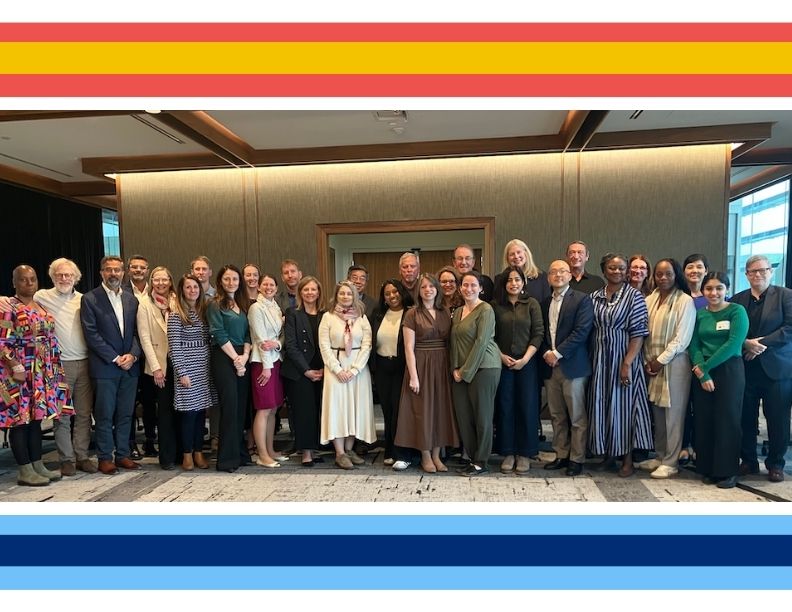
The full value of a medical breakthrough is realized when academic research equitably reaches communities in need. The path from research and development to impact is often winding and intricate, involving many actors and differing agendas, from researchers to university technology transfer offices to private sector companies and investors. Along the way, there are many opportunities to shape how quickly and affordably innovation will reach people in need. What role can academia play, particularly at the outset of research when their contributions and leverage are often strongest?
On April 29 and 30, 2026, The Johns Hopkins University, under the leadership of Richard Chaisson, M.D., and with support from the Provost’s Office through a Nexus Convening Award, co-hosted a two-day meeting with Unitaid, a United Nations agency promoting global scale-up of health technologies, to explore how university-based researchers can shape access to medical innovation in infectious diseases.
As an institution with more than 4,000 active patents, 100 annual licensing agreements and recent experience negotiating more equitable access for drug-resistant tuberculosis treatment, The Johns Hopkins University is in a unique position to bring together a diverse array of leaders in the field of infectious diseases to share practices, articulate gaps and challenges and start to build consensus about what academia can forge together.
The meeting explored several priority topics from the vantage point of different stakeholders, including the history of access to medicines advocacy campaigns at U.S. universities, a culture of medical research in academia that inadvertently deprioritizes access and its global impact, ethics, the design of research itself (including inclusion of key populations) to ensure equitable access downstream, community engagement, licensing, transparency and the role of funders. Panelists and moderators joined from U.S. and global institutions including the NIH, the Gates Foundation, Médecins Sans Frontières, Universities Allied for Essential Medicines, the Medicines Patent Pool, the Clinton Health Access Initiative, the University of California, San Francisco, the University of Liverpool and the University of Kwa-Zulu Natal.
In addition to convening, the meeting showcased the Johns Hopkins University faculty’s breadth of expertise in several of these areas as panelists and moderators, including Nancy Kass, Sc.D., deputy director for public health in the Berman Institute of Bioethics and professor of health policy; Nicole Salazar-Austin, M.D., Sc.M., associate professor of pediatrics; Caleb Alexander, M.D., M.S., professor of epidemiology; Anthony So, M.D., M.P.A., distinguished professor of the practice at the Johns Hopkins Bloomberg School of Public Health and founding director of the Innovation+Design Enabling Access (IDEA) Initiative; and Amita Gupta, M.D., M.H.S., the Florence Sabin Professor of Infectious Diseases and Director of the Division of Infectious Diseases at the Johns Hopkins University School of Medicine.
“Convening leaders of this caliber in global health to think about one of the most vital issues in our field was invaluable,” says Chaisson. “We started a conversation about universities’ role in a broader R&D ecosystem to build in access considerations early on. We look forward to the prospect of moving from principles to practice and catalyzing a movement for academia to embed access planning in research.”
Chaisson plans to carry the access work forward through collaborations with other partners who are similarly bridging scientific innovation and end-user access. The SMART4TB Consortium, which he leads, is conducting a number of trials for novel point-of-care diagnostics and TB treatment and prevention regimens, for which access planning is now being prioritized. An ACTG trial of long-acting bedaquiline, co-chaired by Sonya Krishnan, M.D., M.H.S., has made access planning for low- and middle-income countries a key component of protocol planning. “Funders are increasingly demanding that investments in health technologies ensure downstream access for the populations that will benefit most from innovations,” Krishnan says.