
Johns Hopkins Cochlear Implant Center Provides Comprehensive Pediatric Care
The multidisciplinary team includes specialists who help young patients learn to translate sounds into meaning.

The Johns Hopkins Cochlear Implant Center, one of the largest such centers in the country, provides intensive, multidisciplinary support for patients with cochlear implants (CI).
The devices, widely used since the 1980s, work by stimulating a part of the inner ear that processes sound. However, recipients — even if they get the implants when they are younger than 1 year old, as many do — must learn how to interpret those sounds in order to recognize words, discern the meaning behind tone of voice, even tell the difference between a cat’s meow and a cow’s moo.
A key differentiator for the Johns Hopkins Medicine center is the inclusion of auditory rehabilitation, provided by Kathleen Lehnert, speech-language pathologist.
“Johns Hopkins is one of the few centers in the country that has all aspects of multidisciplinary care, which is particularly important for children,” says Charley Della Santina, director of the CI center.
“If I wanted to get good at tennis, I’d probably do better if I have the involvement of a coach who is skilled and experienced, and has done this many times with many trainees before,” says Della Santina. “That is what our rehabilitation therapy team does. They help children and their families learn to get the maximum benefit at the fastest pace possible.”
Lehnert completed rigorous, multiyear training to earn certification from the AG Bell Academy as a listening and spoken language specialist, certified auditory-verbal therapist. She works closely with parents, giving them strategies and techniques for helping their child detect sounds, interpret what they hear, and attach meaning to the auditory information provided by a cochlear implant.
“When children are new to listening with the cochlear implant, they don’t yet understand that sounds are important,” she explains. “The brain is what listens, and the ears transmit sound to the brain. The goal is to support the brain’s growth and development through a new way of listening with the cochlear implant.”
From Diagnosis to Adulthood
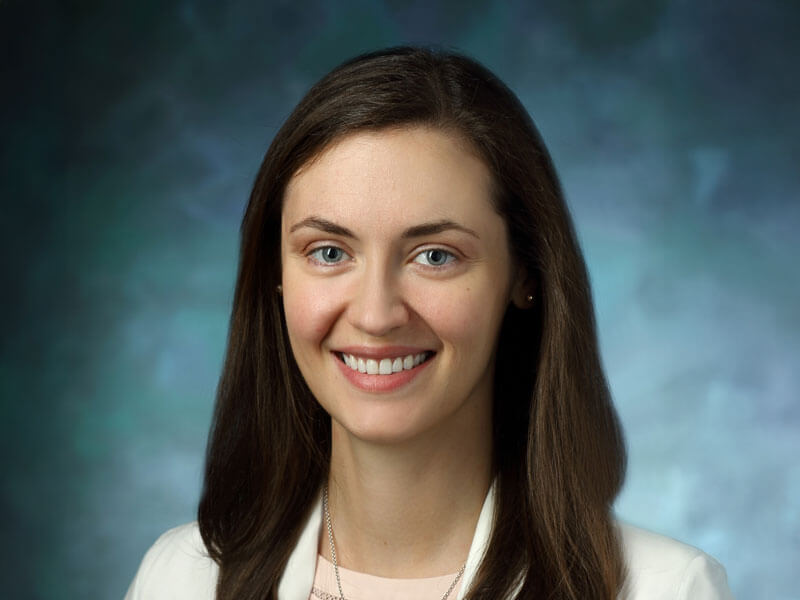 Carolyn Jenks
The iHeardd (Infant Hearing Early Access and Rapid Diagnostic Detection) clinic is one of the few in the mid-Atlantic region to offer specialized hearing tests for babies, including an auditory brainstem response (ABR) test.
“We have done a lot of networking in Maryland and the surrounding region, trying to connect newborn nurseries and NICUs to the iHeardd clinic to help expedite diagnosis and care of babies with hearing loss, since timing of intervention is critical,” says pediatric otolaryngologist Carolyn Jenks.
Once hearing loss is diagnosed, the otolaryngologist initiates additional workup, including imaging and genetic testing. (The Food and Drug Administration recently approved its first genetic remedy for a specific kind of hearing loss; other genetic therapies are likely to follow.)
“The process is often logistically and emotionally overwhelming for families, so we do our best to help streamline appointments and support families,” says Jenks. If the diagnosis shows that a cochlear implant could improve a child’s hearing, the pediatric team has extensive decision-making conversations with families.
Also important, says Jenks, is offering cochlear implants to patients with diverse medical needs, such as children with autism or Down syndrome, or with inner ear malformations that hinder hearing even with the implant.
“Some programs are hesitant to implant kids that might not have optimal outcomes,” she says. “I think that’s a shame because children benefit from CI, even when they have significant other neurologic and medical conditions. We support families even when the journey is going to be longer and less straightforward.”
Steve Bowditch, Courtney Carver and Dawn Marsiglia are the audiologists who counsel parents about the implant process and likely outcomes. They also work with patients and their families to program the devices and evaluate the results.
“We ask the parents about their goals for their children,” says Marsiglia. “Do they want their child who’s been diagnosed with a significant hearing loss to communicate by speaking and listening, or are they comfortable with a fully manual type of communication mode or somewhere in between?
“How we guide them has a lot to do with what their desires are and how they would like their child to grow up. For the children who qualify for a CI, it is usually the only option to provide enough input for the development of spoken language.”
The implant surgery itself is generally an outpatient procedure under general anesthesia that takes just a couple of hours, says Jenks. Patients return one to two weeks later to see their surgeon, meet with audiologists who activate the device, and with Lehnert to begin the process of learning to recognize and interpret sounds.
Parents can expect between seven and 10 appointments with audiologists the first year after the implants, as the devices are adjusted based on the child’s development.
Della Santina says a new offering that’s becoming more common is remote programming, which allows audiologists to adjust implant settings over an internet connection. He notes that the center, which has about 4,500 patients with cochlear implants, can offer remote programming in Maryland, Florida and Washington, D.C.
Early referral to a comprehensive cochlear implant program can help streamline diagnosis, reduce delays in intervention and provide families with the multidisciplinary support needed to navigate complex decisions, notes Jenks.
Through close collaboration among otolaryngologists, audiologists, speech-language specialists, educators, geneticists and other pediatric subspecialists, the Johns Hopkins Cochlear Implant Center is committed to helping every child maximize access to sound, language and lifelong opportunities.
For Clinicians Clinical Connection
Clinicians, discover the latest in research and clinical innovation from Johns Hopkins experts. Access educational videos, articles, CME courses and other resources from our world-renowned institution.