
A Heartfelt Tribute for CDH Care
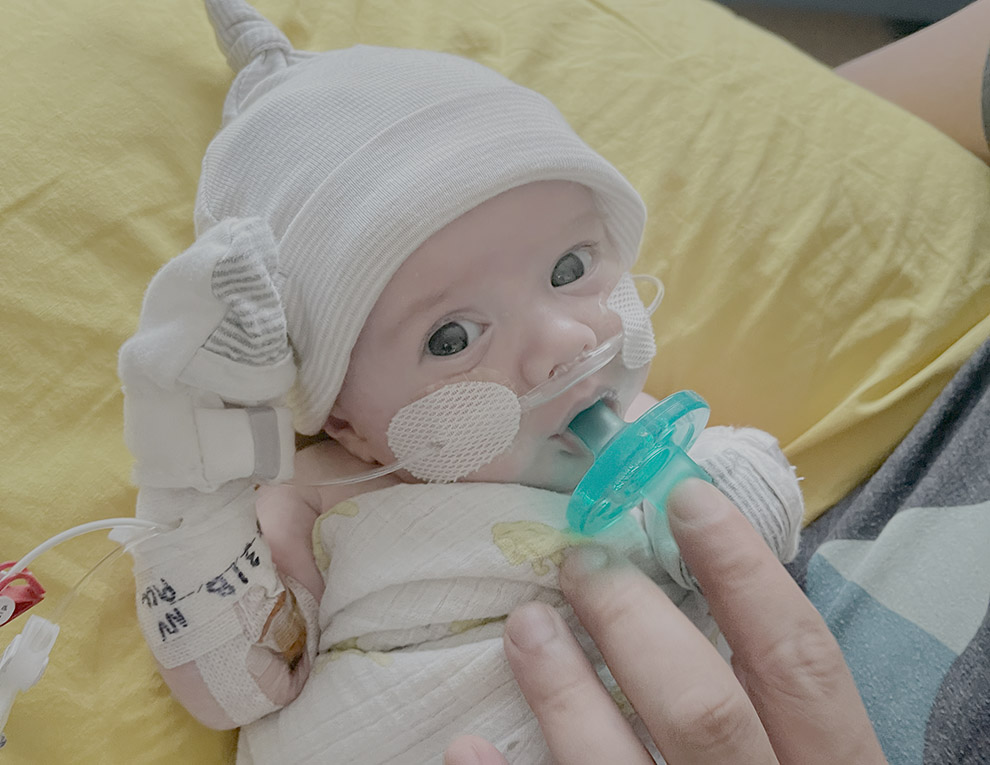
Congenital Diaphragmatic Hernia (CDH) is a severe birth defect in which the diaphragm — the muscle separating the abdomen from the chest — does not develop completely, allowing abdominal organs to fill the chest, threatening the baby’s life.
But there is hope for babies with CDH. The Center for Congenital Diaphragmatic Hernia at Johns Hopkins All Children’s Hospital in St. Petersburg, Florida, led by David Kays, M.D., offers an advanced level of care that results in outcomes for these babies that far exceed the national benchmark.
One special family traveled all the way from the Cook Islands in the South Pacific Ocean to receive specialized care that would save their baby’s life. They share their journey in this beautiful letter of gratitude:
April 10, 2026
To everyone at the Center for Congenital Diaphragmatic Hernia:
There aren’t words weighty enough to convey our thanks to you, the team that saved our child’s life. I write words for a living, and I can’t think of any. But there are words to describe experience. Our experience was that floor 8 Northeast was our baby’s first village.
Our story mirrors other stories we heard here: a severe diagnosis, a doctor who recommended terminating the pregnancy, a canceled baby shower. We traveled from the Cook Islands, in the middle of the South Pacific Ocean, to Los Angeles, where a surgeon at a reputed children’s hospital told us there was a 70 percent chance our baby would die shortly after birth. So, we came to St. Petersburg because moms in a Facebook group told us to.
The road here was not smooth. A scammer drained our savings after we decided to relocate. Sam was not granted a medical emergency visa to travel to the United States until the ninth month of my pregnancy. We landed in Florida on the same day my closest friend died of cancer.
We named our baby Kauvai, which means “river” in Cook Islands Māori, the language of the islands he comes from, because there’s a Bible verse that says God can carve a river through a wasteland. Rivers flow in harsh terrain. Kauvai’s name is a declaration. His middle name is Manava, which means a few things, among them “courage,” “endurance,” and “vitality.” Manava also means “lung.” We are praying people, but this naming, this claiming of hope, was also anchored in the trustworthiness of what you have built here.
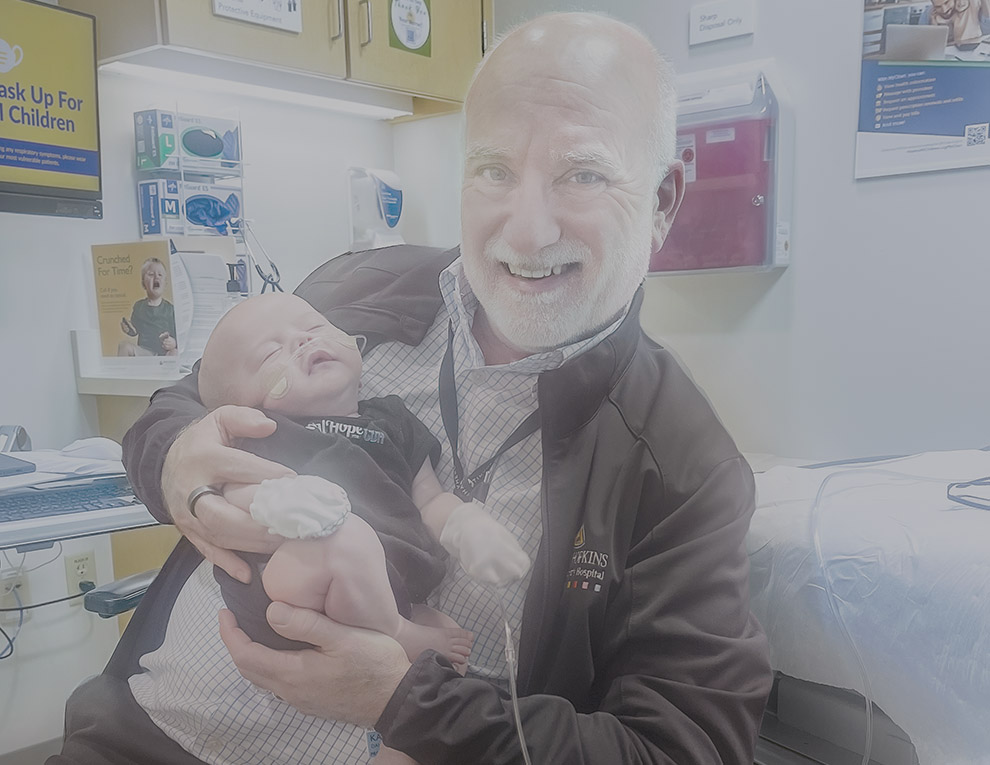
Other doctors talked about predictive ratios, aggressive interventions, and standard operating procedures. Dr. Kays explained to us the first time we met him that he would use machines and medications when necessary, but not otherwise. He talked about trusting the body to do the growing and healing work it instinctively does. He told us to ignore the numbers, the O/E, that we had a liver up (migration from the abdomen up into the chest cavity). He was the first medical professional who referred to our child as a person, rather than a statistical anomaly.
“We just have to meet your baby,” he said, “and he’ll tell us what he needs.”
Sam and I both teared up during that first meeting with Dr. Kays. We are the kind of people who drink raw garlic in lemon juice when we get sick. For Sam especially, trust in a medical team felt complicated. His sister complained of a headache, was misdosed in a hospital, and died. To have our baby’s agency and spirit acknowledged felt like hope.
Over the next months, we saw that this philosophy, of attunement, bears out in practice. The CCDH operation centers on listening, which is to say, a willingness to recalibrate. We saw this when Kauvai tried and failed to wean off ECMO (extracorporeal membrane oxygenation) and when he tried and failed to wean off CPAP (continuous positive airway pressure). The wean plans move slowly and steadily forward but pause and resume according to a patient’s readiness. Through medical technology, but also through deep and diligent attention, Kauvai’s care was attuned to what he needed at every turn.
We expected to meet a brilliant surgeon in Florida. What we did not expect were the compassion and community we would experience on the eighth floor. Our months in the unit contained moments of fear so visceral their imprint will continue to live in our bodies. We will remember oxygen desaturation alarms climbing and phone calls after midnight. But our memories are larger than the anxieties. We will also remember the Mickey Mouse drawn on the dressing covering the incision where tubes entered Kauvai’s jugular vein. We will remember the nurse who decorated the door, rebranding Room 806 as Kauvai’s Koi Pond, and the nurse who made us a Valentine bearing our baby’s tiny footprint. We will remember the contrast cards depicting symbols of the places he comes from — an outline of California, a frangipani, a coconut tree — that one morning appeared above his bed.
To every doctor who listened to Kauvai by studying his charts, gases, and body: thank you for the hundreds of decisions, large and small, you made to keep our baby alive. We are taking him home because you knew when to induce, when to ventilate, when to operate, when to wean, when to wait, when to trust his body, and when to offer him a little more support.
To the providers who asked us, twice a day, if we had questions: thank you for your patience. Your explanations felt like care.
To the ECMO specialists and perfusionists who managed the machine that stood in for Kauvai’s heart and lungs when his body could not yet support itself: thank you for your vigilance.
To the respiratory therapists: thank you for helping our baby find his breath. Thank you for the enthusiasm you brought every time you came in to turn down his vent. You made small steps feel like big wins.
To the physical therapy and occupational therapy teams: thank you for stretching Kauvai’s muscles during the weeks he moved and the weeks he did not. You helped his body cope with intensive care.
To the social workers and palliative care team members who tended the emotional landscape of this experience: thank you for checking in on us and creating space for us to connect with other parents who know the weight of loving a critically ill child.
To the staff who emptied trash cans twice a day and mopped the floor every morning: you made space for us to live. Your work also felt like care.
And to the nurses, our guides through unfamiliar terrain: thank you for changing our baby, bathing him, repositioning him, swaddling him, suctioning him, patting his chest, holding his head, talking to him, and being with him when we needed a break. You cared for him when he was motionless, sedated, swollen, paralyzed, intubated, withdrawing, shaking, learning to breathe, and learning to eat. You rocked and cuddled him to sleep in the middle of the night. You came back to visit him when you were no longer assigned to him. You leaned over his bed and greeted him like an old friend.
In your care, Kauvai transformed from a motionless baby completely dependent on machines to a tiny person who frowns, burps, and smiles in his sleep. He doesn’t know what ECMO means. He doesn’t know his parents were told he probably wouldn’t make it. He just breathes and breathes again.
On the days that feel heavy, we hope you will remember that what you have built here will matter for the rest of Kauvai’s life, and for the rest of ours.
With enormous gratitude,
Rachel and Sam
Kauvai’s parents