
A Boost for Ocular Immunology Research
Efforts to advance treatments for immune-mediated and inflammatory diseases of the eye have received a significant boost thanks to the Berry Family Research Endowment.

George and Mary Nell Berry at the Wilmer Centennial Gala, June 2025
Ocular immunology research is a subspecialty of ophthalmology that focuses on immune-mediated and inflammatory diseases of the eye, which result when the body’s immune system mistakenly attacks healthy eye tissue.
While such diseases are severe, they are treatable through immunosuppressive drugs that allow doctors to modulate the immune system. “It’s very satisfying to see patients regain their vision,” says ocular immunologist Paulina Liberman, M.D., who joined the Wilmer Eye Institute, Johns Hopkins Medicine, faculty in 2024, after completing two fellowships at Wilmer. She previously directed the uveitis division at the Pontificia Universidad Católica de Chile’s Department of Ophthalmology.
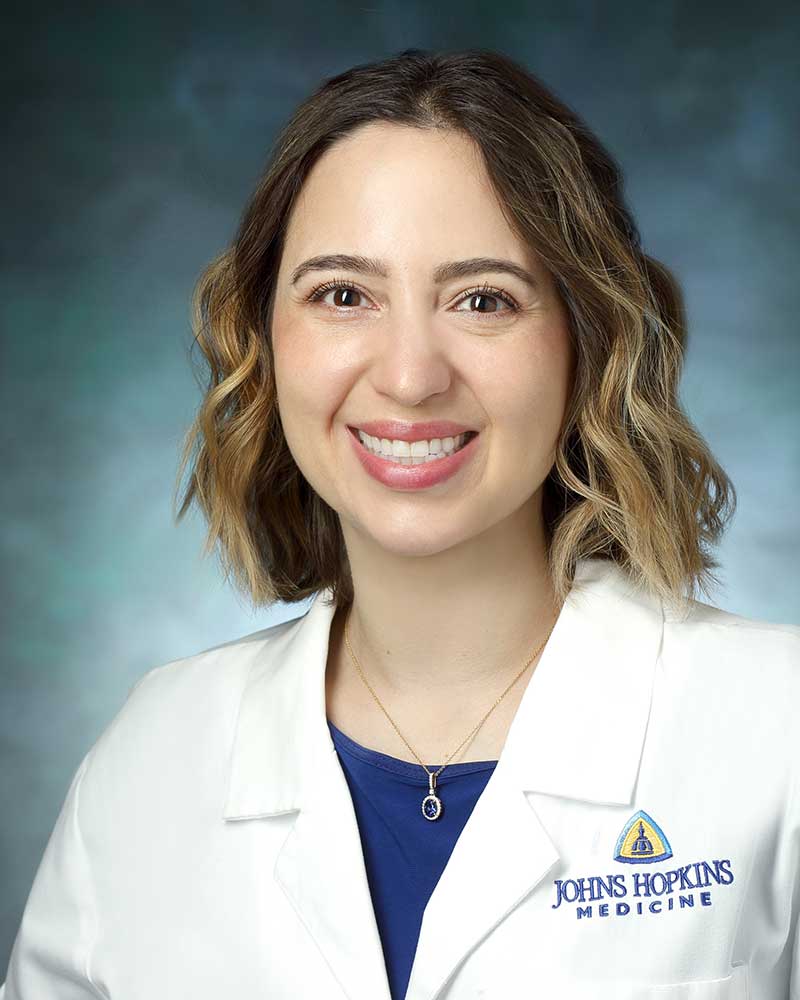 Paulina Liberman
At Wilmer, Liberman treats patients with complex systemic autoimmune diseases such as rheumatoid arthritis or sarcoidosis that can affect the eyes. She also sees patients with primary autoimmune diseases of the eye. Uveitis — the most common one — is inflammation of the uvea, the vascular layer of the eye in between the sclera and the retina.
Her research efforts to advance treatments for such diseases have received a significant boost thanks to the Berry Family Research Endowment, which will also provide support for Liberman and her colleagues to continue their work on rarer eye diseases that span multiple subspecialties.
The endowment was gifted by George Berry, a retired partner at Ernst & Young who led audit services for major multinational companies and continued to serve in advisory and consulting roles, and his wife, Mary Nell, who taught elementary school, including children with special needs. The Berrys support and serve on multiple advisory boards at Johns Hopkins Medicine.
“The leaders and colleagues of the specialties we support, like Dr. Peter McDonnell and Dr. Liberman at Wilmer, are, in our view, the very best in their fields,” say the Berrys. “It is our hope that endowments honoring these individuals will spur more innovations and discoveries in patient care for which Johns Hopkins Medicine is known throughout the world.”
Liberman notes that one current area of collaboration at Wilmer is peripheral ulcerative keratitis, in which the immune system attacks the peripheral cornea, in severe cases leading to vision loss. At Wilmer, cornea specialists and uveitis specialists work together. “They take care of the surgical part, and we take care of modulating the immune system,” explains Liberman, adding, “That conjunction of specialists is not something that’s seen commonly.”
Liberman next plans to focus her research on another potentially blinding disease, mucous membrane pemphigoid (MMP), a rare chronic autoimmune disease that can cause blistering and scarring of mucous membranes, including in the eye. Diagnosis is challenging, she notes, in part because while some patients appear to have MMP, biopsies of their affected eye tissue may result in a false negative.
Liberman’s project will test whether AI can spot differences in eye images that doctors can’t see, thereby aiding in more accurate diagnosis of MMP. “At Wilmer, we’re trying to establish protocols for these diseases that are uncommon and challenging,” she says. “The generous funding from the Berry Endowment will greatly aid us in our efforts.”
“The Institute is grateful for this support from Mr. and Mrs. Berry,” says Peter J. McDonnell, M.D., the Alan and Marlene Norton Director of the Wilmer Eye Institute and the William Holland Wilmer Professor of Ophthalmology. “Those of us who remember what it was like when we were young assistant professors just starting out and looking to test out our new ideas understand how much a gift like this can help launch our research projects and our careers.”
For Clinicians Clinical Connection
Clinicians, discover the latest in research and clinical innovation from Johns Hopkins experts. Access educational videos, articles, CME courses and other resources from our world-renowned institution.