
Johns Hopkins Researchers Are Reimagining Critical Care on the Battlefield and Beyond
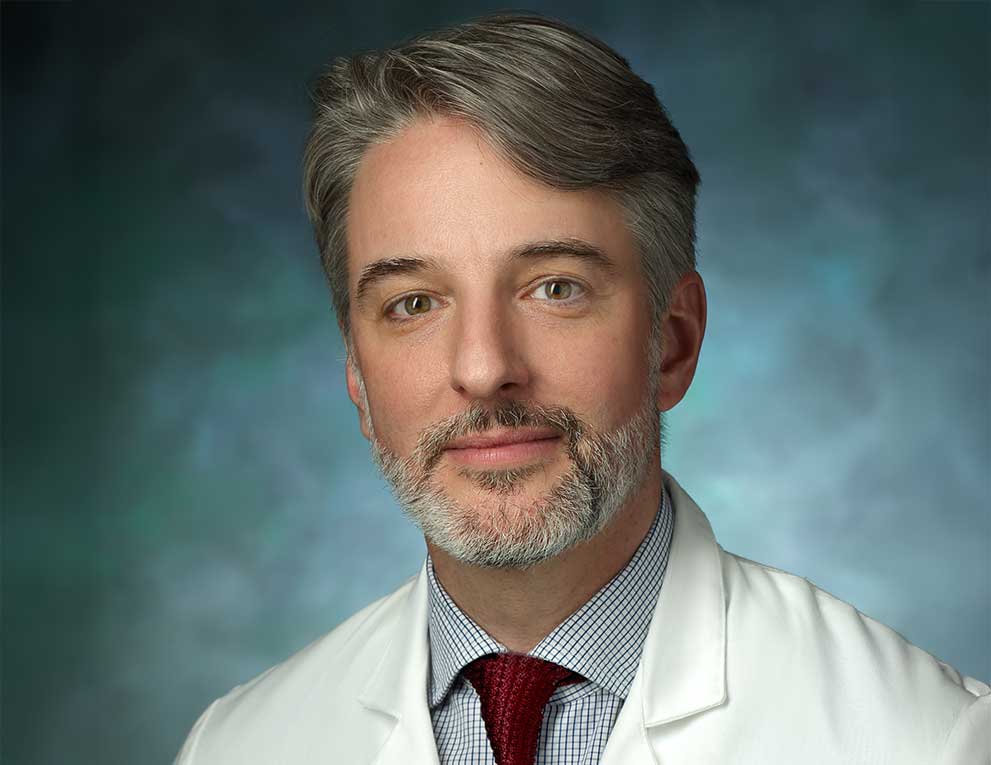
Steve Keller
Honoring Service Through Innovation
Memorial Day invites reflection on sacrifice, service and the people who place themselves in harm’s way to protect others.
For physicians and researchers at Johns Hopkins Medicine, it is also a reminder of the pressing need to provide timely care to injured service members, particularly in the heat of combat, when rapid transport to advanced high-level trauma care may not be feasible.
Steve Keller and his team are developing several technologies to expand treatment capabilities for combat personnel who experience polytrauma, providing potentially lifesaving help — right on the battlefield.
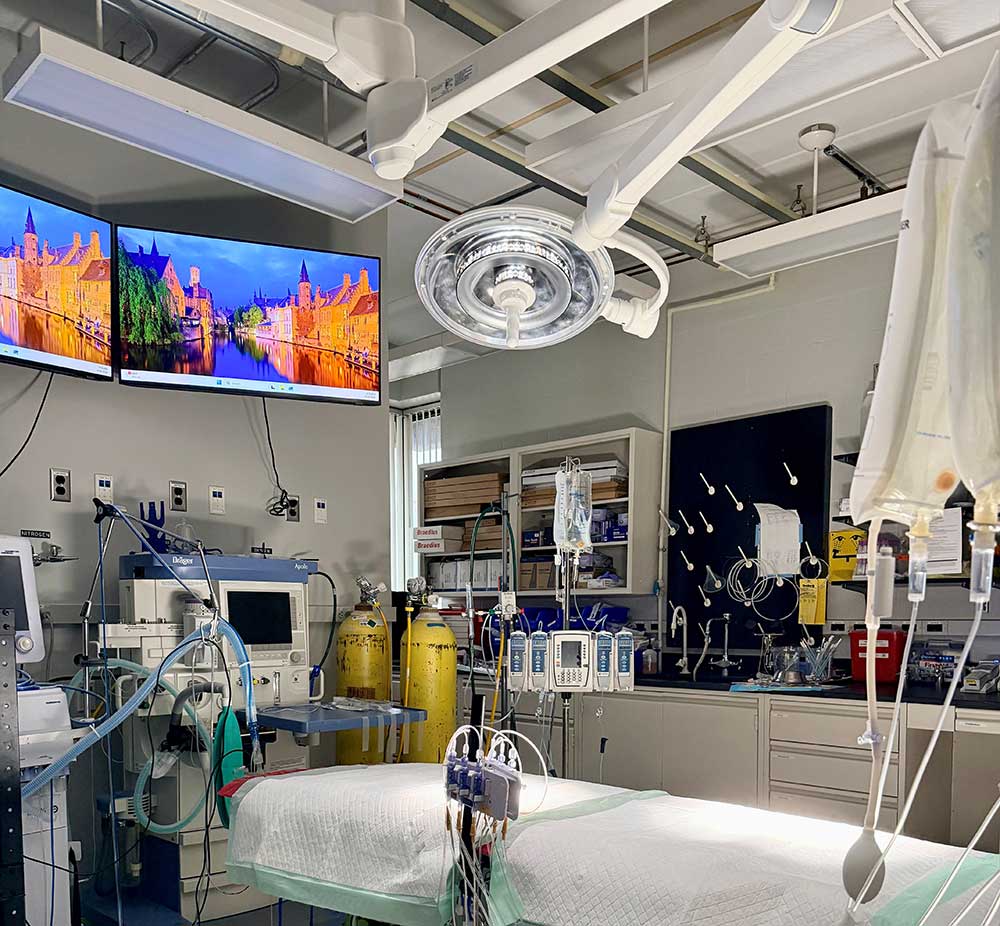 Dr. Keller's Lab
The urgency behind the work is rooted in the changing reality of military medicine. In future conflicts involving near-peer adversaries, quick evacuation from the site of injury may not be possible. Air superiority may not exist, transport may be delayed, and front-line medics may be forced to sustain critically injured personnel for hours or even days in austere environments with limited supplies and personnel.
“These are scenarios where advanced life support may need to happen far from a hospital,” says Keller, a physician-scientist in the Division of Pulmonary and Critical Care Medicine. “We are trying to develop systems capable of supporting patients in places where traditional critical care infrastructure simply does not exist.”
With initial funding from the Defense Advanced Research Projects Agency (DARPA), Keller’s laboratory is leading efforts to develop new technologies aimed at improving survival from two of the leading causes of combat trauma mortality: hemorrhagic shock and acute lung injury.
The work combines critical care medicine with an array of disciplines, including engineering, materials science, physiology and computational modeling, to create systems that are smaller, more adaptable and increasingly autonomous.
One major focus of Keller’s lab is development of autonomous life-support systems capable of resuscitating patients in hemorrhagic shock using noninvasive monitoring and physiologic feedback rather than continuous clinician management. The goal is to expand the capabilities of battlefield medics, allowing a single provider to deliver simultaneous treatment to several injured service members at the point of injury and then during transport, including with potential unmanned evacuation platforms such as drones.
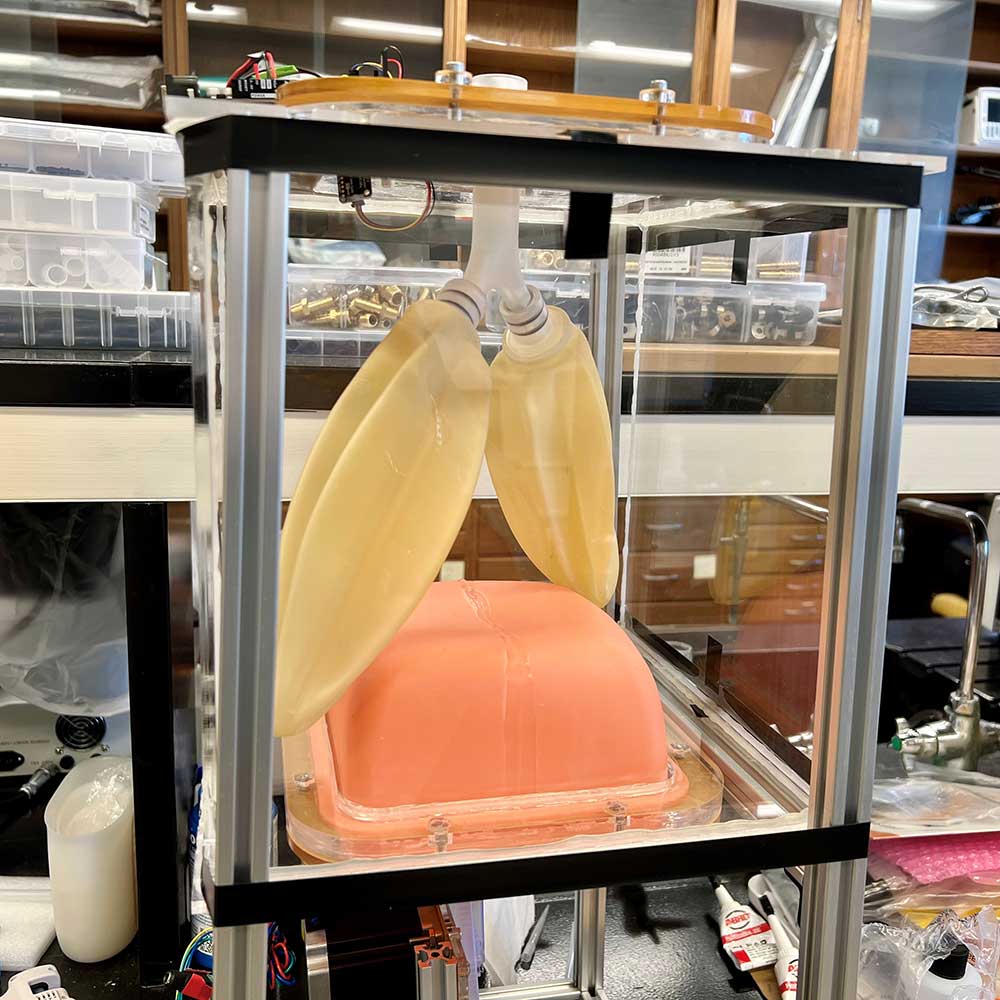 Dr. Keller's Lab
At the same time, Keller’s group is working on automated extracorporeal respiratory support systems intended to help sustain patients with severe lung injury when mechanical ventilation or intubation may not be feasible in the field. While extracorporeal membrane oxygenation, better known as ECMO, has traditionally been limited to highly specialized hospitals with large care teams, Keller and his collaborators are fundamentally rethinking how and where this care can be delivered.
Despite major advances in portable ventilators and critical care transport, advanced respiratory support remains extraordinarily complex. Successful ECMO support currently depends on highly trained specialists and constant monitoring. Keller believes future systems must reduce that dependency if they are to become viable in battlefield medicine, rural healthcare settings, disaster response and prolonged transport scenarios.
The team is also developing novel vascular cannulas using advanced biomaterials, including shape-memory polymers that can simplify insertion and improve extracorporeal support in emergency settings.
Preparing for the Challenges of Future Combat Care
The work itself is deeply interdisciplinary. Advancing ECMO technology requires far more than clinical expertise alone. Engineers must understand the realities of critical illness. Physicians must engage with device design and system mechanics. Researchers must test systems under realistic physiological conditions before they can ever reach patients. Keller says building teams capable of bridging those disciplines remains one of the most important, and challenging, aspects of the work.
That collaborative environment is one of the reasons Keller moved his research program to The Johns Hopkins University in 2021. The institution’s combination of engineering innovation, translational science and clinical expertise created an opportunity to accelerate development of technologies that may eventually transform how critically ill patients are treated both inside and outside the hospital.
From the Battlefield to Civilian Care
While much of the research is inspired by military medicine, Keller emphasizes that the potential impact reaches far beyond combat care. The systems being designed to stabilize wounded service members may also improve outcomes for civilians injured in rural trauma settings, disaster zones or hospitals without immediate access to advanced extracorporeal support. Portable and increasingly autonomous life-support systems could expand access to lifesaving technologies for patients who currently have little opportunity to receive them.
For Keller and much of the Johns Hopkins Pulmonary and Critical Care Medicine team, Memorial Day serves as both a reflection and a responsibility.
Behind every research project, prototype and clinical innovation is a simple but powerful goal: Create more time for patients to survive, recover and return home.
For Clinicians Clinical Connection
Clinicians, discover the latest in research and clinical innovation from Johns Hopkins experts. Access educational videos, articles, CME courses and other resources from our world-renowned institution.