
CITED: Spring/Summer 2026
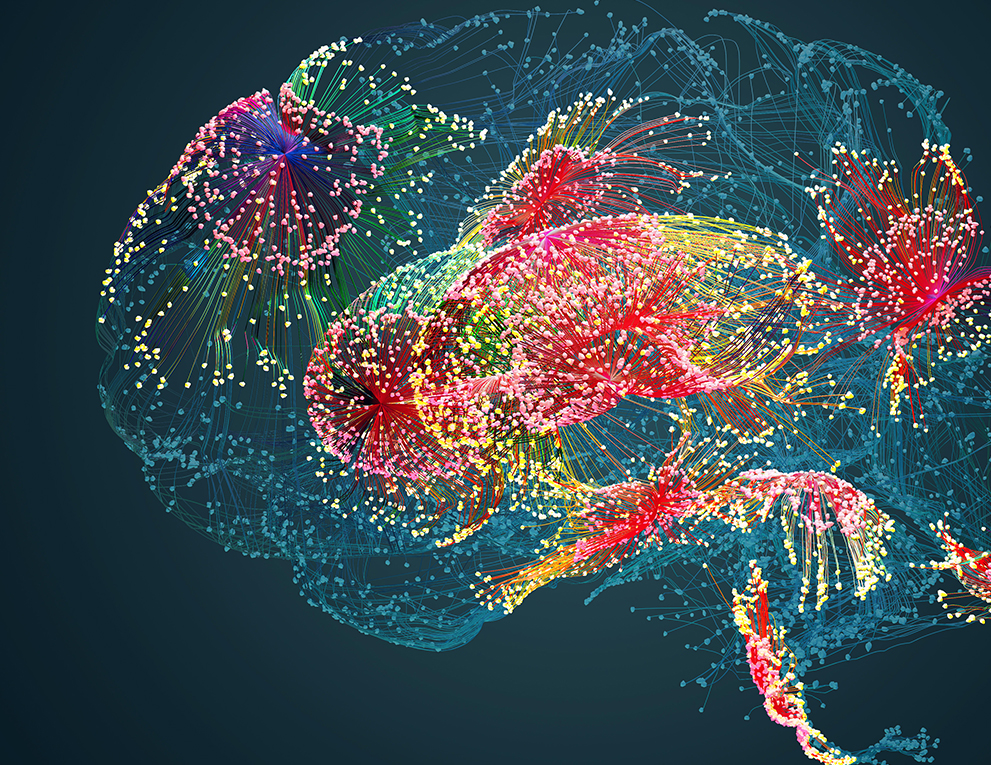
“Microbes don’t just reside in our gut. They can directly influence cancer behavior.”
Oncologist Dipali Sharma, who led a study showing how certain pathogenic bacteria in gut and breast tissue can promote breast cancer development and progression by hijacking a key metabolic enzyme known as spermine oxidase (SMOX). The work, published in Cancer Research, reveals a novel link between microbial dysbiosis — the imbalance of good and harmful bacteria — and breast cancer, and identifies SMOX as a potential therapeutic target.
“Using this tool in the future could help emergency departments better decide which patients need urgent neurosurgical care and could save patients time and money from unnecessary testing and imaging.”
Pediatric neurosurgery fellow Kurt Lehner reporting on a new scoring system he developed with pediatric neurosurgeon Eric Jackson to predict the likelihood of a shunt failure in children with hydrocephalus. The search for better screening is a top concern due to the uncertainty of symptoms and scarcity of specialists, note the researchers, who describe their approach in The Journal of Pediatrics.
“Seeing that boosted speed training was linked to lower dementia risk two decades later is remarkable because it suggests that a fairly modest nonpharmacological intervention can have long-term effects.”
Neuroscientist Marilyn Albert, describing results of a study showing that adults age 65 and older who completed five to six weeks of cognitive speed training and who had follow-up sessions one to three years later were less likely to be diagnosed with dementia up to 20 years later. “Even small delays in the onset of dementia may have a large impact on public health and help reduce rising health care costs,” notes Albert, corresponding author of the study, which appeared in Alzheimer’s & Dementia: Translational Research and Clinical Interventions.
“We see the light at the end of the tunnel here, and that target is an approved and available blood test for ALS.”
Johns Hopkins neurologist Alexander Pantelyat, co-investigator of a multi-institutional study published in Nature Medicine that identified a distinct set of proteins in blood that can detect ALS with remarkable accuracy up to a decade before symptoms appear. “With a test that allows for earlier detection of ALS, we have opportunities to enroll people in observational studies, and by extension, offer promising disease-modifying — and hopefully disease-stopping — medications, before ALS becomes debilitating,” says Pantelyat.
“It’s like mapping the location of all the trees in a forest, but also adding information about soil quality, weather and geology to understand the forest ecosystem.”
Neuroscientist Dwight Bergles describing results of a study, published in Cell, that constructs new maps of mouse brains showing the precise location of more than 10 million cells called oligodendrocytes. (These cells form myelin, a protective sleeve around nerve cell axons, which speeds transmission of electrical signals and supports brain health). The maps not only paint a whole-brain picture of how myelin content varies between brain circuits, but also provide insights into how the loss of such cells impacts human diseases such as multiple sclerosis, Alzheimer’s disease and other disorders that affect learning, memory, sensory ability and movement.