
Building Trust
Rebecca Alvania leads during a disruptive time in infectious disease.
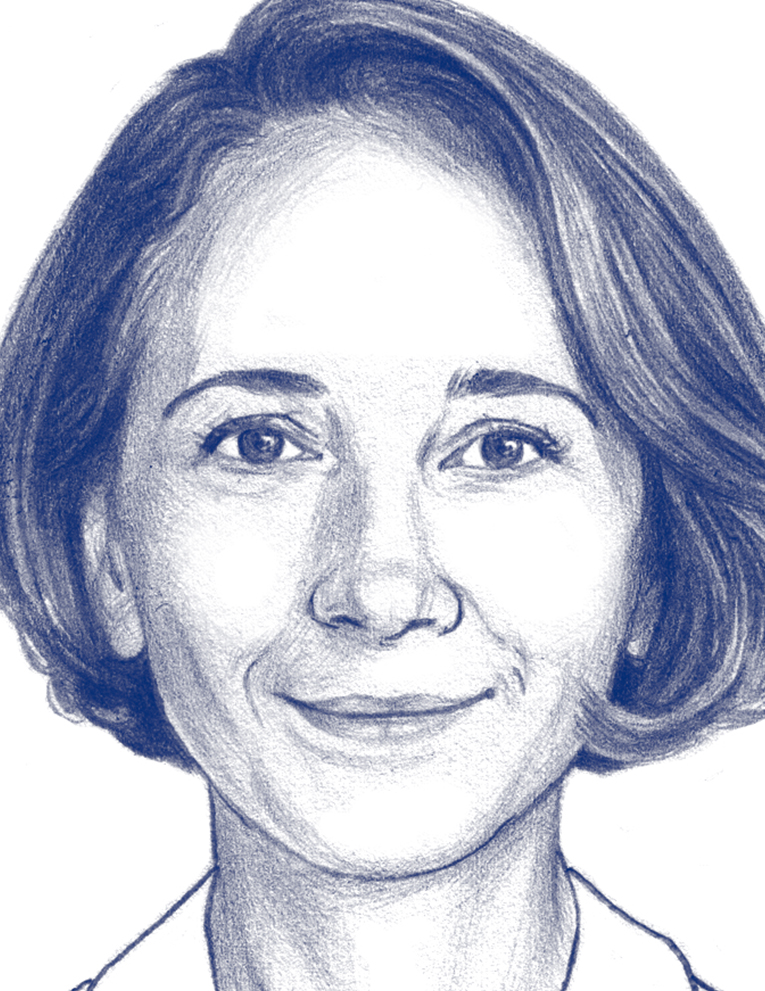
Rebecca Alvania (Ph.D. ’08) was just a few months into her new position as executive director and CEO of the National Foundation for Infectious Diseases (NFID) when seismic shifts in funding and policy at the federal level forced a radical rethinking among many of her nonprofit organization’s stakeholders: public health organizations, researchers, industry partners and the general public.
“For years, the Centers for Disease Control and Prevention was seen as the unifying force in infectious disease, the group that set the agenda and led everything from disease surveillance to data analysis to vaccine policy,” she says. “Now that the CDC has shifted its priorities, many of our groups are redefining how they work. They are stepping up to independently issue immunization schedules, for example, and to create communication programs around flu vaccination.”
The collaborative spirit she has encountered has been heartening, she says. “As a community, despite the disruption right now, everyone is working with the same goals in mind,” says Alvania, who worked for 15 years in scientific publishing (as an editor with Journal of Cell Biology, Neuron and Trends in Cell Biology) before moving into administration as CEO of the American Society for Cell Biology (2022–2025).
She says the educational foundation she received at Johns Hopkins, where she earned a doctorate in neuroscience from the school of medicine and a master’s degree in science communications (’08) from the Krieger School of Arts and Sciences, has prepared her well.
“In my day-to-day work, I am very evidence driven. I want data, and that points back to my doctoral work. It shapes the way that I think, the way that I tackle problems,” says Alvania, whose role includes a significant amount of fundraising — to support the NFID in its public education campaigns, continuing education programs and community engagement and prevention efforts.
“In everything I do, being able to communicate effectively with all sorts of different stakeholders is so crucial,” she says.