
fellows forward
Catching Up with Ryan Westergaard ('11)
A career that balances research, mentorship, clinical practice and policy leadership is an ideal fit for Westergaard
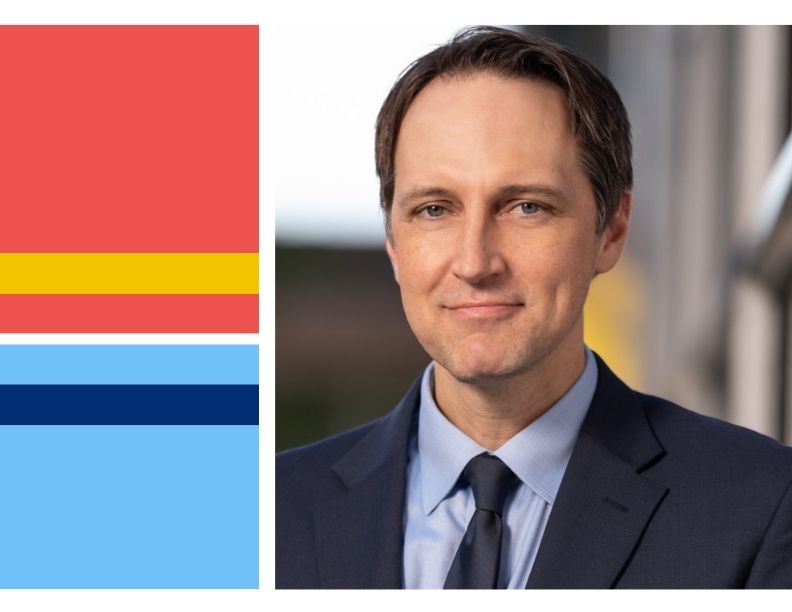
Dr. Ryan Westergaard
Published in
IDeas Magazine -
Spring 2026
Ryan Westergaard (’11) has spent his career probing the complexities of substance use disorder and infectious diseases as a clinician, investigator and public health policy leader. In a recent conversation, he talked with IDeas about how fellowship shaped his focus and the things he learned in Baltimore that have stayed with him.
Westergaard spent his fellowship years working at the intersection of HIV and substance use under the mentorship of Gregory Kirk, vice chair for clinical and translational research at the Johns Hopkins University School of Medicine, who has remained a trusted collaborator and friend.
“He set a powerful example of how to pair rigorous, impactful research with thoughtful academic leadership, and his mentorship has continued to influence how I approach both science and team building.”
Upon completion of the Hopkins ID fellowship program, Westergaard joined the faculty at the University of Wisconsin-Madison, where he embarked on a research program focused on HIV clinical epidemiology and substance use. His first major project was a K23 award from the National Institute on Drug Abuse that allowed him to continue the work he started at Johns Hopkins, extending that investigation into incarcerated and justice-involved populations living with HIV in the Midwest.
“I continued to collaborate closely with Dr. Kirk and colleagues at Hopkins, including work with the ALIVE cohort, while also completing my Ph.D. and the Graduate Training Program in Clinical Investigation,” Westergaard says.
AIDS Linked to the IntraVenous Experience, or ALIVE, is one of the largest and longest-running prospective cohort studies on HIV in persons who inject drugs. ALIVE has been operating continuously since 1988 in the Johns Hopkins Bloomberg School of Public Health, and is responsible for some of the most impactful contributions to our understanding of the connections between HIV and injection drug use. Kirk is the study’s lead investigator.
Though Westergaard has remained at the University of Wisconsin since leaving the Johns Hopkins fellowship, his role has evolved over time. He currently serves on the faculty in the Division of Infectious Diseases in the University of Wisconsin Department of Medicine in a part-time capacity. He is a practicing clinician, delivering patient-centered care for people living with HIV, and is co-director of the Syndemics Research Group, an interdisciplinary team that strives to improve outcomes for individuals and communities affected by substance use disorder, infectious diseases and related social challenges.
Since 2019, Westergaard has also helped shape Wisconsin public health policy, serving in a senior leadership position as chief medical officer and state epidemiologist for communicable diseases at the Wisconsin Department of Health Services, where he makes significant contributions to statewide disease surveillance, outbreak response and broader public health strategy.
In August 2024, Westergaard began a yearlong sabbatical from both his faculty and state positions to complete a Fulbright Public Policy Fellowship in Rwanda. As a visiting scholar in the Ministry of Health in Kigali, he unexpectedly found himself at the epicenter of the nation’s first-ever outbreak of Marburg virus disease (MVD), a deadly viral hemorrhagic fever. He provided support for the government’s response, which included contact tracing, deployment of emergency treatment and a vaccine trial. The MVD outbreak lasted from September 2024 until December 2024, when the World Health Organization and the Rwandan government officially declared its end.
Balancing research, mentorship, clinical practice and policy leadership is an ideal fit for Westergaard, who says that his time at Johns Hopkins working alongside dedicated faculty “reinforced a view of infectious diseases as a discipline that naturally bridges clinical care, population health and global health.” That experience helped clarify the kinds of roles he hoped to pursue long term.
“The Hopkins fellowship provided a durable foundation for every phase of my career,” he says. “The research training through GTPCI, especially in quantitative methods and grant writing, has proven invaluable and remains something I draw on nearly every day.”
Reflecting on his time in Baltimore, Westergaard recalls an enduring piece of advice he received from Dave Thomas, who was then the ID division chief. During an annual fellow review, Thomas noted the tendency of academic medicine to define success in terms of personal achievement — publications, grants, professional titles and the like.
“[Thomas] urged me instead to focus on tangible health outcomes — such as how many people living with HIV and substance use achieve viral suppression over the course of a career because of the work I helped advance,” Westergaard explains.
That shift in perspective has stayed with him, continuing to guide how he evaluates impact both in academic medicine and public health.
Westergaard spent his fellowship years working at the intersection of HIV and substance use under the mentorship of Gregory Kirk, vice chair for clinical and translational research at the Johns Hopkins University School of Medicine, who has remained a trusted collaborator and friend.
“He set a powerful example of how to pair rigorous, impactful research with thoughtful academic leadership, and his mentorship has continued to influence how I approach both science and team building.”
Upon completion of the Hopkins ID fellowship program, Westergaard joined the faculty at the University of Wisconsin-Madison, where he embarked on a research program focused on HIV clinical epidemiology and substance use. His first major project was a K23 award from the National Institute on Drug Abuse that allowed him to continue the work he started at Johns Hopkins, extending that investigation into incarcerated and justice-involved populations living with HIV in the Midwest.
“I continued to collaborate closely with Dr. Kirk and colleagues at Hopkins, including work with the ALIVE cohort, while also completing my Ph.D. and the Graduate Training Program in Clinical Investigation,” Westergaard says.
AIDS Linked to the IntraVenous Experience, or ALIVE, is one of the largest and longest-running prospective cohort studies on HIV in persons who inject drugs. ALIVE has been operating continuously since 1988 in the Johns Hopkins Bloomberg School of Public Health, and is responsible for some of the most impactful contributions to our understanding of the connections between HIV and injection drug use. Kirk is the study’s lead investigator.
Though Westergaard has remained at the University of Wisconsin since leaving the Johns Hopkins fellowship, his role has evolved over time. He currently serves on the faculty in the Division of Infectious Diseases in the University of Wisconsin Department of Medicine in a part-time capacity. He is a practicing clinician, delivering patient-centered care for people living with HIV, and is co-director of the Syndemics Research Group, an interdisciplinary team that strives to improve outcomes for individuals and communities affected by substance use disorder, infectious diseases and related social challenges.
Since 2019, Westergaard has also helped shape Wisconsin public health policy, serving in a senior leadership position as chief medical officer and state epidemiologist for communicable diseases at the Wisconsin Department of Health Services, where he makes significant contributions to statewide disease surveillance, outbreak response and broader public health strategy.
In August 2024, Westergaard began a yearlong sabbatical from both his faculty and state positions to complete a Fulbright Public Policy Fellowship in Rwanda. As a visiting scholar in the Ministry of Health in Kigali, he unexpectedly found himself at the epicenter of the nation’s first-ever outbreak of Marburg virus disease (MVD), a deadly viral hemorrhagic fever. He provided support for the government’s response, which included contact tracing, deployment of emergency treatment and a vaccine trial. The MVD outbreak lasted from September 2024 until December 2024, when the World Health Organization and the Rwandan government officially declared its end.
Balancing research, mentorship, clinical practice and policy leadership is an ideal fit for Westergaard, who says that his time at Johns Hopkins working alongside dedicated faculty “reinforced a view of infectious diseases as a discipline that naturally bridges clinical care, population health and global health.” That experience helped clarify the kinds of roles he hoped to pursue long term.
“The Hopkins fellowship provided a durable foundation for every phase of my career,” he says. “The research training through GTPCI, especially in quantitative methods and grant writing, has proven invaluable and remains something I draw on nearly every day.”
Reflecting on his time in Baltimore, Westergaard recalls an enduring piece of advice he received from Dave Thomas, who was then the ID division chief. During an annual fellow review, Thomas noted the tendency of academic medicine to define success in terms of personal achievement — publications, grants, professional titles and the like.
“[Thomas] urged me instead to focus on tangible health outcomes — such as how many people living with HIV and substance use achieve viral suppression over the course of a career because of the work I helped advance,” Westergaard explains.
That shift in perspective has stayed with him, continuing to guide how he evaluates impact both in academic medicine and public health.