
Johns Hopkins University School of Medicine Student Volunteers to Help Veterans
Over the past seven years, Elle Kim has completed 1,600 volunteer hours with the American Red Cross Service to the Armed Forces.
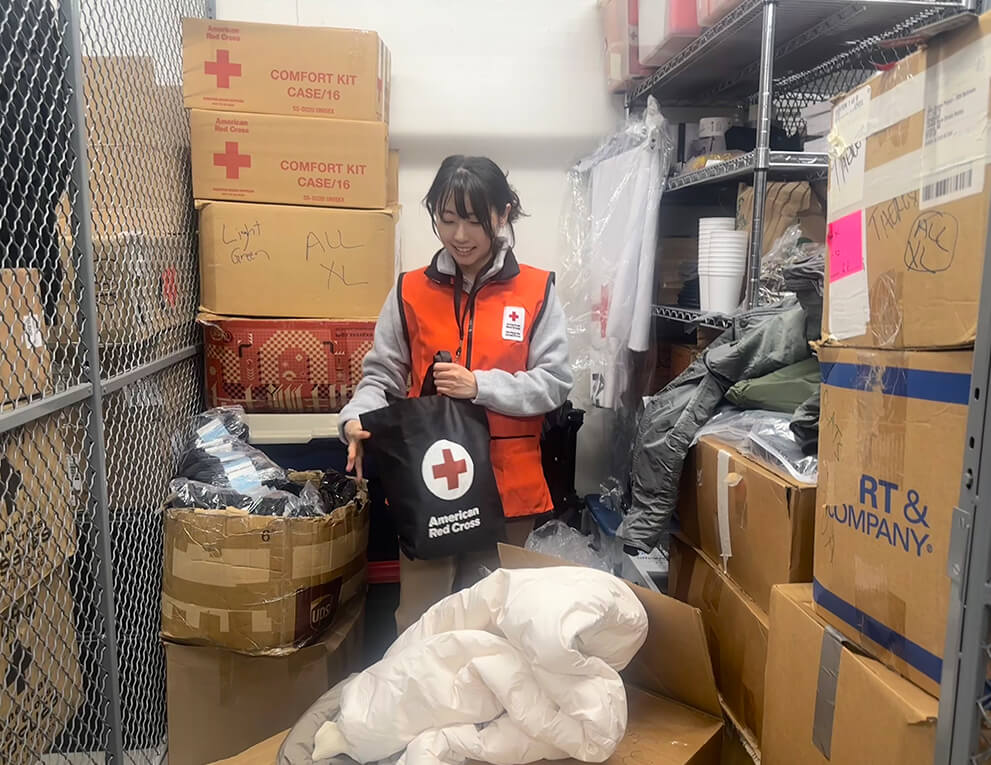
When Johns Hopkins University School of Medicine student Elle Kim met James, a veteran, she was delivering care packages she had made to a local Veterans Affairs Medical Center. When Kim peeked into his room, James looked lonely as he disinterestedly watched the Veterans Day Parade on his small TV. Kim knocked on his door, hoping to provide some company. Although he was startled at first, James perked up immediately upon realizing he had a visitor. At the time, Kim didn’t realize how deeply this moment would connect to her own history.
“Talking to James, I discovered that I was his first visitor in months; his family moved away a year ago. And, hearing his voice quiver, I sensed his hurt from the isolation,” Kim recalls. “Opening up his care package, I pulled out handwritten thank-you letters and read them aloud. To James, these cards reminded him that he mattered. I could tell he felt overwhelmed, his eyes watery with faint tears of joy. Over the next few months, we played bingo, took walks around the park and even celebrated his birthday together.”
When COVID protocols prohibited in-person visits, Kim was unwilling to let isolation undo the connections she had built. She continued sending cards to James to remind him that he wasn’t alone, even in isolation. James inspired Kim to establish the eCards for Heroes project to help veterans cope with pandemic-related loneliness.
Over the past seven years, Kim has completed 1,600 volunteer hours with the American Red Cross Service to the Armed Forces. She started volunteering in June 2018, while an undergrad.
“During COVID, I started making cards saying, ‘Get Well’ or ‘I hope you have a good day,’” Kim explained. “The cards were included with their meals. Beyond the cards, my primary role is to identify local veterans’ needs and organize quarterly deliveries of essentials — personal hygiene kits, jackets, socks and coffee — to support their daily lives. Each delivery begins with listening to veterans, their caregivers and staff members about what would make daily life a little easier.”
Kim says people should know that the American Red Cross is more than a blood bank or a disaster relief organization; it has many divisions that provide continuous, personalized support to communities. Through her work, Kim has seen how critical this support is in the Baltimore area — the Red Cross serves a large, diverse and high-need veteran population of about 350,000 in the mid-Atlantic region. Many veterans, especially in Baltimore, face extremely complex medical, emotional and socioeconomic challenges. The area hosts several major Department of Veterans Affairs centers, including the Baltimore VA Medical Center (affiliated with the University of Maryland Medical System), the Loch Raven VA Community Living & Rehabilitation Center and the Perry Point VA Medical Center in Harford County.
Kim says her connection to this cause is deeply personal. Her grandparents lived through the Korean War, and they often spoke about how the American soldiers helped protect and rebuild South Korea. She says they shared their food with the civilians and rebuilt the community. Kim grew up in Daegu, a city that served as part of South Korea’s last defensive line during the Korean war. Living near a U.S. military base, Kim did not think of the American soldiers as distant figures of war, but familiar faces in her everyday community — teaching her English, sharing snacks and playing Xbox.
“I still remember their kindness,” she says. “My grandfather always reminded me, ‘If you ever meet a veteran who served in the Korean War, thank them for me.’ He often spoke about the sacrifices U.S. soldiers made. As I live my life, I will be forever grateful.”
When Kim moved to Baltimore and realized that thousands of Korean War veterans live here, she felt a deep sense of responsibility to give back.
“I am honoring the same generation of Americans who once stood by my family’s country,” Kim says. “Supporting veterans through the American Red Cross has been my way of expressing that gratitude.”
Kim oversaw the eCards for Heroes Project she established, connecting thousands of volunteers with veterans and caregivers through virtual messages of gratitude. She has also organized wellness workshops, appreciation card distributions and morale-boosting events such as bingo nights and birthday celebrations.
Kim says this experience contributes to her “sohwakhang,” which translates to “small but certain moments of happiness” found in connection and service.
Chris Duffley, the director of Service to Armed Forces and International Services, has worked with Kim for five years.
“Her willingness to continue volunteering and serving through this new chapter in her life is greatly appreciated,” Duffley says. “She is so kind and positive. She’s a great person to work with and to be around.”
Senior program specialist Christiana Ilufoye says Kim is innovative and creative.
“She doesn’t really see hurdles or challenges; she just sees them as stepping stones,” Ilufoye says. “Elle came up with a great idea to digitize the cards. She teaches other volunteers the standard operating procedures. This project helps us meet the mission and supports us despite the changes. She won the Volunteer of the Year award because of the impact she made in the region.”
Youth engagement lead Laura Heck says she always enjoys watching Kim work with the veterans.
“She always has a smile on her face,” Heck says. “She helped us make connections during COVID. She helped us pivot so veterans wouldn’t feel lonely. Receiving these cards is something that picks them up. We’re very thankful.”
Kim is currently organizing a winter outreach and education event focused on cold-weather skin care for vulnerable populations, including veterans and individuals experiencing homelessness.
She says the initiative will provide free skincare kits and education flyers on preventing dry skin, irritation and cold-related skin conditions.
“Just as people speak of lifelong learning as a physician, I see service as a lifelong calling — rooted in gratitude for the family and community that have shaped, and will continue to shape, who I am,” Kim says.
For more information, visit The American Red Cross.