
New Research Model Fast-tracks the Translation of Medical Discoveries from the Laboratory Directly to Patient Care
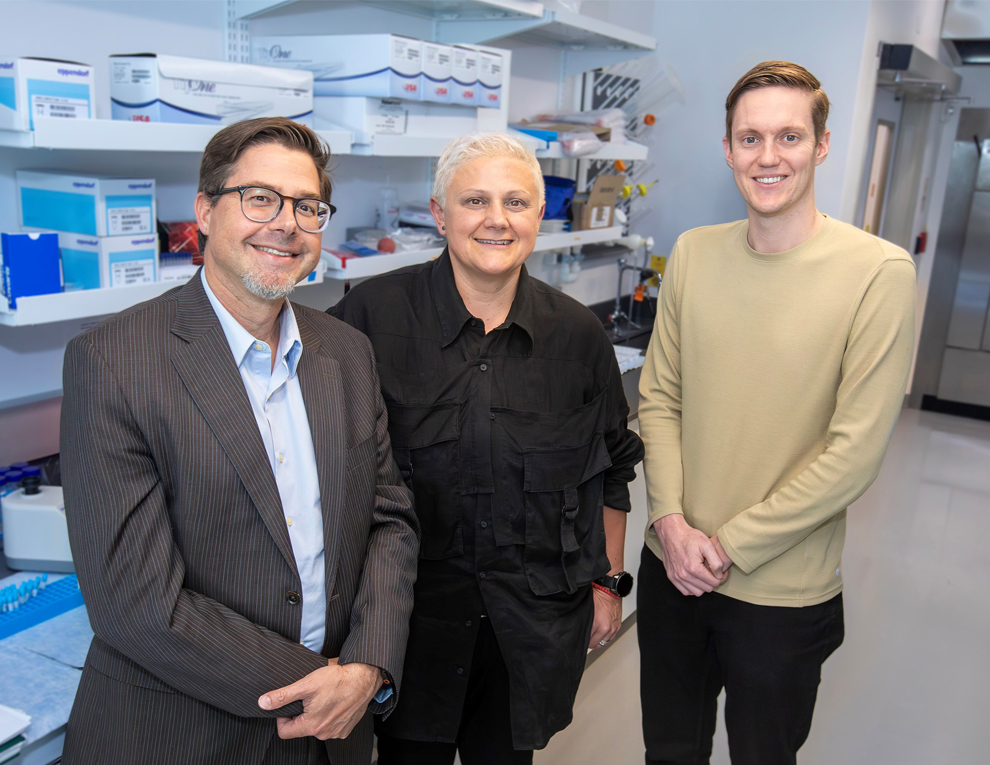
A correspondence just published in the journal Nature Medicine outlines an innovative and paradigm-shifting research laboratory model for academic medical centers, developed at Johns Hopkins All Children’s Hospital: the Translational Research and Innovation Laboratory (TRAIL).
TRAIL co-developer, Vera Ignjatovic, PhD, MBA, OLY, AM, an adjunct professor of pediatrics at the Johns Hopkins University School of Medicine, says the TRAIL focuses on “translational research”, the parallel processes whereby teams of scientists and clinicians make scientific discoveries to solve unmet clinical needs, while also bringing clinical observations to the laboratory to inform and inspire the next scientific discoveries.
“The unique TRAIL model addresses clinically driven research questions posed by pediatric clinical scientists and bridges the divide between basic laboratory research and clinical practice, with every member of team focused on the goal of accelerating advances in patient care,” says Ignjatovic.
She further explains that traditional laboratory frameworks in basic or fundamental science are generally conducted by a principal investigator (PI) who focuses on a single disease or physiological mechanism and engages in a narrow scope of investigation. Additionally, the traditional research model sometimes carries the risk of generating discoveries without providing a clear pathway for clinical applications.
Ignjatovic adds that, while there are many translational research efforts in the global medical research “pipeline”, many efforts ultimately stall or fail to translate clinically. This is often due to obstacles and challenges that can arise between carrying out medical research and getting the research from “the bench” to patient’s bedside.
“Traditional obstacles include the misalignment of research goals between laboratory scientists and clinicians, as well as a lack of support for the necessary infrastructure,” she adds.
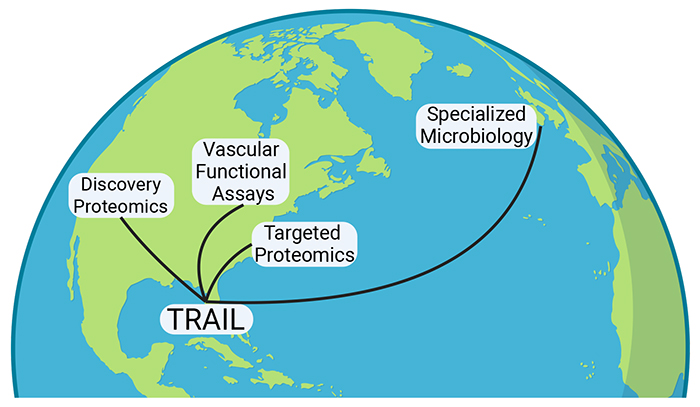 The hub-and-spoke TRAIL model at Johns Hopkins All Children’s Hospital.
TRAIL Acts as a “Hub
According to TRAIL co-developer Steven Bruzek, MS, MB (ASCP), a laboratory program manager in the Johns Hopkins All Children’s Institute for Clinical and Translational Research, “TRAIL acts as a “hub” for providing external strategic agreements with state-of-the-art facilities that may not be available within the TRAIL host institution.
“The TRAIL model can accelerate the pace of scientific discovery and overcome limited resources through collaborations with national and international partners. Via the hub-and-spoke model of operation, TRAIL provides access to state-of-the-art facilities that are unavailable within the TRAIL host institution,” says Bruzek.
Bruzek came to Johns Hopkins All Children’s with experience in scientific research, clinical laboratory testing, and the medical device development industry and began working to expand on-site laboratory capabilities to support a larger “core” group of clinical researchers.
“We started supporting additional clinical researchers and eventually established the TRAIL lab,” he explains. “This was possible because of the expansion of laboratory capabilities and the development of collaborations. Since the inception of TRAIL, we have supported over 20 clinical researchers on a variety of projects, with the expansion of laboratory testing capabilities and staff.” says Bruzek.
“Outsourcing some aspects of the laboratory work is one of the most important keys to TRAIL’s success,” adds Ignjatovic. “So, we have developed strategic national and international agreements to provide access to specific, state-of-the-art facilities in the U.S. as well as abroad.”
TRAIL Aims to Improve Patient Outcomes
“Children with a tracheostomy tube frequently experience bacterial respiratory infections impacting both short- and long-term outcomes for this population,” says John Morrison, M.D., PhD assistant professor of pediatrics and pediatric hospitalist. “In the TRAIL, we are able to perform key microbiology tests, such as antibiotic susceptibility, phenotypic assays and bacterial whole genome sequencing. For some of the more nuanced and specialized assays, we have partnered with a collaborating laboratory at the University of Nottingham to help us determine which bacterial chemical signaling molecules are present in the sample. This innovative approach aims to understand which bacteria are highly virulent and help us determine if we can identify which patients absolutely require treatment with antibiotics or may be at risk for more severe disease.”
In another example, hospital hematologists work with children who have or have had thrombosis (blood clots), and the doctors want to determine why some children have recurrent thrombosis. TRAIL could help discover if there are any “predictors” in their blood or blood proteins that can help clinicians stratify patients who are more likely to get a recurrent blood clot.
Education and Mentoring
TRAIL supports junior faculty principal investigators across departments in hospital medicine, hematology, neonatology, intensive care, general pediatrics, cardiology, pharmacy and surgery. It also provides operational support in consultation, mentoring, assay innovation, microbiology, hemostasis, proteomics and genomics. However, TRAIL is also a comprehensive approach for mentoring and training early-career investigators.
“We recognize the importance of making research accessible to the next generation of translational researchers,” says Neil Goldenberg, M.D., Ph.D., associate dean for research and director of the Johns Hopkins All Children's Institute for Clinical and Translational Research and co-developer of TRAIL. “Accordingly, TRAIL offers unique educational opportunities that include hands-on training in clinical and translational research. It also provides critical consultation and mentorship in the earliest stages of study design, the preparation of funding applications, and the interpretation and presentation of findings. This helps prepare emerging researchers with the skills necessary to navigate the complexities of research in the evolving landscape of pediatric medicine and rapidly changing laboratory approaches. The comprehensive support enabled by TRAIL strengthens individual capabilities and enhances the overall research ecosystem at institutions like Johns Hopkins All Children’s Hospital.”