
Wilmer and the National Eye Institute: A History of Advancing Medicine
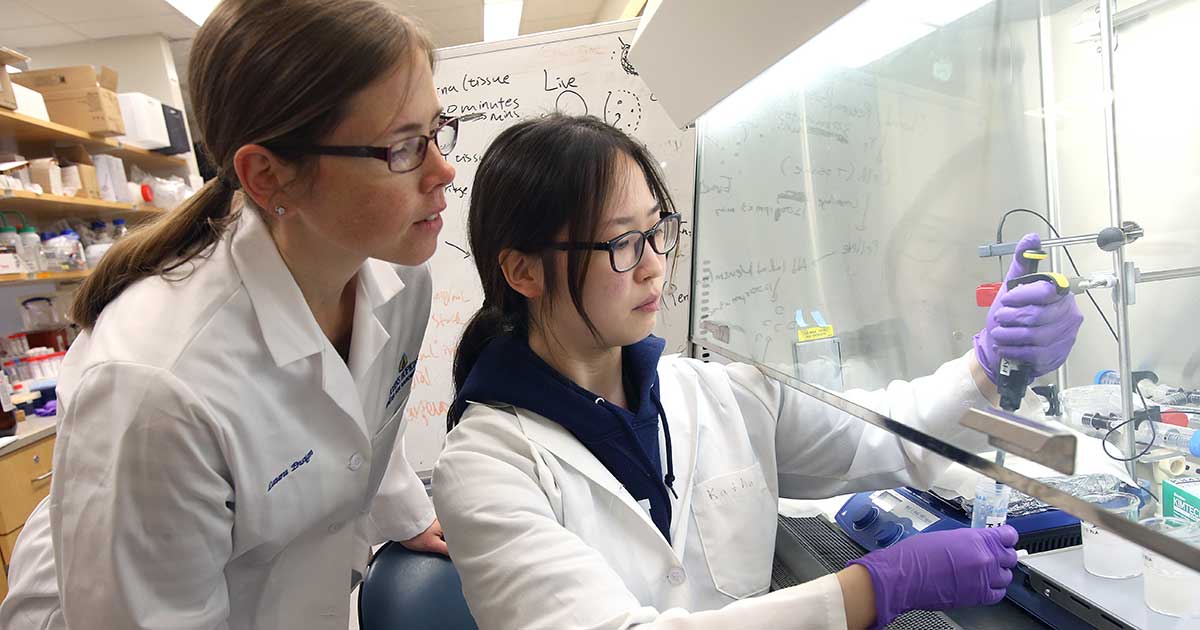
The Wilmer Eye Institute, Johns Hopkins Medicine, has more than 50 years’ history of leadership roles in large, multicenter clinical trials sponsored by the National Eye Institute (NEI). These landmark trials have driven medical advances by testing or comparing interventions that would not necessarily be of industry interest but have had significant impact on health care and public health. Whether the trials concluded that the tested interventions are effective or not, the knowledge gained has provided valuable treatment information. The design and conduct of these landmark trials also served as models for industry-sponsored randomized clinical trials in ophthalmology. Thus, NEI-sponsored trials generate long-lasting effects on clinical care and the development of treatments for eye diseases.
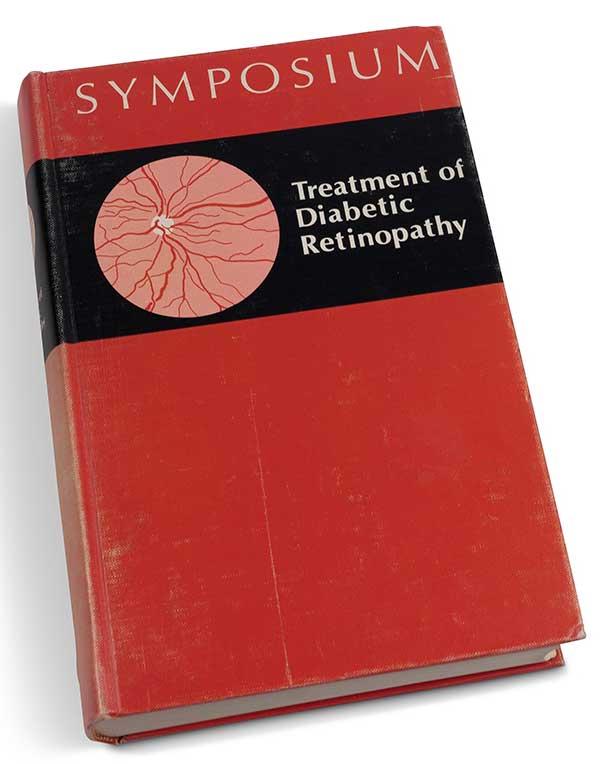 1968 Airlie House Symposium on the Treatment of Diabetic Retinopathy, co-hosted by Drs. Goldberg and Fine, set the stage for the diabetic retinopathy study and future clinical trials.
The Airlie House Symposium, held in 1968, was the foundational meeting that led to the recognition of the importance of rigorously designed randomized clinical trials in generating evidence in ophthalmology. Then-Wilmer faculty Morton Goldberg and Stuart Fine co-hosted the symposium. The consensus from this symposium led to NEI’s funding of research on designing and conducting clinical trials to identify effective sight-saving treatments.
Over the ensuing years, many Wilmer faculty have served as leaders of NEI-sponsored clinical trials. Following are examples of NEI-sponsored landmark trials led by Wilmer faculty.
Early Treatment Diabetic Retinopathy Study (ETDRS)
The ETDRS was a pioneering study sponsored by the NEI and conducted during the late 1970s and 80s. The ETDRS visual acuity chart was designed during the study to address problems with measuring best corrected visual acuity using the Snellen chart. Today, the ETDRS VA chart remains a standard BCVA measurement tool in clinical trials. The ETDRS showed that neither aspirin nor focal photocoagulation were effective in treating pre-proliferative diabetic retinopathy. Wilmer faculty and then director, Arnall Patz, played a big role in the organization of this trial.
Branch Vein Occlusion Study (BVOS)
A landmark trial conducted in the 1980s, the BVOS established standard treatment guidelines for managing branch retinal vein occlusions. Dan Finkelstein was the principal investigator and study chair of the BVOS, the first NEI-sponsored, grant-funded trial at Wilmer.
Macular Photocoagulation Study (MPS)
The MPS included a group of eight randomized controlled trials designed and organized by study chair Stuart Fine and coordinating center principal investigator Argye Hillis in the late 1970s. Later, Neil Bressler served as study chair and Barbara Hawkins served as coordinating center principal investigator. The trials enrolled thousands of patients and compared laser photocoagulation with no treatment for eyes with choroidal neovascularization (CNV) secondary to age-related macular degeneration, ocular histoplasmosis syndrome and idiopathic CNV. Findings from the MPS led to treatment guidelines using laser photocoagulation for certain types of CNV.
Glaucoma Laser Trial (GLT)
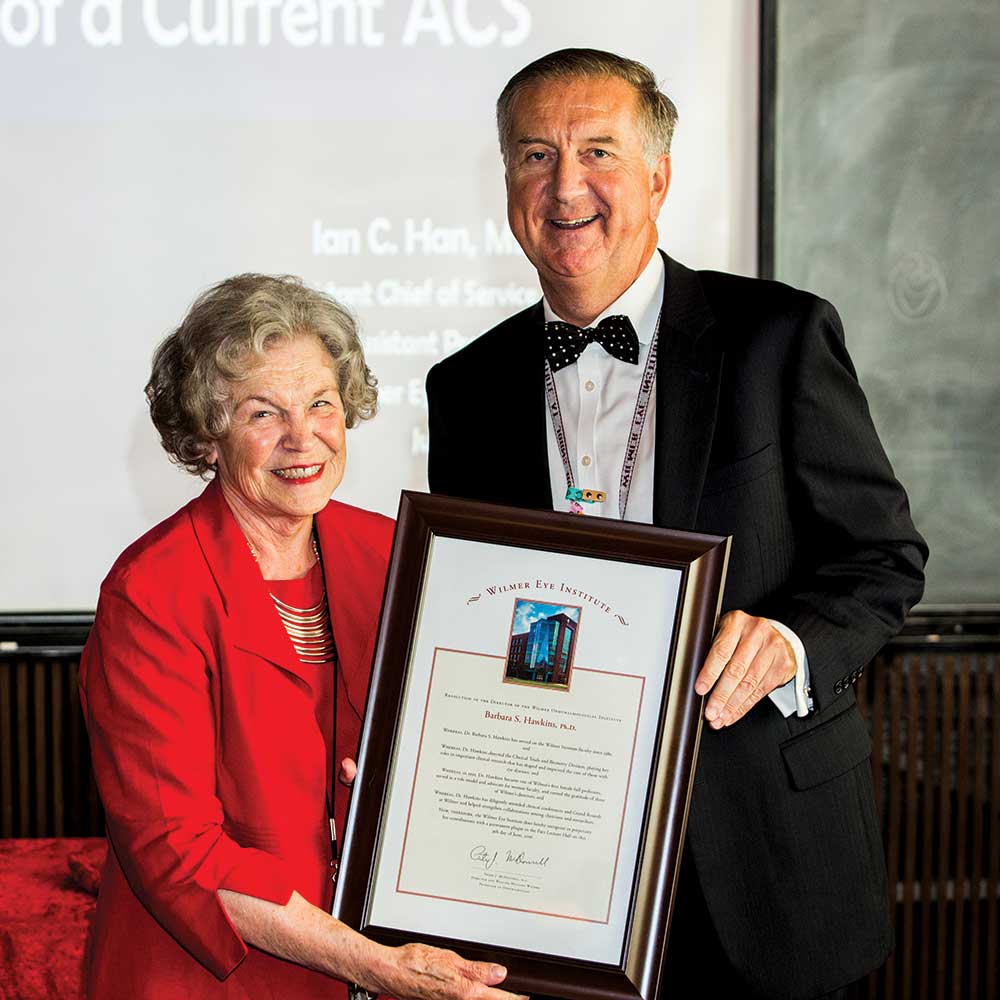 Barbara Hawkins and Wilmer director Peter J. McDonnell in 2016. Hawkins directed the Clinical Trials and Biometry Division, playing key roles in important clinical research.
Conducted in the 1980s, the GLT compared selective laser trabeculoplasty plus medication with medication alone in the control of glaucoma progression. The GLT Coordinating Center was housed at the Johns Hopkins University School of Public Health (now called the Johns Hopkins Bloomberg School of Public Health). Wilmer faculty Maureen Maguire and Barbara Hawkins participated in the GLT Coordinating Center operations and led to improved methods for interpreting Goldmann perimetry based on methods developed in the MPS study. The results, based on over 250 participants, suggested that patients receiving trabeculoplasty required fewer medications to achieve the same outcomes as patients taking medication alone. The results were adopted widely by ophthalmologists around the world.
Collaborative Ocular Melanoma Study (COMS)
The COMS, conducted from 1986 to the 2000s, comprised two major randomized clinical trials to evaluate therapeutic interventions, including radiation therapy, on survival and vision preservation in patients with choroidal melanoma, the most common primary eye cancer in adults. Wilmer faculty member Stuart Fine served as study chair, and Barbara Hawkins was principal investigator of the COMS Coordinating Center. COMS enrolled over 1,300 patients. Study findings suggested that radiotherapy was not effective in improving survival and preserving vision over enucleation alone.
Collaborative Corneal Transplantation Studies (CCTS)
CCTS was conducted in the 1980s–1990s. It was funded as a multicenter randomized clinical trial following a single-center pilot trial at Wilmer, both chaired by Walter Stark. Maureen Maguire, then Wilmer faculty, was principal investigator and biostatistician for the CCTS Coordinating Center. CCTS enrolled over 400 patients to evaluate the effect of donor-recipient histocompatibility matching and crossmatching on survival of corneal transplants in high-risk patients. The primary finding from the CCTS was that matching on a number of parameters in the donor and high-risk recipient did not improve graft survival.
Studies of the Ocular Complications of AIDS (SOCA)
 A study led by Douglas Jabs in 1991 found that the drug ganciclovir not only treats cytomegalovirus, a vision-threatening infection in many patients with AIDS, but also prolongs their lives.
Chaired by Douglas Jabs, SOCA conducted five clinical trials on the treatment of cytomegalovirus (CMV) retinitis from 1988 through 2001. These trials demonstrated that foscarnet and ganciclovir were similarly effective for treating retinitis, but that foscarnet was associated with better survival; that combination foscarnet and ganciclovir was superior to monotherapy with either drug for relapsed CMV retinitis; that cidofovir was an effective treatment for CMV retinitis; that a monoclonal antibody to CMV was ineffective adjuvant treatment for CMV retinitis and was associated with a greater mortality rate; and that cidofovir and ganciclovir were similarly effective for treating CMV retinitis.
Submacular Surgery Trials (SST)
The SSTs, conducted during the 1990s to early 2000s by Neil Bressler, Barbara Hawkins and Susan Bressler, comprised a set of multicenter, randomized clinical trials to determine whether surgical removal of subfoveal choroidal neovascularization (CNV) provided better vision outcomes as compared to observation in patients with age-related macular degeneration (AMD), ocular histoplasmosis syndrome, or idiopathic CNV. The SSTs showed that subfoveal surgery had limited benefits on vision and had a high risk of complications from the surgery. The SSTs preceded the development of anti-VEGF therapy for AMD. Findings from the SSTs provided critical support for the necessity of developing safer and more effective interventions for treating retinal diseases. Conduct of the trial demonstrated to the biopharmaceutical industry an effective model for running multicenter trials for macular diseases.
Pediatric Eye Diseases Investigator Group (PEDIG)
PEDIG is a collaborative network for multicenter clinical trials in strabismus, amblyopia and other eye disorders that affect children. Wilmer faculty Michael Repka led PEDIG as chair from 1997–2009. Findings from studies conducted under PEDIG provided evidence toward creating standardized guidelines for pediatric eye care.
Diabetic Retinopathy Clinical Research Network (DRCR.net)
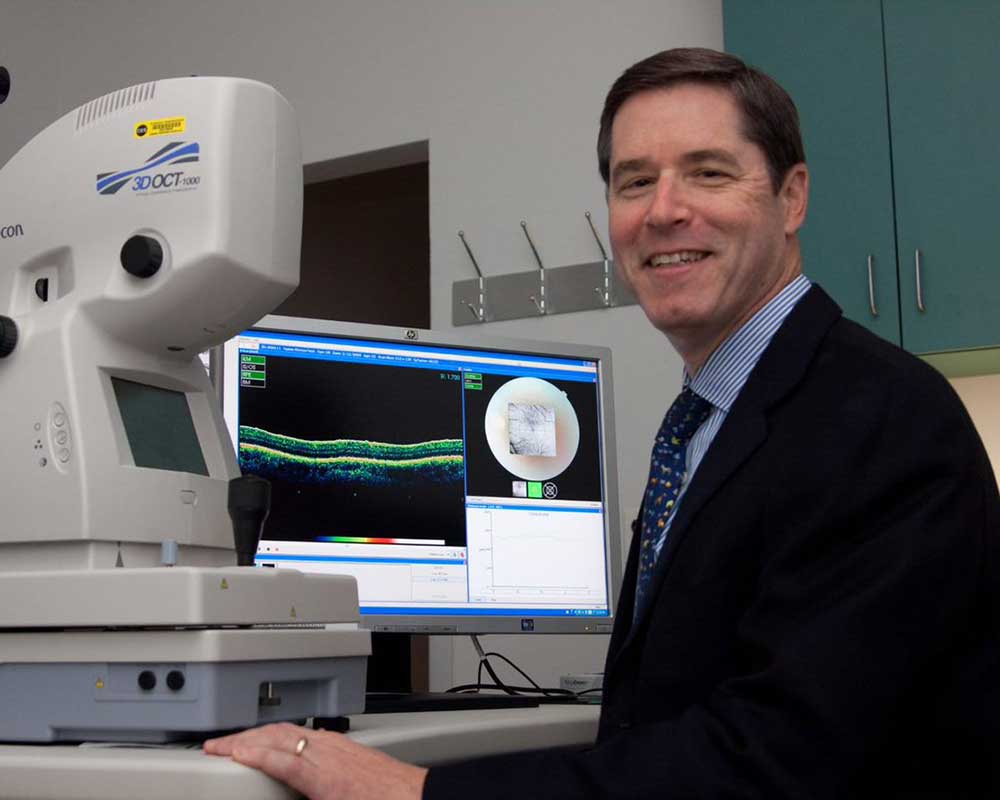 Neil Bressler
In 2003, the U.S. government provided statuary funding for diabetes research, and the Diabetic Retinopathy Clinical Research Network was established by the NEI. Neil Bressler served as study chair for seven years and led trials that, for the first time, included community-based practices in NEI-funded clinical trials. Other Wilmer faculty, including Julia Haller and Sharon Solomon, played active roles as investigators in DRCR studies. Conclusions from DRCR trials generated long-lasting effects on the clinical management of diabetes.
Multicenter Uveitis Steroid Treatment Trial (MUST)
MUST was an NEI-funded, multicenter, comparative effectiveness clinical trial conducted from 2004–18 and chaired by Douglas Jabs. It demonstrated that systemic treatment with oral corticosteroids and immunosuppression produced superior long-term visual acuity results to a long-acting intraocular corticosteroid reservoir for the treatment of noninfectious intermediate, posterior and panuveitides. Furthermore, it demonstrated that, when used properly, systemic therapy did not have a greater rate of systemic side effects than a strictly local (ocular) treatment. This trial established the paradigm currently used to treat these diseases.
Macular Edema Trials Associated with MUST (META-MUST)
META-MUST was an NEI-funded project comprising two multicenter, comparative effectiveness trials for uveitic macular edema, also chaired by Douglas Jabs, involving the MUST trials team, and conducted from 2014–22. The Periocular vs Intravitreal Corticosteroids for Uveitic Macular Edema (POINT) Trial demonstrated that intravitreal corticosteroid injections were superior to periocular corticosteroid injections for the treatment of uveitic macular edema both for improving/resolving the macular edema and for improving visual acuity. The Macular Edema Ranibizumab vs Intravitreal Anti-inflammatory Therapy (MERIT) Trial demonstrated that repeat intravitreal corticosteroid injections were superior to intravitreal anti-VEGF injections with ranibizumab and to intravitreal methotrexate for the treatment of relapsed or persistent macular edema for improving/resolving the macular edema and for improving visual acuity. These two trials defined the paradigm now in use for regional injection therapy for uveitic macular edema.
Adalimumab vs. Conventional Immunosuppression for Uveitis (ADVISE)
The ADVISE trial was an NEI-funded, multicenter, comparative effectiveness trial chaired by Douglas Jabs and conducted from 2018–25. It demonstrated that the anti-TNF monoclonal antibody adalimumab was faster than immunosuppression with conventional drugs (antimetabolites and/or calcineurin inhibitors) for achieving successful corticosteroid sparing and superior for achieving successful corticosteroid discontinuation within one year of initiating treatment for noninfectious intermediate, posterior and panuveitides. These results established the utility of using adalimumab early in the treatment paradigms for these uveitides.
Biomechanics of the Human Optic Nerve Head for Glaucoma Biomarkers: The STRAIN Study (STRain Assessment In Glaucomatous Neuropathy)
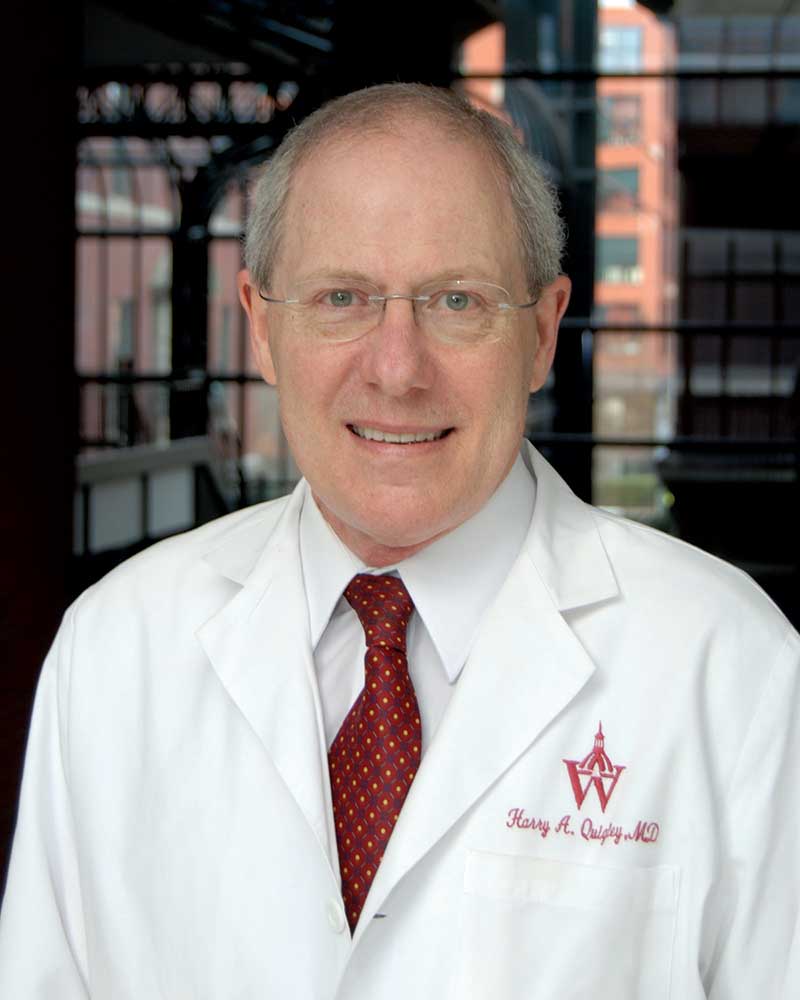 Harry Quigley
This clinical trial is being conducted from 2024–29 by Thao “Vicky” Nguyen with co-investigator Harry Quigley to examine biomechanical responses of the optic nerve head obtained from optical coherence tomographic images of persons with open angle glaucoma. Its prospective design compares the strain behavior of the site of glaucoma damage with the past and future progressive worsening of visual field and retinal nerve fiber layer findings. Initial findings demonstrate the strong potential that the measurements will predict the course of glaucoma damage. It was Quigley and colleagues who, in 1983, established the mechanical basis of optic neuropathy in glaucoma.
For Clinicians Clinical Connection
Clinicians, discover the latest in research and clinical innovation from Johns Hopkins experts. Access educational videos, articles, CME courses and other resources from our world-renowned institution.