
Diagnostic Residency Rethinking for the Future
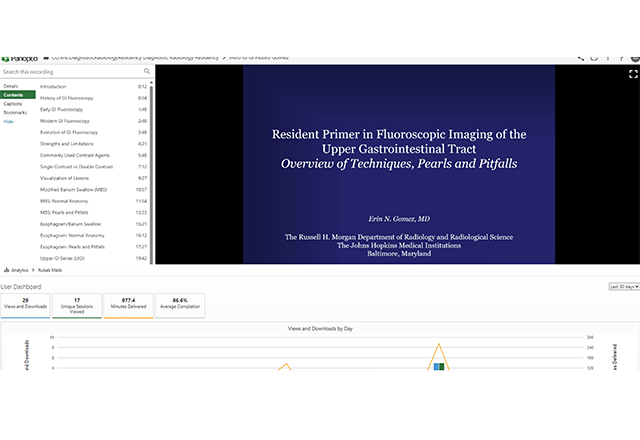 Screenshot showing the recorded lecture library, video, and example
metrics on resident activity.
Screenshot showing the recorded lecture library, video, and example
metrics on resident activity.
In the last few years, the Diagnostic Radiology and Molecular Imaging Residency Programs have seen some big changes. From returning to in-person conferences following the COVID-19 pandemic to preparing for the return of oral board exams, it has been a busy time.
According to Erin Gomez, director of the residency programs, this is a trend that will continue.
One change is the addition of a variety of new audio-visual equipment in the Stoll Conference Room at The Johns Hopkins Hospital. This state-of-the-art equipment includes a new projector and two display screens that interface directly with the computer at the podium, allowing speakers to adjust settings and launch presentations with the press of a button.
The renovations also included the installation of new audio equipment, including microphones, in the ceiling of the conference room. This will allow audience members attending conferences via Zoom to better hear questions from residents in the room. These renovations come after similar upgrades to the nearby Rad103 space. “We’re really grateful for the resources the department has provided,” Gomez said, adding, “We have two very functional, technologically modern spaces to teach.”
These audio-visual upgrades will support a new morning conference system that was implemented in August.
Traditionally, conferences for residents have been held from 7:30 to 9:30 a.m. five days a week and include mostly didactic learning with some quizzes. However, in an era of remote learning and online instructional materials, that model may not offer the flexibility residents need.
Diagnostic Residency Rethinking for the Future Enter asynchronous learning. Residents will spend 2 to 3 days a week learning at their own pace watching lectures recorded by faculty. The other 2 to 3 days of the week will be spent with those faculty members as they lead residents in interactive case-based instruction. One of the main goals of the new conference system is to prepare residents to think on their feet in advance of the return of oral board examinations in 2028.
“This is a generation that enjoys asynchronous learning, but they also need to develop skills in taking cases and answering questions on findings,” Gomez said, noting, “Not only because oral boards are returning, but it is also a vital skill for radiologists in the real world. This is best taught by hands-on, case-based conferences.”
In a recent survey of residents and faculty, most respondents indicated a desire for meaningful interactions with colleagues, building relationships, and cementing concepts.
“This is an answer to that call,” Gomez said, “By allowing faculty to record their lectures, it gives them the opportunity to make the most of their time with residents.”
The asynchronous schedule and pre-recorded lectures (archived in a library for continued reference) are also more accommodating for both faculty and resident schedules, allowing for a focus on more high-yield personal interactions.
This new asynchronous system is exceptional among radiology residency programs. Gomez is a member of a national consortium of radiology residency program directors. While she has encountered institutions that record their lectures, none are utilizing those recordings in this way.
“It is something that sets Johns Hopkins apart,” she explained, noting, “Leveraging the expertise of our faculty and using recorded lectures to set the stage for interactive instruction is unique.” For their part, residents have expressed enthusiasm for the new morning conference schedule.
“The changes will give the residents more flexibility around when and where we watch lectures, and the lecture library gives us the ability to go back and re-watch critical topics to make sure we understand the fundamentals, said Andrew Voter, a diagnostic radiology chief resident.
He added, “The new format also lets us focus our inperson lecture time on interactive cases – great for both learning and preparing for the oral certifying exam.”