
Cardiac Surgeon Offers Pioneering Procedures for Aortic Issues
Mehrdad Ghoreishi performs endovascular aortic root repair and the Ross procedure, two innovative surgeries for aortic conditions.
For patients with aortic and aortic valve issues, Johns Hopkins is among the few centers with surgeons who can perform new procedures that are less invasive and provide longer-lasting results.
The Broccoli Center for Aortic Diseases is one of few centers in the world that can treat patients with acute type A aortic dissection (ATAAD) using endovascular aortic root repair, an investigative procedure known as Endo-Bentall repair, pioneered by the center’s co-director Mehrdad Ghoreishi. It is also among a small number of centers nationwide that offer the Ross procedure — during which a patient’s diseased aortic valve is replaced with their own pulmonary valve — for younger patients with aortic valve disease.
Endovascular aortic root repair offers an alternative to open-heart surgery for patients with ATAAD, which requires emergency surgery.
“This transcatheter, minimally invasive procedure is almost the last frontier in endovascular repair for aortic operations,” Ghoreishi says.
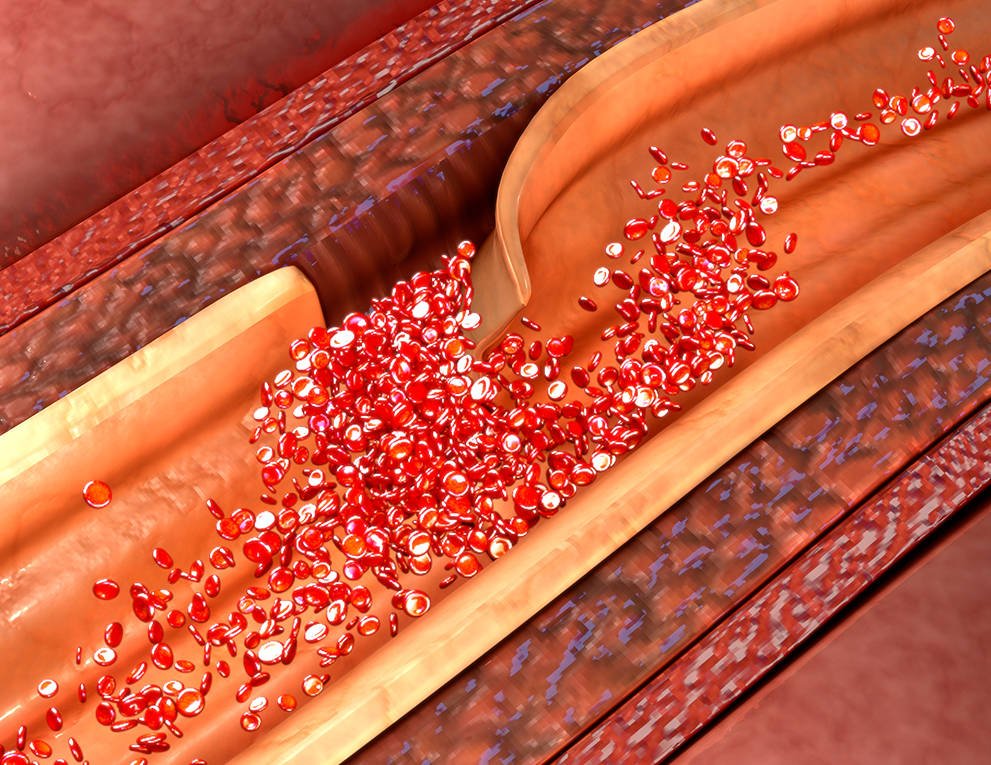
ATAAD, which has a high mortality rate, occurs when a tear develops in the ascending part of the aorta, where it branches off from the heart. While there is no FDA-approved device that is designed for the aorta in this location, Ghoreishi repurposes stents that are approved for treatments in the descending aorta.
In endovascular aortic root repair, Ghoreishi uses what is called an Endo-Bentall device, which consists of a self-expanding transcatheter aortic valve replacement (TAVR), an aortic endovascular stent graft (TEVAR) and two wire-reinforced fenestrations for coronary artery stenting.
The TAVR valve is sutured into the TEVAR graft, and coronary fenestrations (openings) are made in the TEVAR graft based on the patient’s CT angiogram so the artery gets perfusion. The device is then resheathed within the TEVAR delivery system and implanted using a catheter via the femoral artery. If the patient has an endoleak after the procedure, surgeons can access and stent the coronary ostia. The surgery does not require cardiopulmonary bypass support.
For patients who present with aortic dissection, endovascular aortic root repair is an alternative to the standard of care, which involves cardiopulmonary bypass and open-heart surgery. For patients with less-than-optimal pulmonary function and other comorbidities, open-heart surgery is not a good option.
In January, Ghoreishi was first author on a study published in the Journal of Thoracic and Cardiovascular Surgery detailing the first five patients to receive endovascular aortic root repair. All five implantations were successful, and no patients had aortic insufficiency on follow-ups. The procedure has now been performed in more than 10 patients.
A multidisciplinary operation, the Endo-Bentall procedure involves vascular surgery and interventional cardiology in addition to cardiac surgery. Because the procedure is minimally invasive, patients can be discharged within days.
“Endovascular aortic root repair — a transcatheter, minimally invasive procedure — is almost the last frontier in endovascular repair for aortic operations.”
Mehrdad Ghoreishi
Ross Procedure
The Broccoli Center is also among a small number of centers that offer the Ross procedure for patients with aortic valve disease. The procedure, which Ghoreishi recommends in patients 55 and younger, involves replacing the abnormal valve with the patient’s own pulmonary valve, and replacing the pulmonary valve with a cadaver valve. It has a lower risk of complications compared with using animal or artificial valves, and puts patient survival rates at the same level as people of the same age without aortic valve disease.
For patients with valve disease, including aortic stenosis and aortic regurgitation, the standard of care is open-heart surgery to replace the aortic valve with an artificial valve made of animal tissue or metal. Those valves can put patients at risk for long-term complications — patients have to take blood thinners, which increase risks for bleeding and strokes, and the artificial valves increase infection risk and wear out after seven to 10 years, requiring replacement or stenting.
“If the patient is young and has decades to live, these options are not optimal,” Ghoreishi says.
With the Ross procedure, the cadaver valve that replaces the pulmonary valve lasts for decades, Ghoreishi says, because it’s a low-pressure environment, allowing the valve to easily adjust. The patient’s own pulmonary valve that replaces the aortic valve needs to adapt to a high-pressure environment, so doctors monitor patients’ blood pressure very closely for six months to a year.
A technically demanding operation, the Ross procedure requires the multidisciplinary expertise of centers of excellence, and aortic surgeons who specialize in the procedure, Ghoreishi says. In addition to cardiac surgeons and cardiologists, the procedure may involve experts in congenital cardiology, as many patients who undergo the procedure are born with bicuspid aortic valve disease. Pediatric patients may also be eligible for the Ross procedure.
After the Ross procedure, a patient’s hospital stay usually lasts four to five days. In about two weeks, patients can get back to normal daily activities, and return to work after a month, Ghoreishi says.
A Multidisciplinary Approach
Prior to joining Johns Hopkins in August 2025, Ghoreishi was director of the University of Maryland Center for Aortic Disease, where he created the Endo-Bentall operation with a colleague. He attended medical school and completed a general surgery residency in Iran prior to coming to the University of Maryland, where he completed a residency in thoracic surgery before he joined the faculty.
Ghoreishi’s research focuses on aortic issues. He has served as principal investigator on a number of studies funded by the National Brain, Lung, and Blood Institute. He also contributes to national guidelines and surgical education symposia.
“Now, we have an option for treating every segment of the aorta either by open or endovascular surgery,” Ghoreishi says. “The key to addressing aortic problems is a multidisciplinary approach — a very collaborative back-and-forth approach and discussion among multiple teams involved in aortic disease that includes cardiac surgery, vascular surgery, radiology, cardiology, interventional cardiology and nursing. Our team at the Broccoli Center follows these patients closely so there is no drop-off in their surveillance.”
To refer a patient, call 410-955-2800. For more information, visit hopkinsmedicine.org/heart-vascular-institute/cardiac-surgery/broccoli-center.