
Uncovering New Paths to Detect and Treat Cancer-Induced Cachexia
Zaver Bhujwalla, vice chair of research and director of the Division of Cancer Imaging Research, has built her career around understanding the tumor microenvironment and developing imaging tools that reveal how cancer affects the body long before symptoms become visible.
One of her most active areas of research focuses on cancer-induced cachexia — a life-altering syndrome marked by severe, involuntary muscle and weight loss. Cachexia affects up to 80% of patients with pancreatic cancer and significantly worsens prognosis.
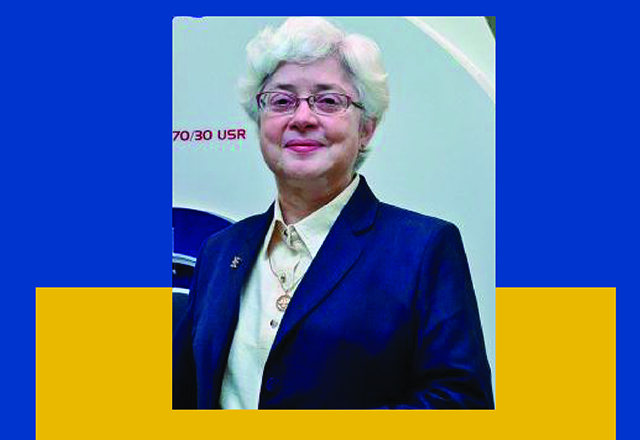
“Cachexia is such a devastating condition, and finding ways to detect and intervene earlier could make an enormous difference for patients,” Bhujwalla says.
Her lab is working to identify early metabolic and molecular signatures of cachexia, with the long-term goal of enabling earlier diagnosis and more effective clinical management.
Collaborating with Johns Hopkins pathology and gastroenterology faculty, her team analyzes plasma and tissue samples from patients to understand how the condition develops and evolves. Using advanced metabolic imaging techniques and biochemical profiling, they study systemic changes that occur before severe muscle wasting becomes clinically apparent.
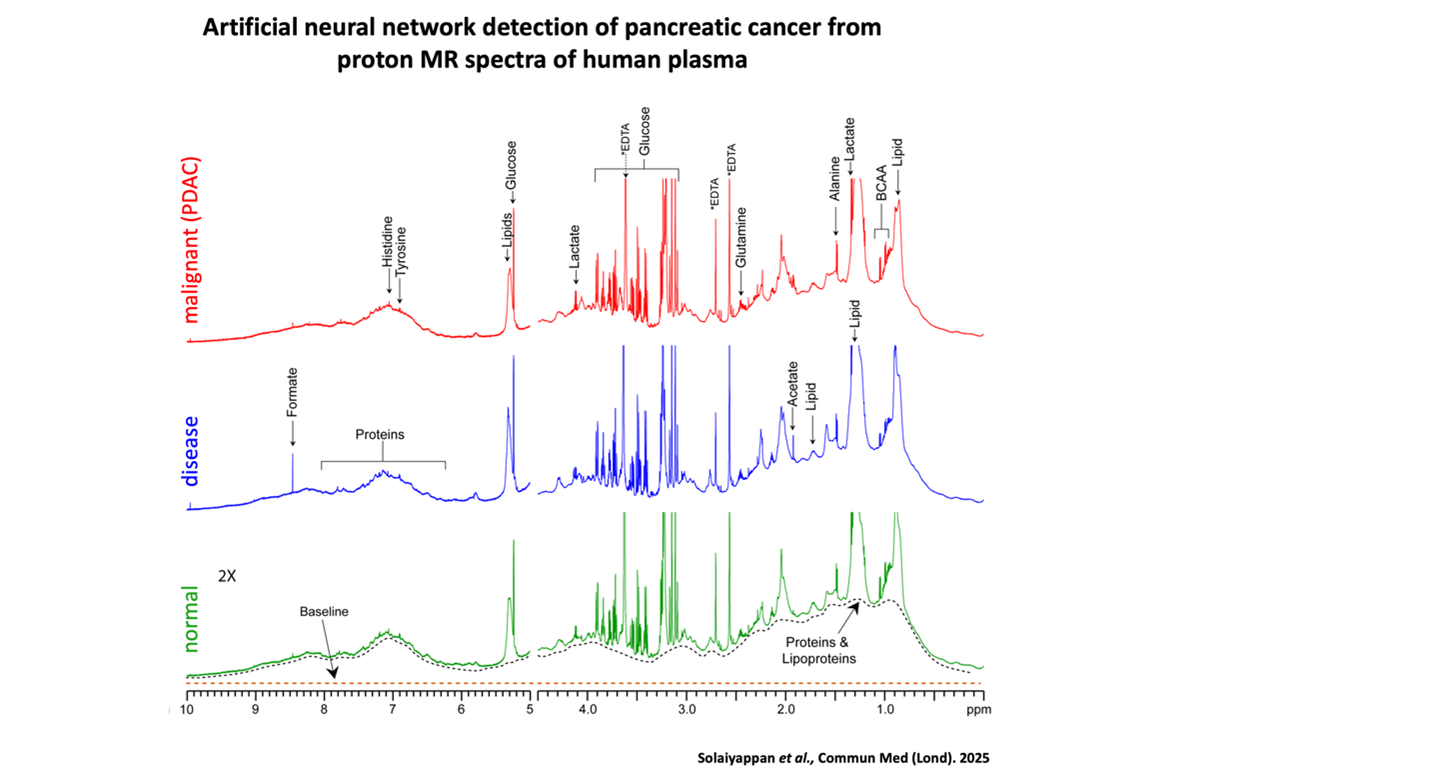
A recent project in her group highlights the promise of this approach. In a study using spectral data extracted from plasma samples, her team demonstrated that artificial intelligence–based analysis could distinguish pancreatic cancer from non-cancer controls with approximately 90% sensitivity and specificity. This work, led by research associate Meiyappan Solaiyappan, suggests that imaging-guided metabolomic profiling could eventually become a noninvasive tool for both early detection and ongoing monitoring.
Bhujwalla emphasizes that cachexia research remains underdeveloped, across the field despite its enormous clinical impact. “What’s been exciting is seeing how much information is hidden in these metabolic signatures,” she says. “If we can detect the earliest biological shifts, we may be able to intervene before patients experience the severe weight and muscle loss that drastically affects quality of life.”
Her research program spans far beyond a single disease, integrating imaging physics, molecular biology, and computational analysis. Throughout her career, Bhujwalla has led efforts to develop molecular and functional imaging methods that reveal complex tumor–host interactions — including angiogenesis, immune responses and metabolic disruption. Her lab also contributes to theranostic imaging approaches that combine diagnostics with precision therapy, bringing molecular imaging closer to personalized treatment.
In addition to her scientific leadership, Bhujwalla directs the MRB Molecular Imaging Service Center and Cancer Functional Imaging Core, and co-directs the Cancer Molecular and Functional Imaging Program at the Sidney Kimmel Comprehensive Cancer Center. She is a fellow of the International Society for Magnetic Resonance in Medicine, the American Institute for Medical and Biological Engineering, and the World Molecular Imaging Society, and has received gold medals from both ISMRM and WMIS for her contributions to the field.
Through her work, Bhujwalla continues to expand the reach of cancer imaging — from detecting disease earlier to revealing the hidden biology that drives conditions like cachexia. Her research underscores a central belief shared across her division: When imaging is used not only to see cancer, but to understand it, new opportunities for earlier, gentler and more effective care become possible.

For Clinicians Clinical Connection
Clinicians, discover the latest in research and clinical innovation from Johns Hopkins experts. Access educational videos, articles, CME courses and other resources from our world-renowned institution.