
Research: 'The Fabric That Unites Us All'
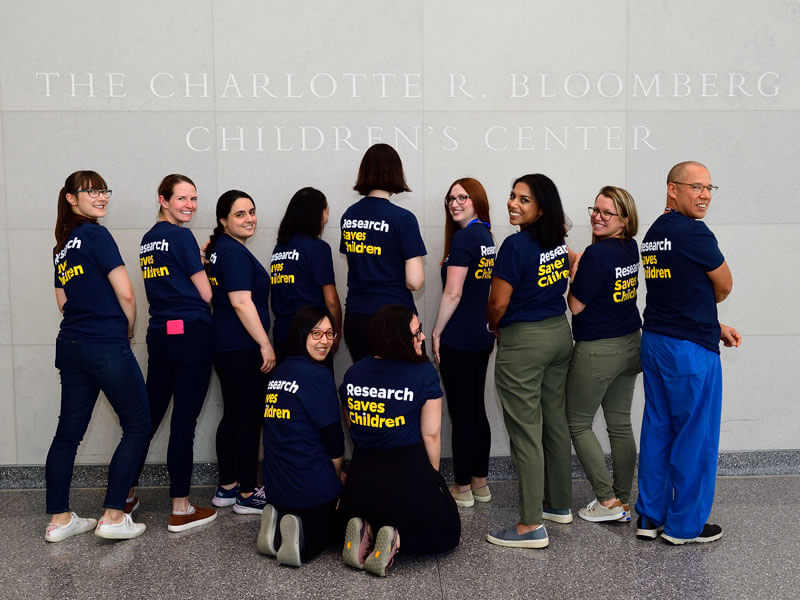
Inspired by Johns Hopkins University’s systemwide Research Saves Lives campaign, which is calling attention to the critical role of research in advancing patient care, clinicians and researchers at the Children’s Center have started a Research Saves Children campaign.
“I think a lot of families don’t really understand that the things we do every day that bring their child back to health are evidence-based clinical practices — that research indeed saves children,” says Brenda Banwell, co-director and pediatrician-in-chief of the Children’s Center.
Beyond building awareness, the campaign is designed to function as a mechanism for people to donate to lifesaving pediatric research, she says. “We have lots of needs for research support and a lot of programs that are right at the cutting edge of being ready to launch the next step of their work,” Banwell says.
The campaign kicked off Sept. 15 with a State of the Children’s Center Grand Rounds talk by Banwell and David Hackam, JHCC co-director and pediatric surgeon-in-chief. The gathering was well-attended by faculty and staff, many wearing T-shirts emblazoned with the new “Research Saves Children” slogan (more than 700 were sold, with proceeds going to support the campaign). A science fair-type show-and-tell event where researchers can discuss their research also is being planned, says Banwell. In addition, a campaign website features stories of children successfully treated at Johns Hopkins thanks to research advances.
At a time when there is a clear need for research funding, the idea is to build awareness of how Children’s Center experts bring health and recovery to children in need, Banwell says.
“Research is discovery,” Banwell says. “It’s clinical excellence, it’s best practice, it’s safety and quality. It’s a lot of things that families may not see.”
Lauren Jantzie, a neuroscientist at the Children’s Center, says she was eager to join the campaign. Her lab studies babies and very young children in the Children’s Center’s neonatal and pediatric intensive care units, typically ones who have had severe brain injuries. The majority of the research is on preterm infants or young children with hydrocephalus, a neurological condition characterized by an accumulation of cerebrospinal fluid in the brain. The scientists’ goal is to find new therapies to treat these injuries and restore neuro-development.
“We’re dedicated to kids who have had a stroke, are at high risk for cerebral palsy, and/or have been exposed to toxins, opioids, alcohol or cannabis,” she says. “When you come to the hospital, you’re never going to see me or any members of my team. We’re in the lab and we’re working really, really hard with our friends and colleagues who are physicians, and we’re all dedicated to a very common mission. Research is really the fabric that unites us all.
“It doesn’t matter whether you’re a scientist or physician or a grad student or lab tech,” Jantzie adds. “The campaign is about recognizing that we’re all here for the patients.”
Vital Support
In the wake of federal research cuts, Brenda Banwell and colleagues are actively pursuing philanthropic support to continue vital research efforts at the Children’s Center. Newly funded initiatives include:
- Among its many philanthropic efforts, the Harriet Lane Foundation is supporting two additional studies. One is following 12- and 24-month-olds who had been treated in utero with amniotic fluid because they didn’t have kidney function and structure, and who received kidney transplants after birth, to determine how they are doing developmentally. The other is evaluating how best to counsel, diagnose and treat adolescents with sexually transmitted infections.
- The Hospital for Consumptives of Maryland (Eudowood), a nonprofit foundation, is providing support to eight faculty members who lost federal funding by providing them with grants to support early stages of enterprising research. The foundation also created an accelerant team to move research into clinical trials, replacing a clinical trial network for adolescents that had been defunded. That team is led by pediatric infectious diseases specialist Allison Agwu.
- A member of the Children’s Center’s Advisory Board is supporting a research project that had lost funding, which focuses on suicide prevention in teenagers.
Research Saves Children
