
Faculty in the News in 2025

Faculty members from the Johns Hopkins Department of Otolaryngology–Head and Neck Surgery contributed expert insight to national and international media outlets throughout 2025. Their commentary and research advanced public understanding of hearing, balance, airway, head and neck disease, and related conditions. Below is a curated selection of notable media appearances from the past year.
 Alexander Daniel, D.D.S.
AP News — Do You Need Fluoride Treatment After a Teeth Cleaning? Dental Experts Weigh In
Alexander Daniel, D.D.S.
Daniel discusses the role of fluoride treatments in preventive oral health, noting that patients “who don’t have access to fluoridated water, don’t use fluoridated toothpaste, or don’t floss regularly” may be good candidates for fluoride treatments.
Washington Post — Roaring Engines, Blasting Movies: Is Air Travel Hard on Your Hearing?
Matthew Stewart, M.D., Ph.D.
Stewart addresses the potential auditory risks of in-flight noise exposure, stating, “When the average passenger is sitting on an aircraft, exposed to the loud activities around them, can that be loud enough to be bothersome, noxious or even injurious? The answer to that question is yes.”
BBC Podcast — Unexpected Elements
Bryan Ward, M.D.
Ward explores the science behind vertigo and intoxication, addressing the question: “Why does the world spin when we are drunk, yet we have been lying stationary for some time?” (Interview begins at 15:10.)
 Emily Boss, M.D., M.P.H.
New York Times — What to Know About Hand, Foot and Mouth Disease
Emily Boss, M.D., M.P.H.
Boss talks about the viral infection known as hand, foot and mouth disease, which was spreading last summer. “It looks much scarier than it is,” she says.
MSN Ireland — “Embarrassing, Painful and Socially Debilitating”: The Rare Condition that Stops People from Burping
Lee Akst, M.D.
Akst explains retrograde cricopharyngeal dysfunction, noting: “That retrograde dysfunction, that absence of relaxation of that upper sphincter, so that the air can't get out, leads people not to be able to burp. As a consequence, the air is trapped in their esophagus.”
New York Times — What Can You Do About Tinnitus?
Matthew Stewart, M.D., Ph.D.
Stewart emphasizes the profound impact tinnitus can have on quality of life, noting, “We often meet patients that suffer terribly from tinnitus and the negative impact on mood, including anxiety and depression.”
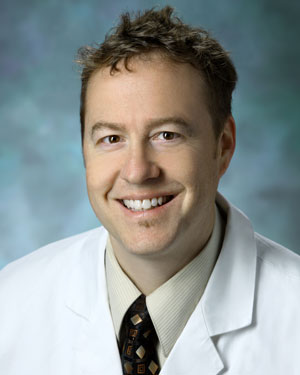 Michael Schubert, Ph.D.
PBS — Your Fantastic Mind: Body, Brain and Behavior
Michael Schubert, Ph.D.
Viewers are introduced to the Kraken, a large-scale disorientation device housed at Wright-Patterson Air Force Base in Dayton, Ohio, used to prepare astronauts for the sensory challenges of long-duration space missions. Schubert discusses the critical role of the vestibular system and highlights his collaborative research with Emory University evaluating head-movement therapy to address balance impairments following spaceflight.
HuffPost — Mucus v. Phlegm: What’s The Difference?
Nicholas Rowan, M.D.
Rowan offers an accessible explanation of nasal mucus, stating, “It is kind of like saliva for the nose. Its main job is to keep those areas moist and to trap dirt, bacteria and viruses before they can cause harm.” He adds: “One of my favorite ENT jokes is, ‘you think it’s mucus, but it’s snot.’”
Smithsonian Magazine — Can a Medical Device Restore Your Balance?
Charles Della Santina, M.D., Ph.D.
Della Santina is featured for his pioneering work on an experimental vestibular implant aimed at restoring balance sensation in individuals with severe vestibular loss. Nearly two million people worldwide have lost the simple ability to feel steady, and this innovative technology offers new hope by targeting the sensory machinery responsible for spatial orientation and equilibrium.
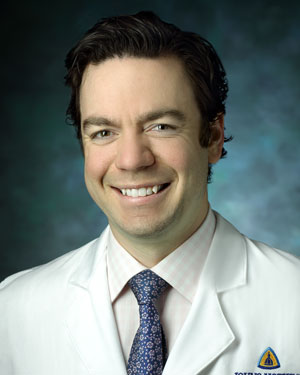 James Clark, M.B.B.Ch., BAO
CNN — Common Allergy Medication’s Risks Outweigh its Usefulness, Experts Say
James Clark, M.B.B.Ch., BAO
Clark contributes to an expert analysis evaluating the risks and benefits of diphenhydramine, stating, “In the past, it has been a useful medication that has helped millions of patients; however, its current therapeutic ratio is matched or exceeded by second-generation antihistamines … It is time to say a final goodbye to diphenhydramine, a public health hazard.”
UnitedMedia24 — Russia Shatters Their Faces on the Frontline. These American Doctors Reconstruct Them
Shaun Desai, M.D.
Desai is recognized for his work providing advanced reconstructive surgical care to soldiers wounded in combat. His efforts focus on addressing complex facial and limb injuries sustained under extreme conditions. Reflecting on the nature of these injuries, Desai observes, “Since many of the soldiers don't have protection on their faces but have body armor, the injuries are more on their face or their arms and legs.”
The Naked Scientists Podcast — Keeping Humans Healthy in Orbit
Mark Shelhammer, Ph.D.
Shelhamer examines the physiological challenges of space travel and ongoing efforts to protect human health during extended missions.
 Leila J. Mady, M.D., Ph.D., M.P.H.
GBN Great Britain’s News Channel — Teen cancer survivor shares symptom doctors dismissed - 'I knew deep down it wasn't normal'
Leila J. Mady, M.D., Ph.D., M.P.H.
Mady discusses the typical presentation for thyroid cancer in the context of a teenage girl who was diagnosed with and successfully treated for the disease.
People Magazine — Girl Undergoes 12 Surgeries to Treat Recurring Vocal Cord Tumors
Simon Best, M.D.
At Savanna Branham’s first appointment, Best immediately recognized the condition as recurrent respiratory papillomatosis (RRP), a rare and challenging disease. Speaking to the profound impact it has on patients and families, he said, “RRP is an absolutely terrible disease. The tumors look like little raspberries — and they always come back.” His early recognition marked the beginning of an ongoing effort to provide care, relief and hope in the face of a relentless condition.
AARP — Why Are More Older Men Getting Throat Cancer?
Maie St. John, M.D., Ph.D.
St. John addresses an increase in HPV-associated throat cancer, stating, “The incidence of throat cancer caused by HPV has surpassed cervical cancer as the most common cancer associated with the human papillomavirus. So we actually do consider it an epidemic.”
The above resources are intended for informational purposes only. These materials do not necessarily express the opinions of Johns Hopkins Medicine. These links are for convenience only, and the mention of any product, service, organization, activity or therapy is not intended to indicate an endorsement by or affiliation with Johns Hopkins Medicine.
For Clinicians Clinical Connection
Clinicians, discover the latest in research and clinical innovation from Johns Hopkins experts. Access educational videos, articles, CME courses and other resources from our world-renowned institution.