
Leading the Way in Artificial Intelligence
Inspired by his Wilmer education, William Wood and his wife, Jennifer, are partnering with Wilmer to support the clinical application of AI in ophthalmology.
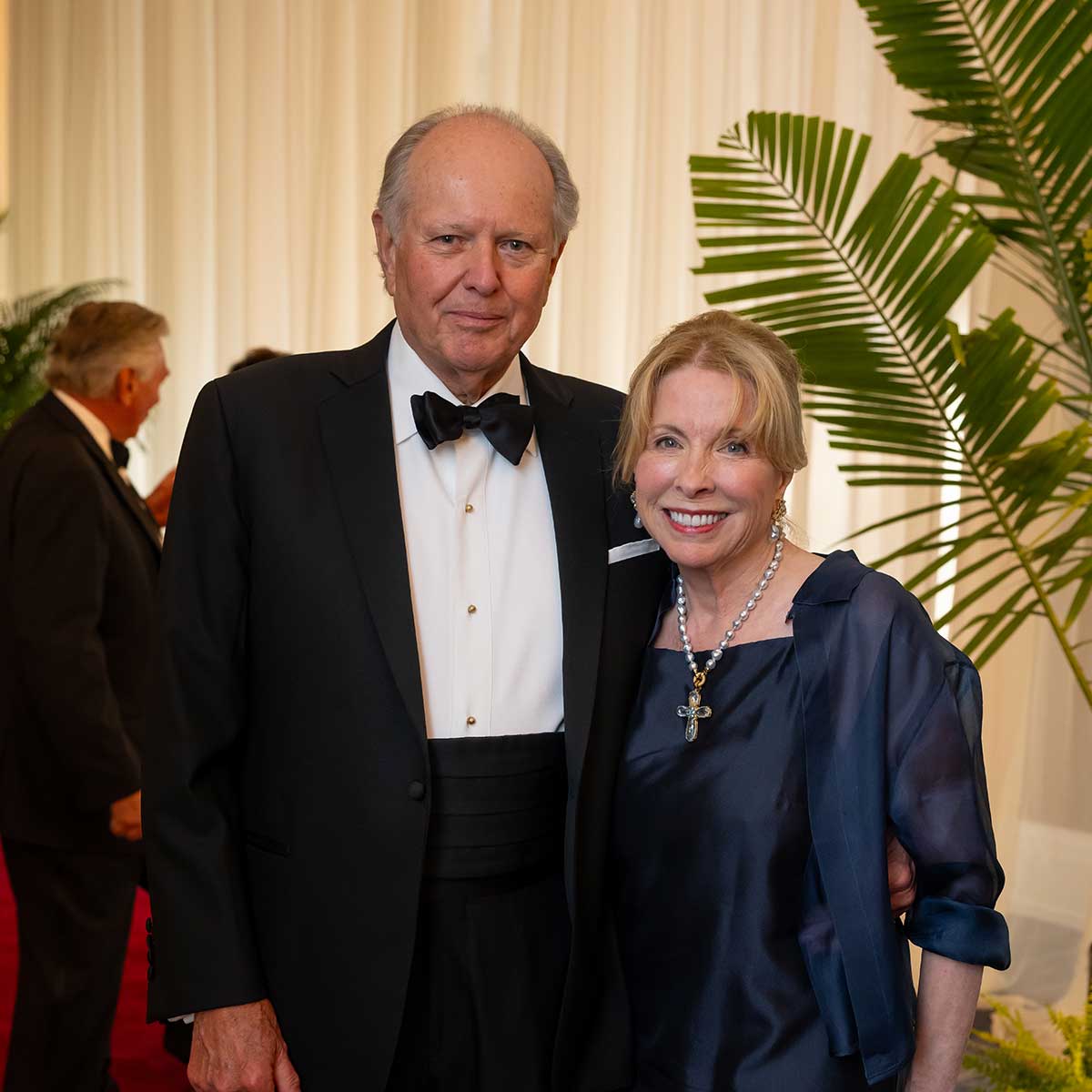
William and Jennifer Wood at the Wilmer Eye Institute’s Centennial Gala on June 14.
In 1975, William Wood, M.D., then a recent graduate of the Wilmer Eye Institute’s Residency Program, brought specialty retina care to Lexington, Kentucky (his home state), when he founded Retina Associates of Kentucky. At the time, the central and eastern parts of the state didn’t have a retina specialist; today, the practice encompasses 10 physicians who practice at nine locations. Wood, a member of the Board of Governors at Wilmer, then went on to co-found the Surgical Retina Fellowship, a program offered through his practice and the University of Kentucky, to educate promising young retina specialists.
It was Wood’s time at Wilmer that motivated him to build his own multifaceted career. At Wilmer, he was inspired by faculty members who delivered top-notch patient care, performed valuable research and engaged in teaching — tenets that Wood went on to incorporate into his own ophthalmology practice for four decades.
Now retired, Wood has chosen to partner with Wilmer to make an impact in the clinical application of artificial intelligence (AI) in ophthalmology. To do this, Wood and his wife, Jennifer, have established The William Wood, M.D., and Jennifer Wood Clinical Artificial Intelligence Fund, an endowment that will support a junior faculty member conducting research in AI and ophthalmology at the James P. Gills Jr., M.D., & Heather Gills Artificial Intelligence Innovation Center at Wilmer.
“The Gills Center may be the first of its type,” Wood says. “We hope our gift will help Wilmer be the leader once again to transform every aspect of ophthalmology through the clinical use of artificial intelligence, the benefits of which include enhancing diagnoses, improving treatment and monitoring, preventing disease and accelerating drug development.”
The Woods’ gift, which will be matched by Wilmer, comes at a time when it is especially critical to help young researchers obtain funding for their work. In today’s climate, assistant professors are often competing with senior faculty for National Institutes of Health (NIH) grants, a significant roadblock to funding for those who are early in their careers, says Peter J. McDonnell, M.D., the Alan and Marlene Norton Director of the Wilmer Eye Institute and the William Holland Wilmer Professor of Ophthalmology.
“Having this support for an assistant professor means they can explore their brand-new ideas a decade sooner than if they had to wait for a grant from NIH,” McDonnell adds. “This will dramatically speed up the work that our young faculty are testing and exploring when it comes to artificial intelligence at Wilmer.”