
Imaging Excellence: Highlights from the Johns Hopkins QI Showcase

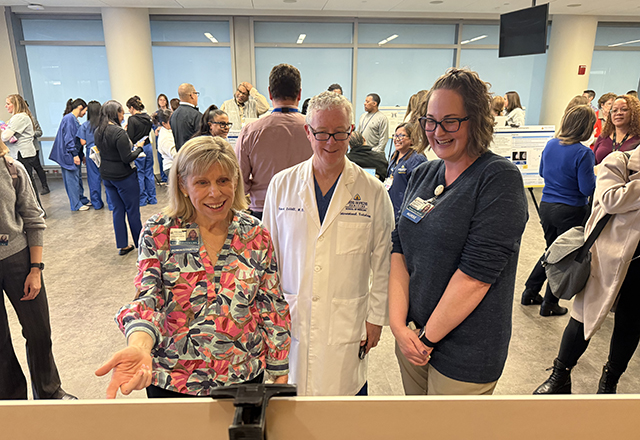
Cold, rainy weather did not deter the crowd as more than 200 attendees gathered for the Johns Hopkins Department of Radiology’s 2025 Quality Improvement (QI) Program Poster Showcase at The Johns Hopkins Hospital on Dec. 2.
Established in 2009, the Radiology QI Program consists of representatives from radiology and imaging divisions, both clinical and non-clinical, as well as department leadership. The program is coordinated by Vince Blasko, assistant director of QI and patient safety, and Valerie Felipe, QI team leader.
The QI Program Committee meets monthly, providing training to frontline staff on Quality Improvement principles and practices. The goal is to empower frontline staff to become change agents by providing the tools, resources, and support to drive meaningful change.
Each year, teams conclude by presenting QI projects exploring ways to improve processes in one area of the department. Participants spend months selecting a topic, collecting and analyzing data, and developing and implementing a plan.
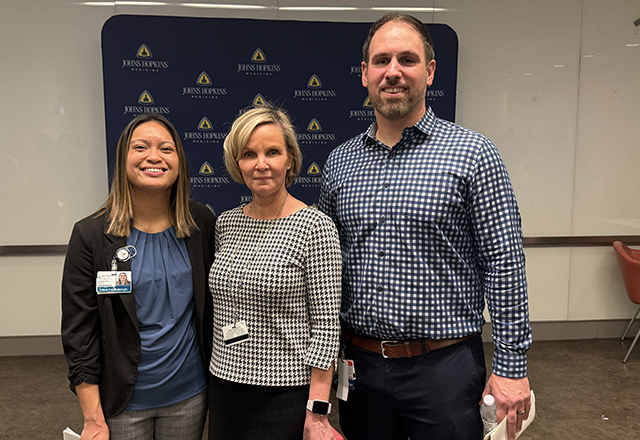
This year’s QI program featured 20 projects completed by 40 participating staff and residents tacking projects from streamlining scheduling processes to improving communication among staff and to patients The event marked the first full, in-person showcase for the program since the COVID-19 pandemic.
Participants in this year’s program included teams from The Johns Hopkins Hospital, Johns Hopkins Medical Imaging (JHMI), and Johns Hopkins Bayview Medical Center. Representatives from Sibley Memorial Hospital and Suburban Hospital also attended sessions.
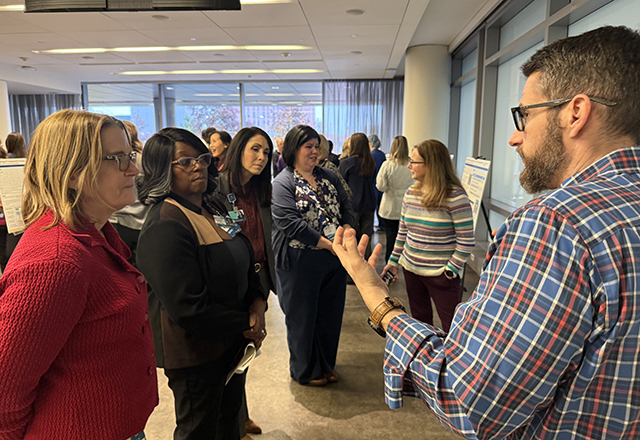
The excitement in the room was palpable as QI program participants described their projects to department leaders and colleagues. Projects focused on efforts to streamline processes, improve safety, reduce waste, and optimize patient outcomes and experiences.
“Continuous improvement is part of who we are, and this group truly highlights what makes our Radiology department such a special and inspiring place to work,” program co-chair Vince said.
“The strength of our QI Program comes from the support of our senior and local leaders, and most importantly from the deep frontline expertise of our technologists, nurses, providers, PSCs, call center agents, and support staff,” he explained, adding. “Their teamwork and dedication are at the heart of everything we do, and we are genuinely appreciative.”
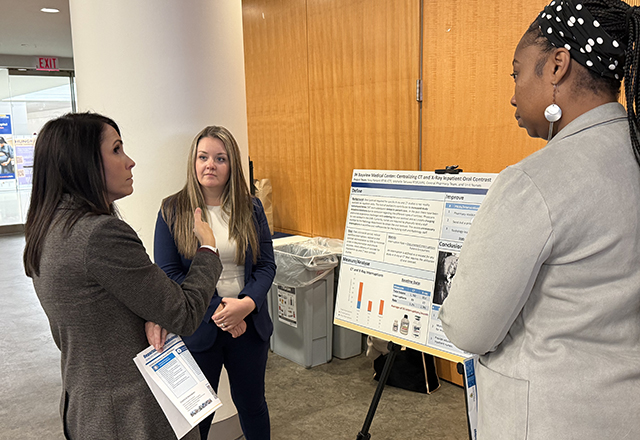
Program co-chair Valerie echoed this sentiment, noting, “The success of the Radiology and Imaging Program would not be possible without the commitment, dedication, and engagement from our leadership, QI reps, project team members, meeting participants, and the entire department.”
Several department leaders were on hand to view the projects, including Dr. Kelvin Hong, executive vice chair of radiology.
“It is amazing work that frontline staff are doing,” Dr. Hong said of the work on display, adding, “Quality improvement efforts are very important as it impacts patient care, as well as staff and the work environment.”
Danielle Karavedas, chief administrative officer of radiology, was also on hand to view the results of the teams’ hard work.
“These projects represent a lot of time and effort invested, and they are very impressive,” Danielle said. “I am so proud of all of the QI Program participants.”
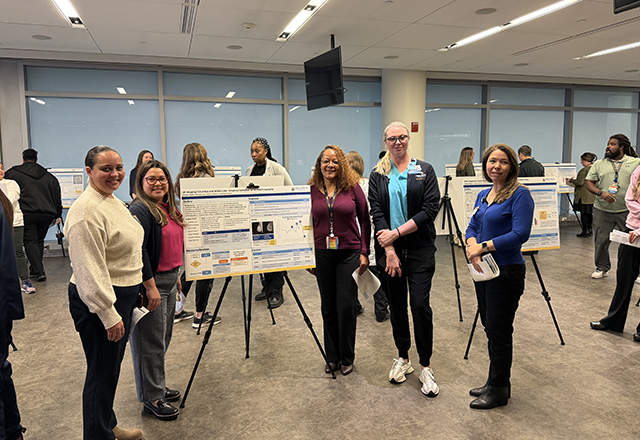
Among the staff presenting at last week’s showcase were the team from Johns Hopkins Medical Imaging at Columbia Medical Center – Patricia Spence, assistant site supervisor, Sonia Turner, registration supervisor, and Jennifer Yacich, senior mammography specialist. Their project involved standardizing selection of 3D mammography to align with best practices.
According to Patricia, 3D mammography, which is now standard at all Johns Hopkins imaging and radiology sites, is more effective and leads to 30 percent fewer patient callbacks.
Since switching all mammograms to 3D, callback rates have reduced and workflows have been streamlined, leading to increased efficiency and shorter patient wait times.
Results like these are what the Radiology Department’s QI efforts are all about.
“The entire Radiology QI Program is such an important part of the department,” said Andrew Menard, executive director of radiology strategy and innovation.
“It is establishing a culture of safety,” he said, concluding, “It is part of the DNA of Johns Hopkins Radiology – that everyone can contribute to making it safer and more efficient.”