
Get to Know Emerson T. Que
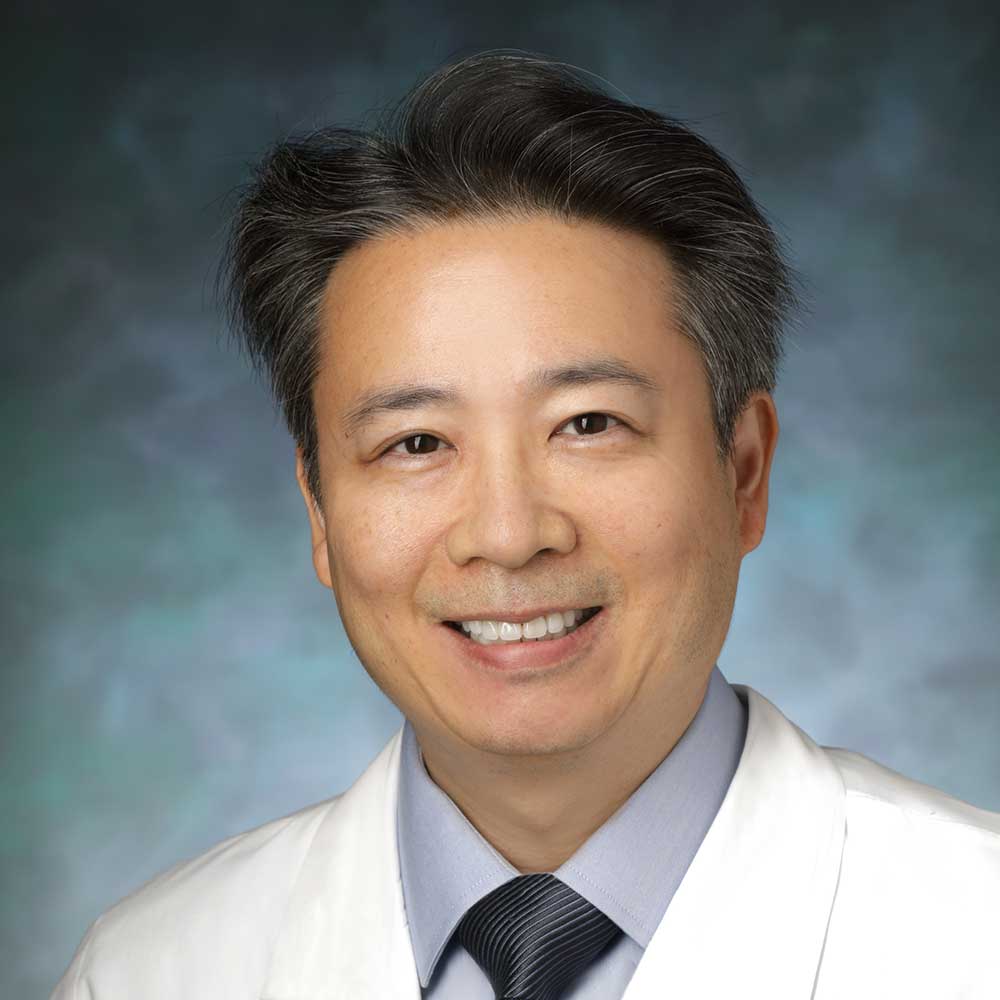
Emerson T. Que, M.D., joined the Wilmer Eye Institute, Johns Hopkins Medicine, faculty in September as an assistant professor of ophthalmology. A comprehensive eye care specialist who is fellowship trained in cornea, Que sees patients at Wilmer’s Bethesda and Arlington clinics.
What attracted you to the field of ophthalmology?
It’s always to help people, but I enjoy the challenges in ophthalmology, including the complex surgical techniques. It requires you to know all about medicine and recognize images and diseases. It’s amazing how you can restore vision.
How did you become interested in the cornea subspecialty?
You can get immediate results. You can see somebody who is legally blind, and you can do surgery to restore their vision or make their vision better. That's always that's rewarding. Someone could come see me, being led around by their spouse, and then you do the surgery and the next day they walk out on their own. There’s a lot of need to protect vision.
What drew you to Wilmer?
I really enjoy Wilmer’s multidisciplinary approach, and that’s my thought philosophy as well. Wilmer also has a great academic reputation, and when you work with people here, you notice there’s a larger organization and culture that is there to help you. So if you have something very complex — whether it involves glaucoma, macular degeneration, neuro-ophthalmology, strabismus, or oculoplastics — you can coordinate with other people, and the patient gets the best care.
Where do you see opportunities for advancement or innovation in your specialty?
I think it’s some of these new modalities, like using lasers in the FLACS procedure, that make the cataract procedure safer and more reproducible. The laser helps standardize key steps, leading to more consistent and reliable outcomes.
There have also been significant advances in intraocular lens technology, especially in presbyopia-correcting lenses. These multifocal lenses show promise, but we still need more research on how patients respond to them.
I also think we’ll continue to see progress in dry eye treatments, since it remains a common and persistent problem for many patients.
How would you describe your approach to patient care?
I think it comes down to providing compassionate care and taking time with the patient. It’s difficult, because sometimes we focus on the condition and say, “Oh, it’s glaucoma, you’re stable,” and move on, but I try to take more time and educate the patient.