
Dream Team
The pediatric glaucoma service at the Wilmer Eye Institute, Johns Hopkins Medicine, comprises four subspecialists, each of whom brings their unique training, research and clinical experience to target glaucoma in infants and children. These exceptional individuals work in collaboration with genetic counselors, nurses, anesthesiologists, pediatricians and family members to provide top-of-the-line care from newborns on up.
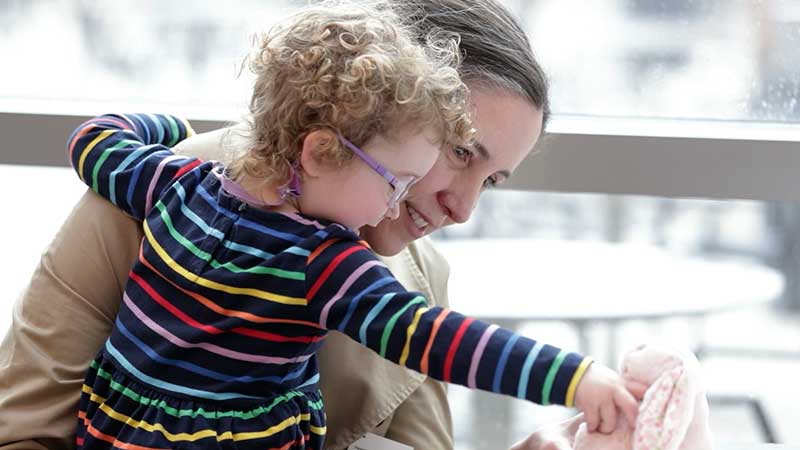
Helping Children and Families Lead Normal Lives
 Courtney Kraus, M.D.
As the senior member of the pediatric glaucoma team, Courtney Kraus, M.D., the Knights Templar Eye Foundation Professor of Ophthalmology, brings years of experience in treating Wilmer’s youngest patients and a youthful enthusiasm to her work.
“I love being able to shepherd a family and a child through what is a scary diagnosis with confidence and hope that they’re going to get to the other side — that there’s someone who’s really passionate about it and right there with them,” says Kraus, who values the long-term relationships that develop in the process.
“I sometimes see newborn babies and operate on them when they are days to weeks old. I see them as 7-year-olds, and I’ve been seeing them every three to four months — seeing them more than their pediatrician — and I get to be a part of all those developmental milestones,” she says.
It feels natural, then, that Kraus’ interests include how to enhance the quality of life that comes with a childhood diagnosis of glaucoma. To meet the challenge of obtaining eye pressure measurements on children — necessary to monitor glaucoma — Kraus teaches parents how to use a portable home-based testing device that allows them to obtain eye pressures when children are comfortable in their own home or even asleep. This practice has minimized the number of exams done under anesthesia and smoothed the process for children with glaucoma.
Kraus’ research has examined what it’s like for children and their parents to live with glaucoma. “I have a child who is a really good soccer player and wanted to know very early on if I would let him play soccer — his dream activity,” says Kraus, who undertook a study to look at the standard of care in things that are otherwise a normal part of childhood. “We found that most pediatric ophthalmologists and glaucoma surgeons understand the value of playing and being a kid,” she says.
Kraus says that one of the first questions parents ask when their child receives a diagnosis of glaucoma is, what are we going to do? What is the next step? “We talk through the surgeries, the eye drops and the numerous postop appointments, but then everyone wants to know, how is this going to affect my child? Are they going to be able to lead a normal life?” says Kraus. “The more research I’ve done into what it’s like to navigate the world as a child with glaucoma, I feel much better equipped to tell the parents, yes, they are.”
“My soccer-playing patient wouldn’t be able to head the ball, and he should be wearing his glasses — preferably rec specs or safety glasses — but with the appropriate modifications, these kids lead normal lives.”
Targeting the Genetic Underpinnings of Eye Disease
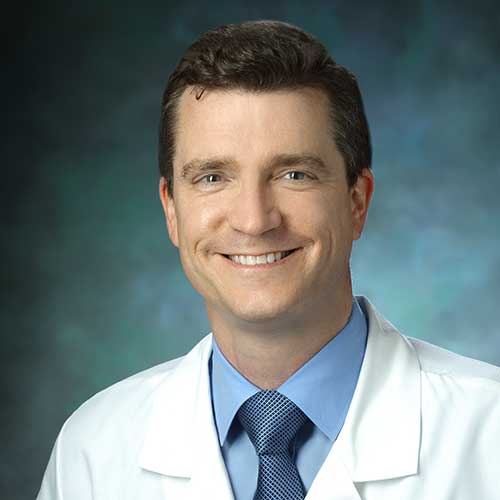 Jefferson Doyle, M.D., Ph.D., M.H.S.
A pediatric glaucoma specialist with expertise in genetic eye disease, Jefferson Doyle, M.D., Ph.D., M.H.S., the Andreas C. Dracopoulos and Daniel Finkelstein, M.D. Rising Professor of Ophthalmology, brings to the team an interest in not only the diagnosis and treatment of children with glaucoma, but also in what causes it. In early 2020, he launched the Wilmer Eye Institute Genetic Eye Disease Center with his colleague, retina specialist Mandeep Singh, M.D., Ph.D., the Andreas C. Dracopoulos Professor of Ophthalmology.
At Wilmer, where Doyle and his pediatric glaucoma colleagues see many complex cases, he says the ability to consult with one another is invaluable. That can be especially true when it comes to causation. “Courtney [Kraus] will say, ‘I’ve got this case, there’s just something different about it, any thoughts?’ And I’ll say, ‘You know what, that sounds exactly like a connective tissue disorder presenting as glaucoma. I’ve been picking up more of those cases and developing a whole case series that have been positive genetically for something that is presenting as glaucoma.’”
Doyle says that even if such patients don’t have glaucoma, they have high rates of retinal detachment, so it’s important that they be monitored. In addition, the family may want to consider family testing, because they may have that condition, too. Knowing if there’s a genetic basis for eye disease can also help to inform family planning. “If you know there’s a 1 in 2 chance that any future child would have it, then families can consider that,” he says.
Doyle sees genetic forms of glaucoma as a prime opportunity for gene therapy. “The prospect of directly targeting the problem, not simply trying to deal with the consequences, I think in the coming years is going to be a total game changer.”
Another avenue that’s ripe for study is modifier genes — not a gene that causes the disease, but other, secondary genes that affect the severity of it. “It may well be that if you identify a single modifier gene, it modifies many different types of glaucoma,” Doyle says. “In the case of retinal degenerations, you've got nearly 300 genes that cause retinal degeneration, so you’ve got to make 300 gene therapies and get 300 gene therapies approved by the FDA. But if you identify the modifier gene, you need one therapy and one approval for FDA to impact many different causes.”
Developing Noninvasive Imaging Techniques for Children
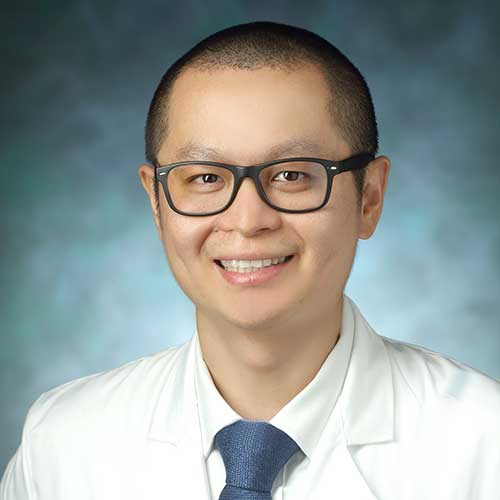 Bo Wang, M.D., Ph.D.
As a resident at Wilmer, Bo Wang, M.D., Ph.D., was mentored by Kraus and Doyle before completing a fellowship in pediatric ophthalmology and adult strabismus at the Duke Eye Center. Upon returning to Wilmer, Wang says their different experiences — between the four of them, they trained at the top anterior segment hospitals in the country — are a real strength.
“With a disease that’s so rare, it’s nice to be able to share ideas and thoughts. With children, every case is unique,” says Wang, who meets regularly with the team to discuss cases.
Practically speaking, Wang says, having four pediatric glaucoma specialists on staff means there’s always someone available. “When a child has glaucoma, every day that the pressure is high results in more permanent vision loss to the optic nerve,” he says. Moreover, he says, unlike adults where the eye is essentially rigid and doesn’t change shape, in children with glaucoma, the eye expands “kind of like a balloon,” Wang says. “The longer that the pressure is high, the bigger and the more deformed the eyes get, so it’s really important to get these kids evaluated and treated quickly.”
For this reason, Wilmer’s call center is alert to ensuring that these young patients are evaluated quickly. Last year, over 12,000 patients received same-day appointments, which are always available for urgent cases.
Wang, who brings to the group an interest in noninvasive imaging of the eyes, is studying the drainage pathways of children’s eyes to see what predisposes children to getting glaucoma in the first place. “We’re imaging the drain of the eye to identify differences in how it appears in children,” he says — a finding first reported by Wang and his collaborators at the Duke Eye Center. “If we can identify children at greater risk of developing glaucoma, we can monitor them and intervene if necessary before damage occurs.”
Bridging the Gap from Childhood to Adulthood
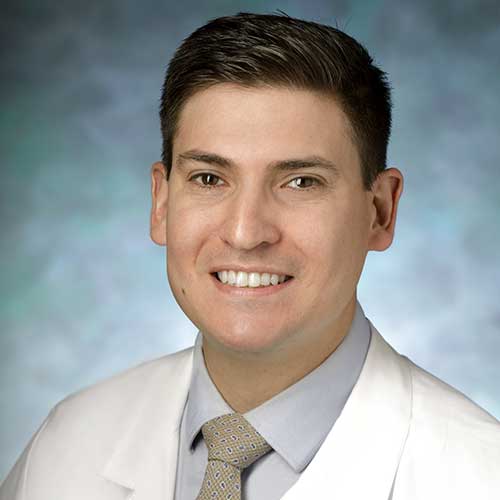 Matthew Javitt, M.D.
The newest addition to the Wilmer team, Matthew Javitt, M.D., brings experience treating people of all ages with glaucoma — uniquely beneficial for patients who may have been receiving care since birth but who are aging out of the pediatric practice.
Javitt also brings an interest in surgical innovation in pediatric glaucoma, including the introduction of minimally invasive surgeries that may help early on in the disease and thus prevent the more invasive glaucoma surgeries that many children require. “I think there’s a lot to be said for using innovation in the adult realm to help inform how we could treat children better as well,” he says.
In addition, Javitt is working with Pradeep Ramulu, M.D., M.P.H., the Sheila K. West Professor of Ophthalmology and chief of Wilmer’s Glaucoma Division, to enable better visual field testing in children. Specifically, they’re looking to validate parameters for visual field testing through a gamified virtual reality system that, he says, could expand their ability to screen and monitor children, ensuring the appropriate level of treatment is being administered.
“Right now, I think the youngest you can monitor a kid with visual fields with any reliability is probably around age 10,” he says. “We’re hoping to get younger than that by basically making it a game — something they look forward to doing, or at least tolerate doing a little better.”
Looking ahead, Javitt sees value in building large, normative databases on which to draw for children. “So much of what we do in ophthalmology and in glaucoma is informed by these massive databases that are beautifully crafted, but in adult patients,” he says. He acknowledges that building such databases for children would require collaboration among departments and institutions, but says doing so would help to inform how a child is doing in an objective manner.
“When you’re dealing with looking at optic disk sizes and fundus photos to monitor how a child is doing, in addition to pressure testing and visual field tests, it can get very challenging,” he says. “It’s hard to know when the right time is to take a child to surgery, but building normative databases and robust systems to monitor kids is something I’m really interested in.”
As the junior member of the team, Javitt says he greatly values the opportunity to work with Kraus, Doyle and Wang. “There’s such a benefit to starting your career with built-in mentors who are both wonderful surgeons and wonderful people. I’m excited to work with them,” he says.