
AI-Powered Image Alignment Enhancing Precision in Cancer Therapy Monitoring
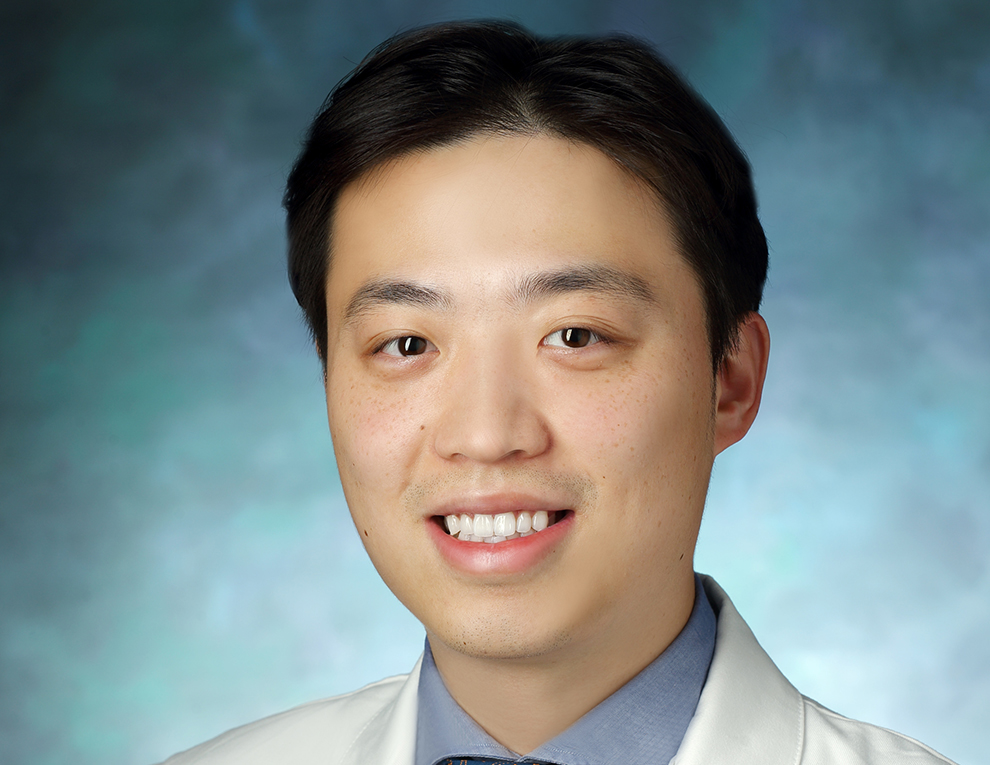
Junyu Chen, instructor in the Radiological Physics Division, is developing advanced artificial intelligence (AI) methods to make cancer therapy monitoring faster, safer and more accurate.
His research focuses on improving image registration in nuclear medicine — a process that aligns sequential positron emission tomography/computed tomography (PET/CT) or single-photon emission computed tomography/computed tomography (SPECT/CT) scan with scans taken throughout a patient’s treatment to precisely measure how tumors respond over time.
“By aligning these images, we can better see how a tumor is shrinking or responding to treatment,” Chen explains. Small differences in tumor size or metabolic activity can be critical when adjusting therapies, and AI helps capture those subtle but meaningful changes with greater consistency.
A major application of this work is in imaging-guided cancer therapy, where medical images are used to track tumor-targeting pharmaceuticals inside the patient to deliver dose directly to cancer cells. Chen’s team is building AI-based image-analysis tools that accurately calculate dose, helping ensure that tumors receive the intended treatment while nearby healthy organs remain protected. These AI tools will also support population-level studies to understand why some patients do not respond as well as others to certain cancer therapies.
“Once developed, these AI tools could help guide the optimal design of personalized cancer treatments for individual patients, while relying on less manual intervention, which may keep personalized therapy more affordable,” Chen says.
The software, now in early development, is designed as a post-processing solution that integrates seamlessly into standard clinical workflows enhancing precision without disrupting practice. Once finalized, it will undergo review by the department’s Radiology Artificial Intelligence Development Subcommittee to ensure alignment with clinical and technical standards.
 Figure 1. PET/CT scans from different patients are shown. The AI tool developed by Chen’s group performs spatial normalization, where anatomical differences between patients are eliminated to allow consistent point-to-point comparisons both within a patient over time and across different patients.
Chen’s research exemplifies how AI can serve as a collaborator rather than a replacement; a tool that amplifies physicians’ decision-making rather than automating it. “AI isn’t about taking over the clinicians’ role,” he notes. “It’s about giving them sharper tools to deliver better, more personalized care.”
Recognized for his leadership in this field, Chen was named to the Forbes 30 Under 30 for Healthcare list in 2024. With a background that bridges engineering, imaging science, and medicine, his work reflects a growing movement in radiology toward computationally driven, patient-centered precision care.
For Clinicians Clinical Connection
Clinicians, discover the latest in research and clinical innovation from Johns Hopkins experts. Access educational videos, articles, CME courses and other resources from our world-renowned institution.