
New Insights on a Rare Subtype of Urothelial Carcinoma
Found: two potential targets for treating an aggressive form of bladder cancer.
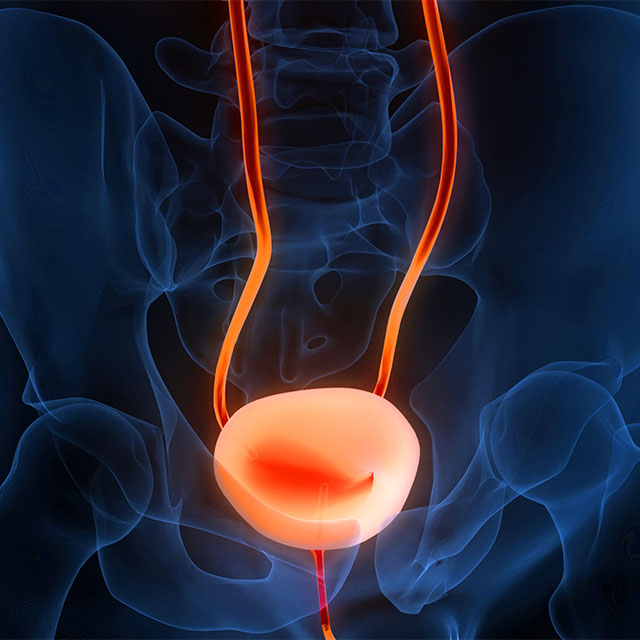
“Sarcomatoid urothelial carcinoma (SUC) is an aggressive form of bladder cancer that is difficult to treat,” says medical oncologist Burles (“Rusty”) Johnson III, M.D. Adding to the challenge, “subtypes of bladder cancer such as SUC are excluded from clinical trials, so we don’t have the data on how best to treat patients with this disease.”
But there is encouraging news: In 2024, Johnson and medical oncologist Noah Hahn, M.D., reported in Bladder Cancer that patients with muscle-invasive SUC who receive chemotherapy before surgery have a pathologic complete response rate – no tumor present at time of surgery – of 38 percent.
After their study showed that SUC is responsive to chemotherapy, Brady investigators did further work toward understanding SUC better and improving treatment. Johnson, with genitourinary pathologist Andres Matoso, M.D., identified differences between SUC and conventional urothelial carcinoma within eight patients who had both types of tumors. Using spatial transcriptomics, which allows identification of different cells within different spaces, Matoso and Johnson found that macrophages (cells that can stimulate or suppress the immune system), “were significantly increased in SUC when compared with UC,” says Johnson.
In further analysis, they found moderate to high levels of a protein called CD163 in SUC macrophages, suggesting that these cells may be suppressing the immune system and facilitating cancer growth. Matoso and Johnson also found that other immune system cells called fibroblasts (which support tumor growth and progression), were increased in SUC regions. “This discovery has led us to focus on targeting these two cell pathways, which may lead to further treatments to target this aggressive disease,” says Johnson. This work was published in The Journal of Pathology Clinical Research.