
New Hope for Bladder Cancer Detection A Simple Urine Test
“When both tests were used together, detection improved to 78 percent.”
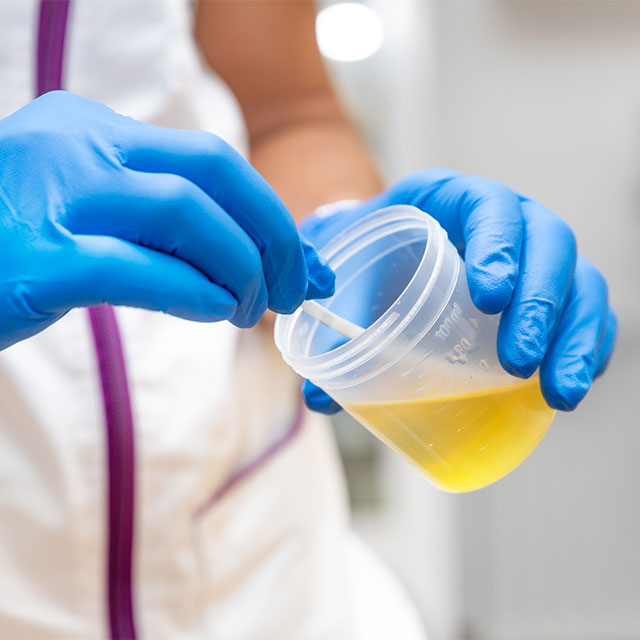
“Bladder cancer, especially in its high-grade form, is a serious and often aggressive disease. Detecting it early is key,” says fourth-year Brady resident Michelle Higgins, M.D. “Unfortunately, there is no routine screening or monitoring test for bladder cancer.” But thanks to Brady investigators, a new, simple urine test may be one step closer.
Higgins was part of a recent Brady study that focused on UCA1, an RNA molecule that is known to be elevated in bladder cancer. In this study, published in Urology, the team investigated whether the presence of this biomarker in urine could accurately identify high-grade bladder cancer.
“We tested urine from 50 patients using a lab method called RNA in situ hybridization (RISH) to detect UCA1 in urine samples,” says Higgins. “We found that RISH detected high-grade bladder cancer in 67 percent of cases — much better than cytology (looking at bladder cells in urine) alone, which detected just 34 percent. When both tests were used together, detection improved to 78 percent.”
Further research is needed to confirm these findings, but “UCA1 is showing promise as a new way to identify dangerous bladder cancers in a noninvasive way,” says urologist Max Kates, M.D., senior author of the study. “It could also help monitor patients over time, and help us detect shifts from low to high-grade disease sooner.”