
Get to Know Isabel Deakins
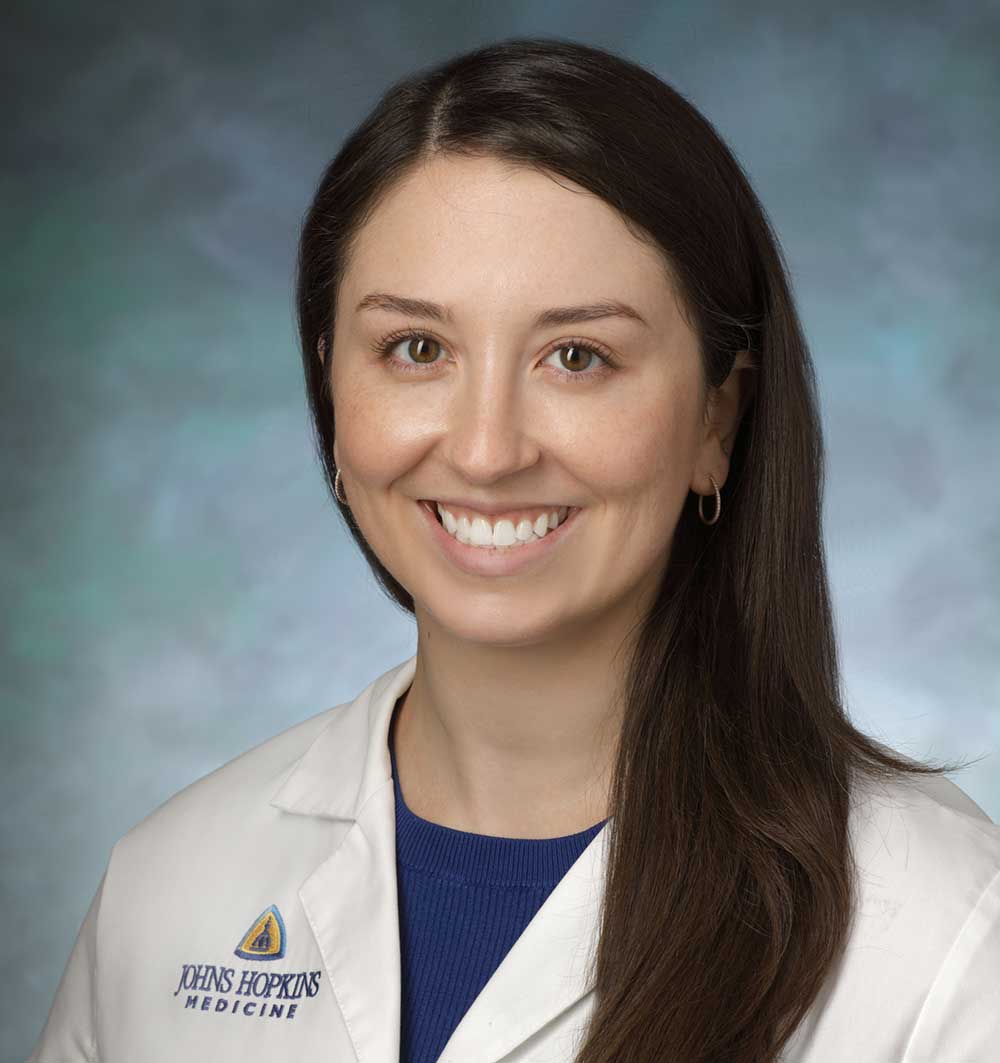
Isabel Deakins, O.D., joined the Wilmer Eye Institute, Johns Hopkins Medicine, faculty in September as an instructor of ophthalmology. An optometrist whose interests include specialty contact lenses, Deakins sees patients at Wilmer’s Bethesda and Arlington clinics.
What attracted you to the field of optometry?
Like many optometrists, I have a high refractive error and therefore spent a lot of time at the optometrist getting glasses and contacts and can still remember my first "wow" moment with glasses. My childhood optometrist inspired me to become both an optometrist and an artist — he spends time every year in France painting and working on his art. I think optometry is a perfect blend of art and science: I use my knowledge of optics, neuroscience and medicine to help people navigate and perceive the world.
What are your specialties? How did you become interested in them?
I became interested in specialty contact lenses in optometry school and completed a residency in specialty contact lenses in Boston. The reason I love fitting contact lenses is that for some patients, no amount of surgery or glasses will fully correct their vision, and the only way to provide truly crisp vision is to simulate a new cornea with a custom contact lens.
What drew you to Wilmer?
Wilmer has a massive team of every type of eye specialist imaginable. I wanted to join the Wilmer team in order to work closely with them, learn from them and provide my patients with the best care possible by connecting them to this network of fantastic specialists.
What are you working on right now and how will it contribute to the advancement of optometry?
In our Arlington practice, Wilmer works alongside Johns Hopkins Community Physicians, who specialize in primary care, OB-GYN, urogynecology and cardiology. As we continue to build our brand-new practice in Arlington, I am working with the non-ophthalmology providers to see how we can best provide excellent, efficient and integrated care for our patients.
How do you see the role of optometry within a comprehensive healthcare setting like JHCP, and how do you fit into that vision?
Thankfully, a lot of the greater healthcare world understands how important eye health is, and that a lot of systemic diseases can be caught during a comprehensive eye exam. My hope is that by offering optometry care in an integrated setting, we can expand access to care through convenience. Someone could take one day or a half day off of work to get their physical, cardiology appointment, PAP smear and eye exam at the same location.
How has the field of optometry changed since you began your career?
The technology in dry eye and contact lens design has evolved so much in the last few years. We have new drops for dry eye with completely new mechanisms of action, and ultra-customizable contact lens options that allow previous hard-to-fit contact lens patients to wear contacts with much greater comfort and enhanced vision.