
Division of Urogynecology & Reconstructive Surgery

The experts at the Johns Hopkins Division of Urogynecology and Reconstructive Surgery specialize in advanced surgical care. Using the latest techniques in minimally invasive and reconstructive surgery, they provide specialized treatment for pelvic organ prolapse, stress and urge incontinence, and vaginal fistulas related to childbirth, while optimizing patient outcomes and minimizing recovery time.
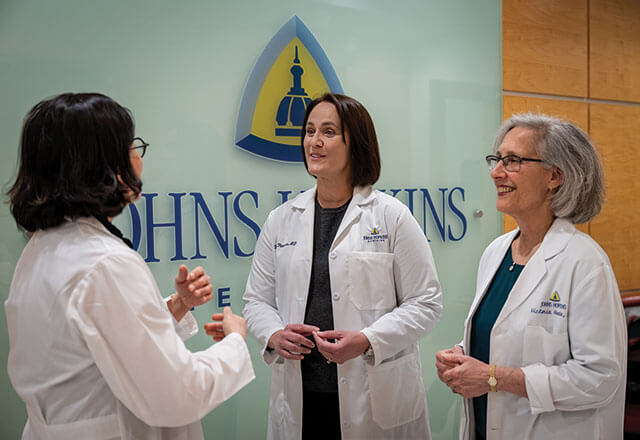
Through close collaboration with Johns Hopkins colorectal surgeons, urologists and gynecologic oncologists, the team addresses complex cases, including pelvic organ prolapse with bowel dysfunction and early-stage malignancies of the uterus, cervix or ovaries. This multidisciplinary approach streamlines care, reducing the need for multiple procedures. By shortening recovery times, lowering complication risks and preserving pelvic function, this strategy enhances long-term outcomes and improves overall patient well-being.
As leaders in the field, the division’s experts are pioneering surgical techniques that improve patient safety and the long-term success of treatments — reducing the need for repeat procedures, preserving pelvic function and providing lasting relief for conditions such as pelvic organ prolapse and bladder dysfunction. Through innovative approaches, including advanced neuromodulation for refractory bladder dysfunction and optimized prolapse repairs, the team continues to raise the standard of care.
With a commitment to surgical excellence, innovation and patient-centered care, the division’s specialists are trusted partners for referring physicians seeking comprehensive management of complex urogynecologic conditions.
Clinical Initiatives
Expanded Expertise in the National Capital Region
To better serve referring physicians and their patients in the Greater Washington, D.C., area, the division has added urogynecologists Shannon VanderPas Lamb and Daniel David Gruber to its team. Practicing in Arlington, Virginia, and Bethesda, Maryland, they specialize in treating pelvic floor disorders, including urinary incontinence, pelvic organ prolapse and complex gynecologic conditions. With decades of combined experience, they offer advanced surgical and nonsurgical treatments, including minimally invasive procedures and pelvic floor rehabilitation.
Leading in Minimally Invasive and Robotic Surgery
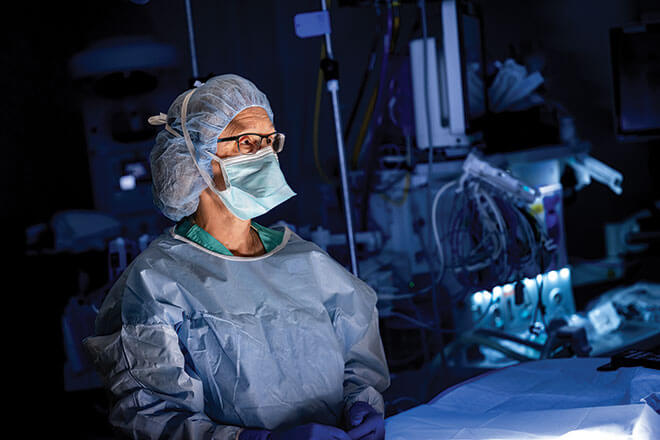
The division is at the forefront of surgical innovation, offering laparoscopic, robotic-assisted, and vaginal approaches to optimize patient outcomes while minimizing recovery time. Complex reconstructions, including mesh-based and native tissue repairs, are tailored to each patient’s anatomy and functional needs. Advanced incontinence procedures, such as midurethral slings and neuromodulation, ensure durable results with minimal risk of complications.
Pioneering Innovations in Bladder Dysfunction Treatment
The division is a leader in the use of neuromodulation to treat refractory bladder dysfunction. Novel, patient-friendly neuromodulation devices — including an implanted ankle-based system — expands treatment options for people with overactive bladders and urinary retention issues.
Research Initiatives
Center for Urogynecology and Reconstructive Pelvic Surgery Research
Principal Investigator: Victoria L. Handa, M.D., M.H.S.
The division’s research focuses on advancing surgical outcomes, understanding predictors of complications, and improving quality of life for individuals undergoing pelvic floor and benign gynecologic procedures. Investigators are exploring innovative treatments and care barriers related to urinary incontinence and overactive bladder, as well as surgical strategies for pelvic organ prolapse, including revision approaches. Additional studies examine the long-term impact of obstetric trauma and levator ani injury on pelvic floor health. A strong emphasis is also placed on addressing health disparities and the influence of social determinants of health in urogynecologic care.